Banner
Ousiometrics Analysis Says All Human Language Is Biased

A new tool drawing on billions of uses of more than 20,000 words and diverse real-world texts claims...

Wavelengths Of Light Are Why CO2 Cools The Upper Atmosphere But Warms Earth

There are concerns about projected warming on the Earth’s surface and in the lower atmosphere...

Here's Where Your Backyard Was 300 Million Years Ago

We may use terms like "grounded" and terra firma to mean stability and consistency but geology...

Convergent Evolution Cheat Sheet Now 120 Million Years Old

One tenet of natural selection is a random walk of genes but nature may be more predictable than...

User picture.
News StaffRSS Feed of this column.

News Releases From All Over The World, Right To You... Read More »

Blogroll

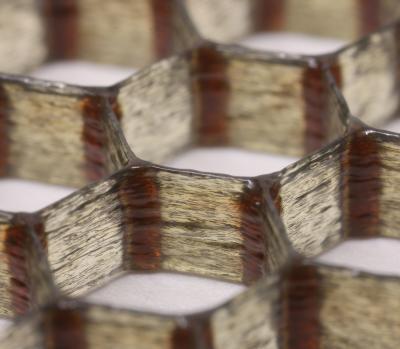
Though wind farms are touted as a viable part of our clean energy future, those sleek turbines are made of a decidedly low-tech core material: balsa wood.

Like other manufactured products that use sandwich panel construction to achieve a combination of light weight and strength, turbine blades contain carefully arrayed strips of balsa wood shipped in from Ecuador, which provides 95 percent of the world's supply.

For centuries, the fast-growing balsa tree has been prized for its light weight and stiffness relative to density. But balsa wood is expensive and natural variations in the grain can be an impediment to achieving the increasingly precise performance requirements of turbine blades and other sophisticated applications.

Cell migration, which is involved in wound healing, cancer and tumor growth, and embryonic growth and development, has been a topic of interest to mathematicians and biologists for decades. 

We don't know what dark matter is but we know it must be. And now, computer hypothetically, we know it a little better, thanks to new supercomputer simulations showing a possible evolution of our corner of the cosmos, the Local Group, from the Big Bang to the present day.

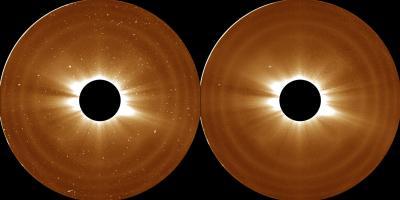
Surrounding the sun is a vast atmosphere of solar particles, through which magnetic fields swarm, solar flares erupt, and gigantic columns of material rise, fall and jostle each other around.  We call it the corona.

This corona, is even larger than thought, extending out some 5 million miles above the sun's surface *the equivalent of 12 solar radii), according to data from  NASA's Solar Terrestrial Relations Observatory. This has implications for NASA's upcoming Solar Probe Plus mission, which is due to launch in 2018 and will go closer to the sun than any man-made technology ever has.

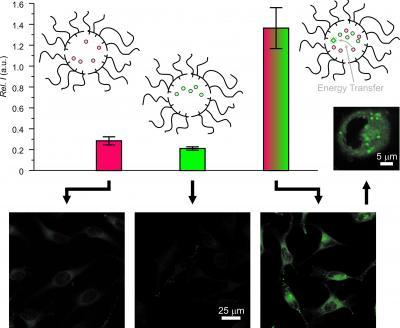
The world of "Fantastic Voyage" is rapidly approaching. Tiny devices are being used in therapeutic applications, and development of nanoparticles that can transport and deliver drugs to target cells in the human body is progressing also.

Recently, researchers created nanoparticles that under the right conditions, self-assemble – trapping complementary guest molecules within their structure. Like tiny submarines, these versatile nanocarriers can navigate in the watery environment surrounding cells and transport their guest molecules through the membrane of living cells to sequentially deliver their cargo.

People with persistent ringing in the ears – a condition known as tinnitus – process emotions differently than those with normal hearing, according to a new paper.

Tinnitus afflicts 50 million people in the United States, according to the American Tinnitus Association, and causes those with the condition to hear noises that aren't really there. These phantom sounds are not speech, but rather whooshing noises, train whistles, cricket noises or whines. Their severity often varies day to day.