Banner
Ousiometrics Analysis Says All Human Language Is Biased

A new tool drawing on billions of uses of more than 20,000 words and diverse real-world texts claims...
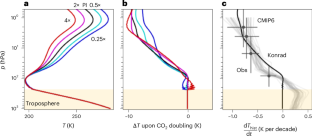
Wavelengths Of Light Are Why CO2 Cools The Upper Atmosphere But Warms Earth

There are concerns about projected warming on the Earth’s surface and in the lower atmosphere...

Here's Where Your Backyard Was 300 Million Years Ago

We may use terms like "grounded" and terra firma to mean stability and consistency but geology...

Convergent Evolution Cheat Sheet Now 120 Million Years Old

One tenet of natural selection is a random walk of genes but nature may be more predictable than...

User picture.
News StaffRSS Feed of this column.

News Releases From All Over The World, Right To You... Read More »

Blogroll

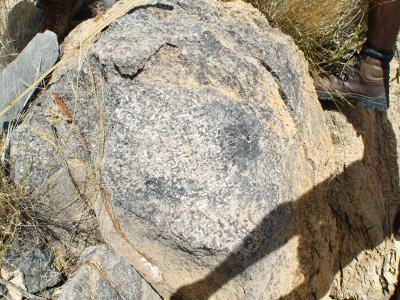
Cloudina were tiny, filter-feeding creatures that lived on the seabed during the Ediacaran Period, which ended 541 million years ago. Fossil evidence indicates that animals had soft bodies until the emergence of Cloudina. Now they are involved in a new study which sheds light on how one of Earth's oldest reefs was formed.  

Researchers have discovered that one of these reefs – now located on dry land in Namibia – was built almost 550 million years ago, by these first animals to have hard shells. Scientists say it was at this point that tiny aquatic creatures developed the ability to construct hard protective coats and build reefs to shelter and protect them in an increasingly dangerous world.  

WASHINGTON, D.C., June 26, 2014 - First-grade teachers in the United States may need to change their instructional practices if they are to raise the mathematics achievement of students with mathematics difficulties (MD), according to new research published online today in Educational Evaluation and Policy Analysis, a peer-reviewed journal of the American Educational Research Association.

VIDEO: Co-author Paul L. Morgan discusses key findings https://www.youtube.com/watch?v=xCAzLGSZ6aM&feature=youtu.be

Chemists at Queen Mary University of London have discovered a new chemical to aid drug manufacturing processes, making it more environmentally-friendly and easier to scale up for industry.

Carbon-based molecules used in pharmaceuticals or agrochemicals can be prepared via a process called C-H activation, which requires the bonds in complex chemicals to be broken and reattached. This method can be expensive as precious metals like palladium or silver are needed to speed up the synthesis process, and can produce waste byproducts harmful to the environment.

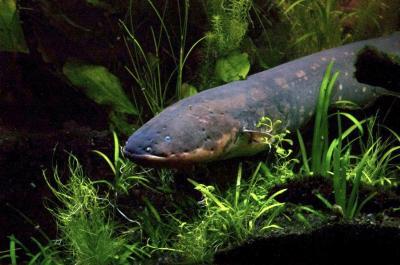
A new paper in Science identifies the regulatory molecules involved in the genetic and developmental pathways that electric fish have used to convert a simple muscle into an organ capable of generating a potent electrical field.

The work establishes the genetic basis for the electric organ, an anatomical feature found only in fish.

The most shocking part to non-biologists? It evolved independently half a dozen times in environments ranging from the flooded forests of the Amazon to murky marine environments.

'Big data' means a lot of things to a lot of people but generally it is used to indicate huge amounts of information, like texts or keywords, in use at any time by billions of people.

Though it has many cultural upsides, tracking flu epidemics, monitoring road traffic in real time, or handling the emergency of natural disasters, those are all sunk costs, which means government and that means a lot of poorly-functioning government websites. Big data will be used by marketing people before it gets adopted by social services.

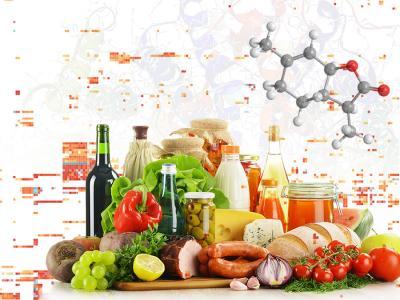
Complementing the five basic tastes of sweet, bitter, salty, sour and umami, a large variety of odors also contribute to the overall sensory impression of a foodstuff.

Taste is big business, and that means science is on the case.  In recent decades, approximately 10,000 volatile food compounds have been identified. Scientists from Technische Universität München (TUM) and the German Research Center for Food Chemistry (DFA) have carried out a meta-analysis on the odorant patterns of 227 food samples. 


How cognac gets its complex notes