

Banner
Synchrotron Could Shed Light On Exotic Dark Photons

There are many hypothetical particles proposed to explain dark matter and one idea to explore how...

The Pain Scale Is Broken But This May Fix It

Chronic pain is reported by over 20 percent of the global population but there is no scientific...
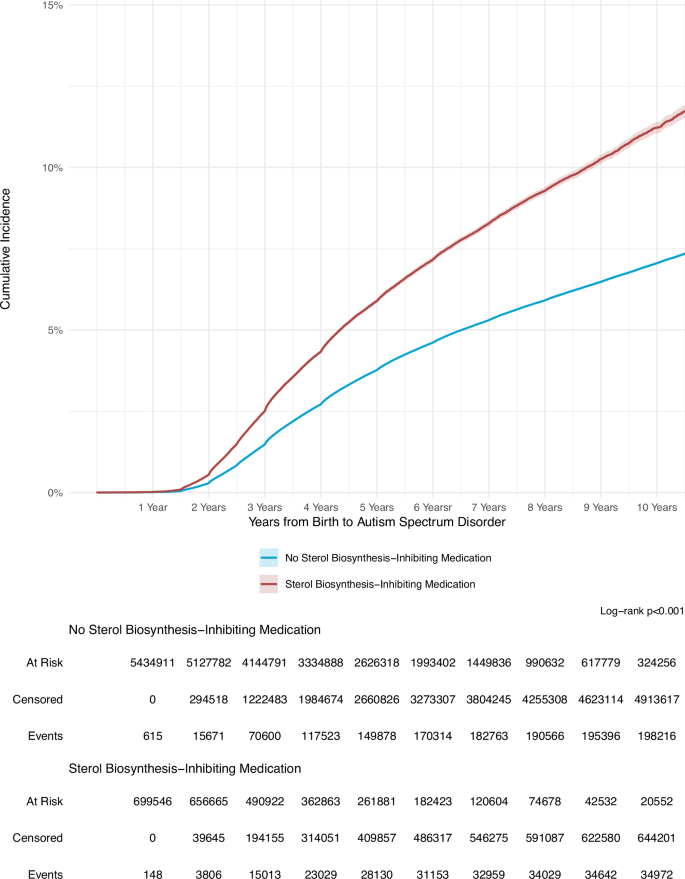
Study Links Antidepressants, Beta-blockers and Statins To Increased Autism Risk

An analysis of 6.14 million maternal-child health records  has linked prescription medications...

Pilot Study: Fibromyalgia Fatigue Improved By TENS Therapy

Fibromyalgia is the term for a poorly-understood condition where people experience pain and fatigue...

User picture.
News StaffRSS Feed of this column.

News Releases From All Over The World, Right To You... Read More »

Blogroll

A study funded by the National Eye Institute (NEI), part of the National Institutes of Health, has shown that uncorrected farsightedness (hyperopia) in preschool children is associated with significantly worse performance on a test of early literacy.

The results of the Vision in Preschoolers-Hyperopia in Preschoolers (VIP-HIP) study, which compared 4- and 5-year-old children with uncorrected hyperopia to children with normal vision, found that children with moderate hyperopia (3 to 6 diopters) did significantly worse on the Test of Preschool Early Literacy (TOPEL) than their normal-vision peers. A diopter is the lens power needed to correct vision to normal. The higher the diopter, the worse the hyperopia.

Interventions intended to encourage green choices among individuals, including for recycling or energy use, would be better targeted at moments of major change in people's lives if they are to stick, according to a new study from University of Bath psychology researchers.

In their paper, published in the Journal of Environmental Psychology, behaviour change experts from the University's Department of Psychology suggest that life transitions, such as a house move or changing jobs, can provide a window of opportunity, during which time habits can be shifted. After this point habits become entrenched and far harder to change.

Dr. Sébastien Jacquemont, a geneticist at the University of Montreal, has correlated genetics to intelligence. "We have just discovered, for example, that a missing copy of a region in chromosome 16 results in a 25-point intelligence quotient (IQ) drop in carriers. Addition of a copy in the same genomic region results in an approximate 16-point drop. Strangely enough, even if carriers show much differentiated sets of symptoms - and sometimes no symptoms at all - the specific effect of these two mutations seems to remain the same."

Bullying is a common technique to gain power or prestige, and has been for as long as humans and other animals have existed. It can take many forms. School yard tactics, like taking lunch money, have grown into Internet campaigns, such as tormenting kids on Facebook, and it has even become organized movements, like the dark-money funded group SourceWatch attacking scientists and pro-science groups for their donors.

A new review article seeks to outline roles and recommendations for peers, parents, schools and new media platforms to stop bullying. 

Epigenetics is spreading its wings out to the painkiller world, at least in an animal model. Of course, it is well-known that just about everything has been linked to causing cancer in rats. The International Agency for Research on Cancer (IARC) has studied hundreds and hundreds of compounds and only one substance has been placed into group 4 (probably not carcinogenic) so if your name gets mentioned in a meeting, you are going to be found to cause cancer.

So don't worry just yet. Unless you are raising money for an environmental group or work at a law group, there is a huge gas between rats and humans. 

Surgeons removing a malignant brain tumor don’t want to leave cancerous material behind, but they also need to protect healthy brain matter and minimize neurological harm. Once the patient’s skull is open, there’s no time to send tissue samples to a pathology lab to be frozen, sliced, stained, mounted on slides and investigated under a bulky microscope in order distinguish between cancerous and normal brain cells.

A handheld, miniature microscope could allow surgeons to “see” at a cellular level in the operating room and determine where to stop cutting. The researchers hope that after testing the microscope’s performance as a cancer- screening tool, it can be introduced into surgeries or other clinical procedures within the next 2 to 4 years.




