

Banner
Synchrotron Could Shed Light On Exotic Dark Photons

There are many hypothetical particles proposed to explain dark matter and one idea to explore how...

The Pain Scale Is Broken But This May Fix It

Chronic pain is reported by over 20 percent of the global population but there is no scientific...
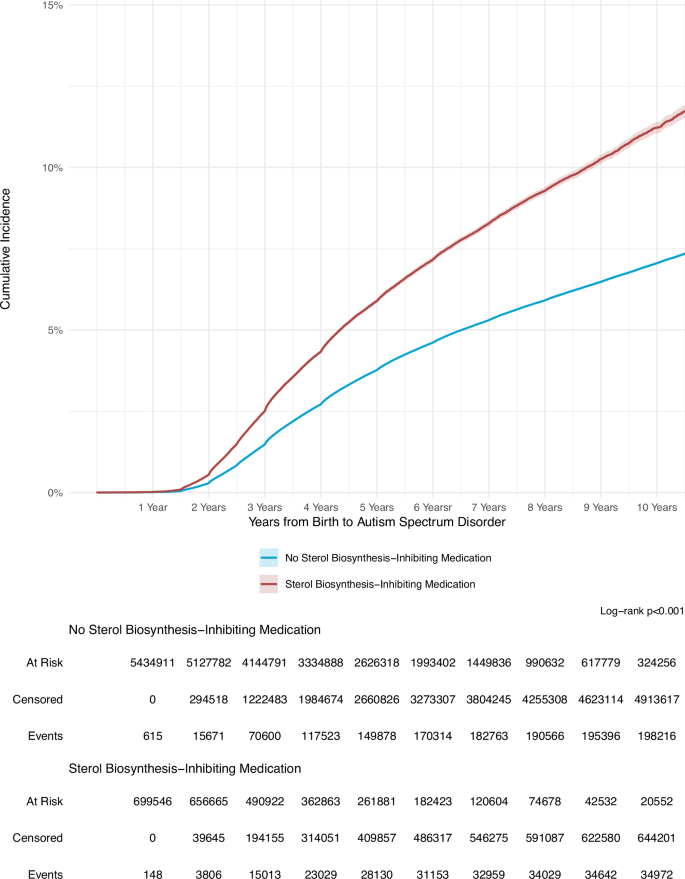
Study Links Antidepressants, Beta-blockers and Statins To Increased Autism Risk

An analysis of 6.14 million maternal-child health records  has linked prescription medications...

Pilot Study: Fibromyalgia Fatigue Improved By TENS Therapy

Fibromyalgia is the term for a poorly-understood condition where people experience pain and fatigue...

User picture.
News StaffRSS Feed of this column.

News Releases From All Over The World, Right To You... Read More »

Blogroll

A new position statement goes contrary to the consensus and finds that the introduction of gluten into the infant diet, or the practice of introducing gluten during breast-feeding, does not reduce the risk of celiac disease in infants at risk. The statement appears in the Journal of Pediatric Gastroenterology and Nutrition.

A true-muonium only lives for two microseconds. These atoms are made up one positively and one negatively charged elementary particle, also known as muons. Although they have yet to be observed experimentally, a Japanese theoretical physicist has come up with new ways of creating them, in principle anyway, via particle collisions. 

The first method would involve colliding a negatively charged muon and a muonium atom made up of a positive muon and an electron. The second would involve colliding a positively charged muon and a muonic hydrogen atom made up of a proton and a negative muon. . 

Amsterdam, Jan. 18, 2016 - If you're scared of the dentist's needles you're not alone -- but new research means you might not have to put off that appointment again. A study published in Colloids and Surfaces B: Biointerfaces reveals how the dentist could give you anesthetic using a tiny electric current instead of a needle.

The researchers behind the study, from the University of São Paulo, say their new findings could help improve dental procedures and bring relief to millions of people who are scared of needles. It would also save money and avoid contamination and infection, they say.

Urban dwellers may think urban living is better than rural life, and penthouse dwellers may believe living at the top of the city is better than living in a townhouse, but a new study found that survival rates from cardiac arrest decrease the higher up the building a person lives.

Human sounds may convey emotions clearer and faster than words, according to a new paper.

It takes just one-tenth of a second for our brains to begin to recognize emotions conveyed by vocalizations, according to the researchers\. It doesn't matter whether the non-verbal sounds are growls of anger, the laughter of happiness or cries of sadness. More importantly, the researchers have also discovered that we pay more attention when an emotion - such as happiness, sadness or anger - is expressed through vocalizations than we do when the same emotion is expressed in speech.

The first study to evaluate the biodiversity of arthropods in U.S. homes finds that humans share their houses with any of more than 500 different kinds of arthropods - at least on a short-term basis. Arthropods are invertebrate animals with exoskeletons, segmented bodies and jointed limbs, such as insects, spiders, mites and centipedes.





