

Banner
Synchrotron Could Shed Light On Exotic Dark Photons

There are many hypothetical particles proposed to explain dark matter and one idea to explore how...

The Pain Scale Is Broken But This May Fix It

Chronic pain is reported by over 20 percent of the global population but there is no scientific...
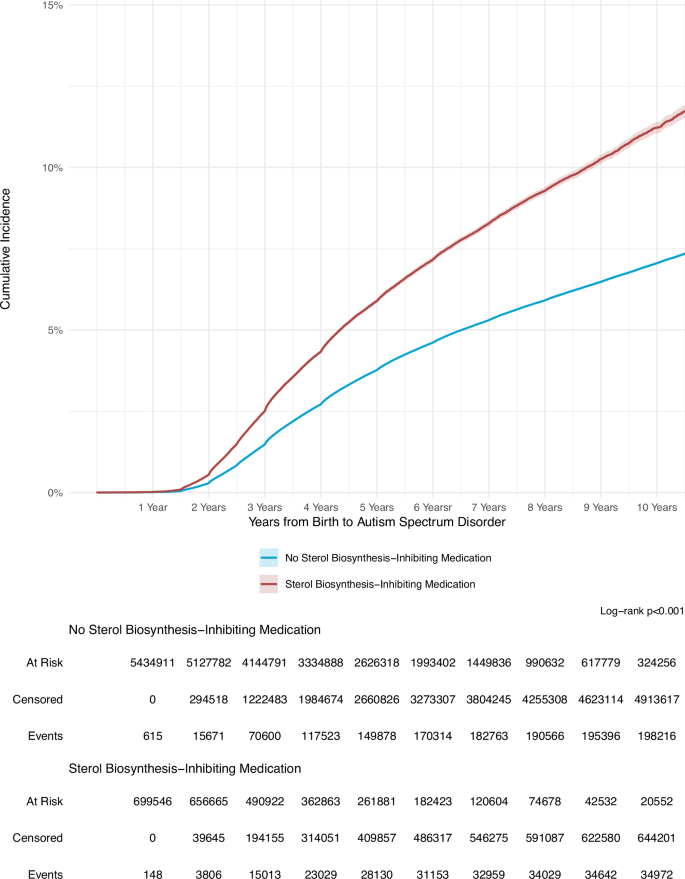
Study Links Antidepressants, Beta-blockers and Statins To Increased Autism Risk

An analysis of 6.14 million maternal-child health records  has linked prescription medications...

Pilot Study: Fibromyalgia Fatigue Improved By TENS Therapy

Fibromyalgia is the term for a poorly-understood condition where people experience pain and fatigue...

User picture.
News StaffRSS Feed of this column.

News Releases From All Over The World, Right To You... Read More »

Blogroll

From the middle-school child considering the premier brands of soccer shoes, to the college graduate weighing which graduate test prep course to take, a common marketing message from consumer brands is "you will perform better with us."

In a new study, Frank Germann, of the Department of Marketing in the University of Notre Dame's Mendoza College of Business, and colleagues Aaron Garvey of the University of Kentucky and Lisa Bolton of Penn State University examine if such performance brands can cause a placebo effect.

Building on a 30-year, three-generation study of depressed individuals, their children and offspring, a study published in the journal Psychiatry Research: Neuroimaging provides a better understanding of the familial risk for depression and the role neuroplasticity might have in increasing the risk of developing depression.

The research by scientists at Children's Hospital Los Angeles and Columbia University shows a link between a particular allele for serotonin found at a higher frequency in those at risk of depression because of family history, and those who go on to develop major depressive disorder.

Caltech researchers have found evidence of a giant planet tracing a bizarre, highly elongated orbit in the outer solar system. The object, which the researchers have nicknamed Planet Nine, has a mass about 10 times that of Earth and orbits about 20 times farther from the sun on average than does Neptune (which orbits the sun at an average distance of 2.8 billion miles). In fact, it would take this new planet between 10,000 and 20,000 years to make just one full orbit around the sun.

The researchers, Konstantin Batygin and Mike Brown, discovered the planet's existence through mathematical modeling and computer simulations but have not yet observed the object directly.

COLUMBIA, Mo. - Approximately half of the companies listed with Standard & Poor have adopted policies mandating retirement based on age. A new study from the University of Missouri has found that although these mandatory retirement polices represent an effective way to address underperforming CEOs, accumulated job experience improves performance and counters age-related declines.

While research has already established that B vitamin supplements can help slow mental decline in older people with memory problems, an international team have now found that having higher levels of Omega-3 fatty acids in your body could boost the B vitamins' effect.

The team, from the Universities of Cape Town, Oslo, Oxford and the UAE, studied more than 250 people with mild cognitive impairment (MCI) in Oxford. MCI is when brain function is below what is normally expected for a person's age but is not significant enough to interfere with daily life. While it is not as serious as dementia, if untreated it often progresses to become dementia.

DURHAM, N.C. -- When the cancer-causing Epstein-Barr virus moves into a B-cell of the human immune system, it tricks the cell into rapidly making more copies of itself, each of which will carry the virus.

To satisfy a sudden increase in demand for more building parts, rapidly dividing host cells will chew up their insides to free up more amino acids, fats and nucleotides.

But if supplies of these materials run low, the cell will enter a suspended state called senescence and cell division will stop, freezing the advance of the virus, according to new findings from a Duke University research team that appear in Proceedings of the National Academy of Sciences.

