Banner
Synchrotron Could Shed Light On Exotic Dark Photons

There are many hypothetical particles proposed to explain dark matter and one idea to explore how...

The Pain Scale Is Broken But This May Fix It

Chronic pain is reported by over 20 percent of the global population but there is no scientific...
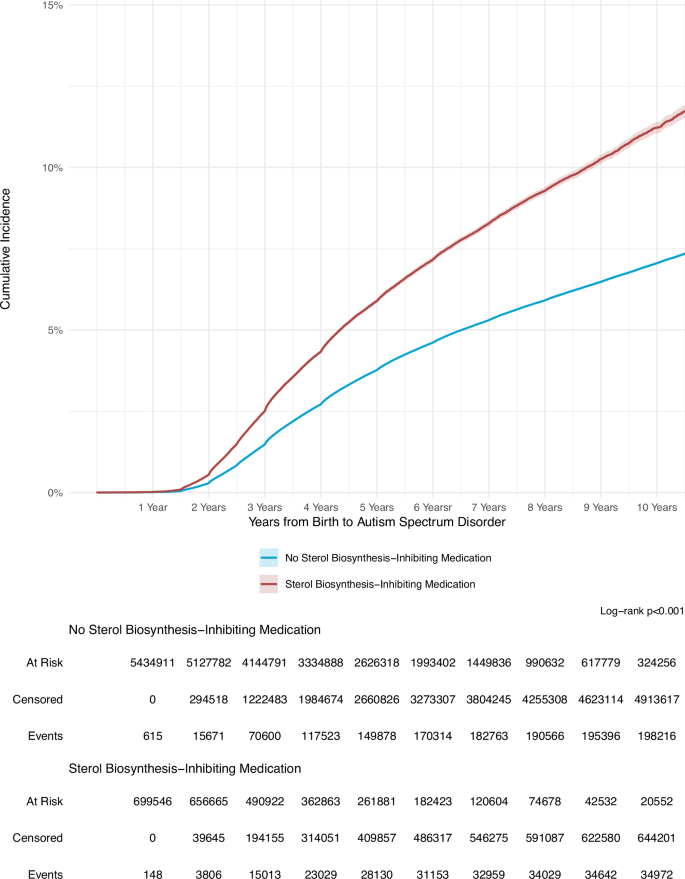
Study Links Antidepressants, Beta-blockers and Statins To Increased Autism Risk

An analysis of 6.14 million maternal-child health records  has linked prescription medications...

Pilot Study: Fibromyalgia Fatigue Improved By TENS Therapy

Fibromyalgia is the term for a poorly-understood condition where people experience pain and fatigue...

User picture.
News StaffRSS Feed of this column.

News Releases From All Over The World, Right To You... Read More »

Blogroll

Both acute kidney injury and chronic kidney disease were common in patients undergoing major vascular surgical procedures and were associated with an increase in long-term cardiovascular-specific death compared with patients with no kidney disease, according to a study published online by JAMA Surgery.

Azra Bihorac, M.D., M.S., of the University of Florida, Gainesville, and colleagues examined the association between acute kidney injury (AKI), chronic kidney disease (CKD) and long-term cardiovascular-specific mortality among patients who underwent inpatient vascular surgery between January 2000 and November 2010 at a tertiary care teaching hospital. Final follow-up was completed July 2014 to assess survival through January 2014.

The discovery of exceptionally well-preserved, tiny fossil seeds dating back to the Early Cretaceous corroborates that flowering plants were small opportunistic colonizers at that time, according to a new study.

Angiosperms, or flowering plants, diversified during the Early Cretaceous, about 100 to 130 million years ago. Based on evidence from living and fossil plants, the earliest angiosperms are usually thought to have had small stature. New data from the fossil record presented here strongly support this notion, but also indicates key differences from modern flowering plants.

The small seed embryos -- less than 0.3 millimeters in size -- and their surrounding nutrient storage tissues in well-preserved seeds were found in eastern North America and Portugal. 

In recent years, a complicated discussion over which direction solar cells should face -- south or west -- has likely left customers uncertain about the best way to orient their panels. Now researchers are attempting to resolve this issue by developing solar cells that can harvest light from almost any angle, and the panels self-clean to boot. Their report appears in the journal ACS Nano.

Commercial solar panels work best when sunlight hits them at a certain angle. Initially, experts had suggested that solar panels face south to collect the most energy from the sun. But an influential 2013 report by Pecan Street, an energy-research organization, advised that systems tilt westward to maximize efficiency.

As nations across the globe negotiate how to reduce their contributions to climate change, researchers at Penn are investigating just how the coming changes will impact the planet. What's clear is that the effect extends beyond simple warming. Indeed, the very physics and chemistry of the oceans are also shifting, and are forecast to change even more in the coming decades.

These changes have implications for, among other things, the single-celled organisms that comprise the base of the ocean's food web and are responsible for half of the world's photosynthetic activity: phytoplankton. Not only are phytoplankton sensitive to changes in climate, they also contribute to those changes, as they can remove carbon from the atmosphere and store it deep in the ocean when they die.

Essen, Germany, December 16, 2015 - In a large population-based study of randomly selected participants in Germany, researchers found that participants with anemia, defined as haemoglobin <13 g/dl in men and <12 g/dl in women, showed lower performances in verbal memory and executive functions. Furthermore, mild cognitive impairment (MCI) occurred almost twice more often in participants diagnosed with anemia. This study is published in the Journal of Alzheimer's Disease.

There is a bad habit in environmental circles, created by the academics that feed them information: Discovering a new species and immediately declaring it endangered. More evidence-based scientists recognize that over 99.99999% of all species that have gone extinct we never knew about in the first place so declaring everything endangered and claiming a domino effect undermines public acceptance of science. Nonetheless, a new paper adds to the former effort by saying we should forget species extinction and talk about species rarity.