

Banner
Synchrotron Could Shed Light On Exotic Dark Photons

There are many hypothetical particles proposed to explain dark matter and one idea to explore how...

The Pain Scale Is Broken But This May Fix It

Chronic pain is reported by over 20 percent of the global population but there is no scientific...
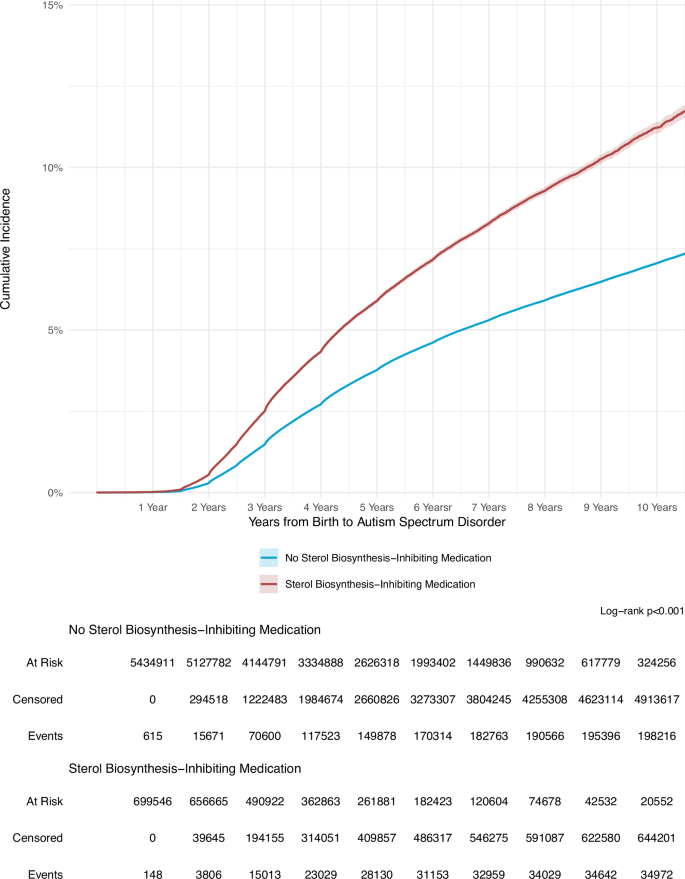
Study Links Antidepressants, Beta-blockers and Statins To Increased Autism Risk

An analysis of 6.14 million maternal-child health records  has linked prescription medications...

Pilot Study: Fibromyalgia Fatigue Improved By TENS Therapy

Fibromyalgia is the term for a poorly-understood condition where people experience pain and fatigue...

User picture.
News StaffRSS Feed of this column.

News Releases From All Over The World, Right To You... Read More »

Blogroll

While the rapid emergence of antibiotic-resistant bacteria has prompted the medical community and media to educate the public to the dangers of misusing and overusing antibiotics but there may be more to the problem than medications - an ecologist is finding a way to blame nuclear research from the 1950s, good timing as environmentalists have declared open war on 'green' scientists who support nuclear energy as the most viable alternative to fossil fuels.

Using mathematical models, scientists have 'looked' into the interior of super-Earths and discovered that they may contain compounds that are forbidden by the classical rules of chemistry -- these substances may increase the heat transfer rate and strengthen the magnetic field on these planets. The findings have been presented in a paper published in the journal Scientific Reports.

The authors of the paper are a group of researchers from MIPT led by Artem Oganov, a professor of the Skolkovo Institute of Science and Technology and the head of the MIPT Laboratory of Computer Design. In a previous study, Oganov and his colleagues used an algorithm created by Oganov called USPEX to identify new compounds of sodium and chlorine, as well as other exotic substances.

WASHINGTON, D.C., Dec. 22, 2015 - Researchers at MINAO, a joint lab between The French Aerospace Lab in Palaiseau and the Laboratoire de Photonique et de Nanostructures in Marcoussis, have recently demonstrated metamaterial resonators that allow emission in the infrared to be tuned through the geometry of the resonator.

Their setup uses sub-wavelength scale metal-insulator-metal, or MIM, resonators to spatially and spectrally control emitted light up to its diffraction limit. This allows an array of resonators to be used to form an image in the infrared -- much as way the pixels in a television screen can form a visible light image -- with potential breakthrough applications in infrared televisions, biochemical sensing, optical storage, and anti-counterfeit devices.

PITTSBURGH, Dec. 22, 2015 - Children younger than 5 who live in economically disadvantaged areas had a greater risk of medication poisoning that resulted in referral to a health care facility, according to scientists at the University of Pittsburgh Graduate School of Public Health and the University of California, San Diego. These areas were rural and experienced high unemployment, along with lower rates of high school graduation and lower household income.

The analysis of Pittsburgh Poison Center data, published online and scheduled for print in the January issue of Clinical Toxicology, gives insight into potential geographic targets for poison prevention outreach.

CHAMPAIGN, Ill. -- A number of drugs already approved to treat parasitic infections, cancers, infertility and other conditions also show promise as antibiotic agents against staph and tuberculosis infections, according to a new study by University of Illinois chemists and collaborators. Because these agents act against multiple targets within the bacteria, it may be harder for bacteria to develop resistance.

The new study, led by Illinois chemistry professor Eric Oldfield, was published in the Proceedings of the National Academy of Sciences.

NEW YORK, NY - Cannabidiol (CBD), a medical marijuana derivative, was effective in reducing seizure frequency and well-tolerated and safe for most children and young adults enrolled in a year-long study led by epilepsy specialists at NYU Langone Medical Center.

