The Daytime Astronomer

antunes

antunes

Read more about the strange modern world of a day laborer in astronomy, plus extra space science-y goodness.
RSS Feed
Mayans, Global Warming, NASA & 2012

Mayans, Global Warming, NASA & 2012

This is not about a Mayan 2012 apocalypse.  This is about the 9th century Mayan apocalypse, as documented by NASA.  It's also about modern global warming.  So there's plenty of doom to go around.Let's first cover the '2012 apocalypse', a fabrication based on pseudoscience.  Modern Mayans are annoyed at the 2012 rumors.  The misinterpretation of their ancient culture-- that somehow an apocalypse is predicted for 2012-- has finally reached its nadir.  Hollywood is going to make a movie about it.  Imagine your own history being reduced to a single 90-minute special effects extravaganza.

The Future Of International Astronomy

The Future Of International Astronomy

I'm sitting at "Beyond the Decade: The Future of International Astronomy", a conference today at the National Academies.  The conference is small (53 people so far) but rich in material, providing a crunchy look at where astronomy is heading.

The International Space Station-- Gone By 2016?

The International Space Station-- Gone By 2016?

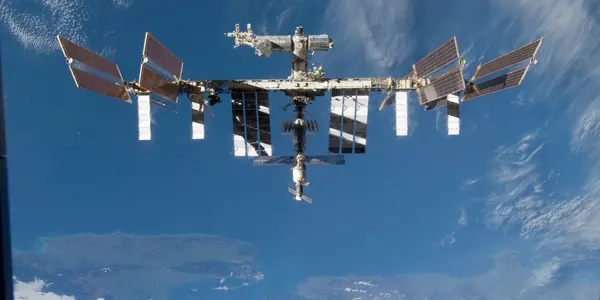
Just why do we have a space station, anyway? That's a question of relevance, because it turns out we might not have one after 2015. The International Space Science Station (ISS) is a football-field sized structure able to support six people 220 miles above us. It is a symbol of international cooperation, a marvel of technology, a new site for tourism and, to some, a project to be terminated in 2015.What we've gotten from it? Some intangibles, some useful stuff.
advancing our space capability
increasing our limits on how long people can live in orbit
keeping nuclear scientists from going rogue after the breakup of the Soviet Union
research that benefits Earth

Learning Through Games... At Public School!

Learning Through Games... At Public School!

Ever play games in school?  Ever have the teacher suggest you play games?  Heck, ever had your entire middle and high school curricula be designed around games?   In a news piece titled "New York Launches Public School Curriculum on Playing Games", reporter Jeremy Hsu writes:

Water On Moon & Mars Is A Game-Changer

Water On Moon & Mars Is A Game-Changer

Here's an experiment.  Prepare for 3 days of hiking.  Pack light-- sleeping bag, tarp, knife, matches.  Bring protein bars and rice for food.  And then pick up 3 gallons (11 liters) of water and start walking.  What's the heaviest part of your gear?  Of course it's the water.If we're going to get anywhere in this solar system, we need to go where there is water.  Everything else can be dehydrated, miniaturized, made more portable.  You can even make oxygen from water, just by adding some electricity (such as from solar power).  But water-- which also makes up most of our body-- is the one item we so desperately need, but can't mimic.

Astronomy Hero, The New PS3 Game!

Astronomy Hero, The New PS3 Game!

I'm torn.  There's two ways I would make a new smash video game, "Astronomy Hero".In the first, you are doing night observing runs, trying to accumulate enough light from each target while evading clouds.  Different targets appear at different times of night, and you have to balance whether to finish a given target (accumulate enough photons) or switch to something that just appeared in hopes that you can do better there.  Targets of different brightness or dimness require different 'stare' times that you're focusing on them, so you're constantly trying to maximize total on-target time while making sure the more valuable targets get done.

First Light From Planck-- And Why It Matters

First Light From Planck-- And Why It Matters

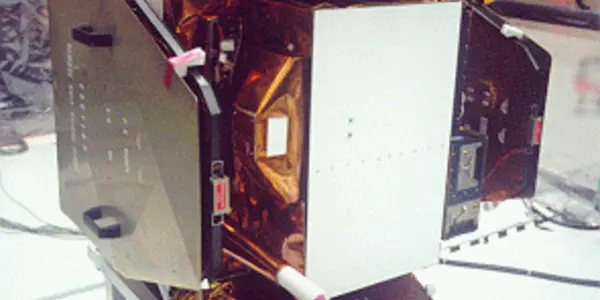
Planck, a European-US collaborative mission launched by ESA, has provided its first pictures. Planck is a followup to WMAP, and looks at the cosmic microwave background. But it has a host of other detectors and purposes, too. Stealing blatently from Wikipedia, Planck will do:

High resolution detections of both the total intensity and polarization of the primordial CMB anisotropies

Creation of a catalogue of galaxy clusters through the Sunyaev-Zel'dovich effect

Observations of the gravitational lensing of the CMB, as well as the integrated Sachs-Wolfe effect

To Space: Burn, Armadillo, Burn!

To Space: Burn, Armadillo, Burn!

What do engineer Burt Rutan, hotel magnate Robert Bigelow, and game programmer John Carmack have in common? Answer: they've built the first private earth-to-space rocket, space station, and lunar lander in the current new space race.Most people are familiar with Scaled Composite's X-Prize $10 million victory with SpaceShipOne, the first private reusable multi-flight manned spacecraft to succeed. But note 'first'-- they were not the only competitor. Just the first tick on the space race radar.

Sunspots, The Colaninno Minimum And Pascal's Wager

Sunspots, The Colaninno Minimum And Pascal's Wager

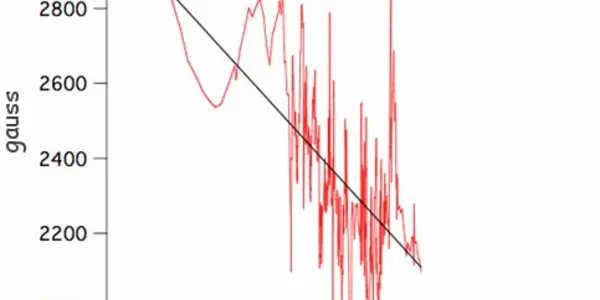
We have been in an anomalously long Solar Minimum.  The sun has an 11 year cycle from Minimum to Maximum.  But the cycles are (like most things in nature) not exact, and some are longer than the others.  We are coming out of Solar Minimum... or are we?Even in the midst of our current cycle, solar physicists were predicting a long minimum, and, humorously, seemed evenly divided over whether this meant we would have a more active Maximum, or a far less active Maximum.  For example, David Hathaway in the NASA article "Solar Cycle 25 peaking around 2022 could be one of the weakest in centuries" clearly predicts the latter. 

Multiple Online Identities

Multiple Online Identities

Who are you?  Who are you online?  Are you the same to everyone?  Should you be?There's been a lot of talk about Google Wave as a new communications paradigm.  I like Wave.  I also think it's retro, harkening back to Nelson and Engelbart's work in the 60s.  Evolutionary rather than revolutionary, as the quote goes.  But even Wave assumes you are a single 'you'.  They need to look at handling multiple personas.

The Petabyte Problem

The Petabyte Problem

What do you do with a petabyte of data?The question came up during a lunch today with two NASA computing people, on in IT and the other in supercomputing.  Modern satellites are returning petabytes of data, and there are many satellites.  This is far more than any human can expect to personally look at, and in fact more than they can fit into their local machine.  How do we make these huge amounts of data useful?We can't ship it to the user's desktop-- there's no room, it'd take forever, and the user doesn't have tools that can browse massive data sets.

Quenching the Sun, For Fun

Quenching the Sun, For Fun

My kids asked me if there was enough water in the universe to quench the Sun.  I voted yes, but of course science isn't about voting, but about verifiable facts.  So now the explanation.The Sun has a mass of around a third of a million Earths.  Stealing a figure from MadSci.org, the mass of water on the Earth is 1/4400 the total mass.  We'll say we need enough water to completely douse every atom in that fusion-burning puppy we call Sol, so we'll need... 4400 * 0.3 * a million Earths. This works out neatly to just over a billion Earths, to get enough water to douse the Sun.