The Daytime Astronomer

antunes

antunes

Read more about the strange modern world of a day laborer in astronomy, plus extra space science-y goodness.
RSS Feed
8 Great Scientist Pranksters

8 Great Scientist Pranksters

Scientists are often portrayed as serious yet quirky, but many hide a prankish interior.  Here's a butcher's dozen of famous pranks by -- or at-- scientists.The best lecture never heard.

Which Science Kills More People?

Which Science Kills More People?

Which science kills the most people each year?  Prompted by a quote-- "guns don't kill people-- physics kills people." ('3rd Rock from the Sun') -- it's time we look at which science really is the deadliest.So let's set up the big three: Physics, Chemistry and Biology.  In a Hollywood movieland world, Physics would be the clear winner on early deaths.  Car crashes, gunshot wounds, bicycle accidents, falling down, people hitting each other, and that biggie called 'war' are all physics-driven deaths.

Myths Of Gifted Education

Myths Of Gifted Education

Dr. Paynter of the MD Dept of Ed noted that "all students have gifts, but there are some students who are ready, right now, to play varsity."  In America, we easily accept that some kids are just more athletic than others, and we support that.  In fact, we're pretty happy accepting that some kids are just naturals at art, math, acting, being charismatic, being beautiful, or doing sports.But suggest some kids are more gifted at learning, and you get the retort "but all children are gifted."  Ask for better learners to get special teaching and now, you're elitist.

The Stopwatch Test & Productivity

The Stopwatch Test & Productivity

How much actual on-task work do you do on a typically work day? The myth is everyone produces 8 hours of useful, targetted work in an 8.5 hour work day (with unpaid lunch). Staying in the office extra hours, likewise, produces more useful work. I suggest you should measure this for yourself. Here's how to find out-- but you may want to hold off telling your boss quite yet.As a freelancer, I have no salary or set work hours. I bill only for time spent on task. I use an electronic timer-- a stopwatch, really-- to track my time. Starting on a task? Timer on. Pause to check personal email or Facebook? Timer off. Back to task? Timer on.

Censoring Mars

Censoring Mars

Over at the Journal of Cosmology, an engaging open journal I've discussed before, there is a controversy over their book, "The Human Mission to Mars: Colonizing the Red Planet".  Namely, Eurekalert refused to accept their press release.  Says the JoC:EurekAlert has refused to issue a paid-for press release announcing the publication of the book edition of The Human Mission to Mars. Over 120 top scientists, including 4 astronauts who walked on the Moon, co-authored this text.

Working In Science

Working In Science

Last week I told you how to get your degree.  Now it's time to look at the life of a working scientist.  It's time for me to answer oft-asked questions like:

What is a scientist's regular day at work like?

What do you do?

Where do you do it-- office, home, et cetera?

Do you work alone or with others in the same enviornment?

What got you interested in science?

Was it easy to get a job?

Around how much can i expect to earn?

How many hours do you work a day?

Do you feel you have enough time to spend with your family?

HS/College Prep For Science

HS/College Prep For Science

Are you thinking about majoring in science or engineering?  Want to get into a good college and leap out into a job?  Here's some advice for science-curious students in high school.As a HS junior, take HS Physics, Biology, or Chemistry-- whichever matches your major.  For engineering or physics or astronomy, HS Physics.  For biology, HS Biology and Chemistry.  For chemistry, HS Chemistry.  For pre-med, heck, take them all.You should also take any and all Advanced Placements (all topics-- Sci, Math, English). AP gives you free credits, so you can go right into stuff you want and sprinkle your electives more freely during your four years-- or even graduate in 3.5 years.

Worst Of 2011 (and Science 2.0 Traffic Stats)

Worst Of 2011 (and Science 2.0 Traffic Stats)

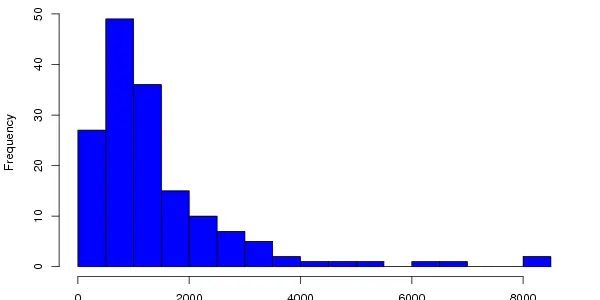
I am 21% of awesome.  But the rest, well, as with last year, I thought I'd let everyone know what you hated. My two worst columns from last year, the only ones to get under 400 visitors, were:1) AGU Meetup? (San Fran, Dec 13-17), at 154 visits.2) Dating Advice or disaster in the making?, an anemic 257 visits.Yeah, I can see it. Neither calls to me. The first is just reaching to regular readers who might be in San Francisco, the second is a reblog of someone else's bad dating advice.

NASA Xmas Presents To You

NASA Xmas Presents To You

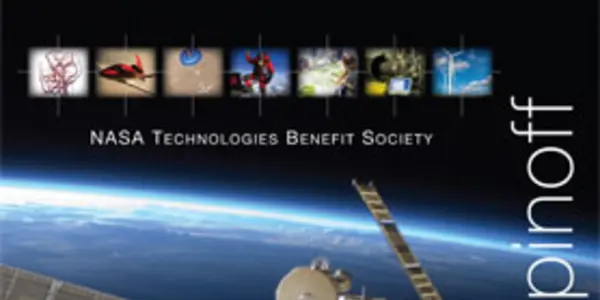
Given all the NASA funding, you think we'd get something from it!  Oh, wait, we do.  SpaceRef pointed me to the NASA SpinOff 2010 report.  What did we get for our $19 billion annual NASA budget?  I mean, that's a lot of money, that's... oh, wait, that's not a lot of money today.  My mistake.  True, you could buy 19 Stealth Bombers for that cost.  Or fight a typical war for 1 month.  But could you... save the airlines $2 billion in fuel costs with NASA wing mods?  Make a sensor that's in 1 in 3 cell phones?  Turns out we do get some bang for our buck.

Perils Of Science Outreach

Perils Of Science Outreach

While you sit there, I am simultaneously providing this blog post, this podcast, and this AGU talk.  All on the same topic-- how can we get scientists to provide science for public consumption.The podcast poses these problems for you, the readers of science:
Who writes the science on the web?
What is their agenda?
Why don't scientists write it?

From the other side, my AGU talk tries to solve it for scientists.  It's rooted in the way that science careers are made and lost.

Skepticism About Skepticism

Skepticism About Skepticism

Anyone can be skeptical about a scientific result. It's good to state your skepticism, to make your view known. But are you done once you speak your view? Is that all it takes, a quick skeptical wrench and we shut off the flow of science? Guest writer Dan Krimm neatly captures the useful role of skepticism in the scientific process, below.AlexTuesdays at The Satellite Diaries and Friday at The Daytime Astronomer (twitter @skyday)

Gifts From The Sky

Gifts From The Sky

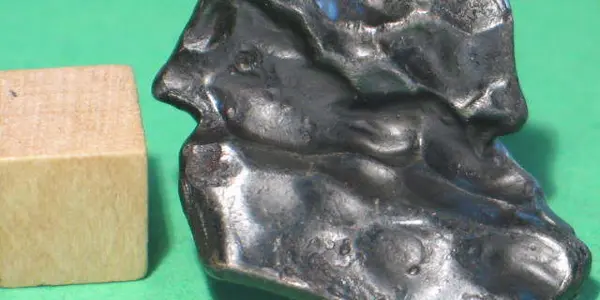
Every wonder what to get an astronomy fan for a present?  In this 365DOA Podcast, Emma the waitress and Sandy the diner roleplay the Meteorite Cafe.  Judging by that name, you can guess what we suggest.  Who can resist a rock older than the Earth?   Even better, who can resist a rock from space that is older than the Earth and costs less than $20?Technically, meteorites formed in space around the same time the Earth was forming.  While Earth went through various atmospheres and engaged in active rock forming and plate techtonics, meteors just sat out in space, unchanged... and waited.  Finally, they made their move!