





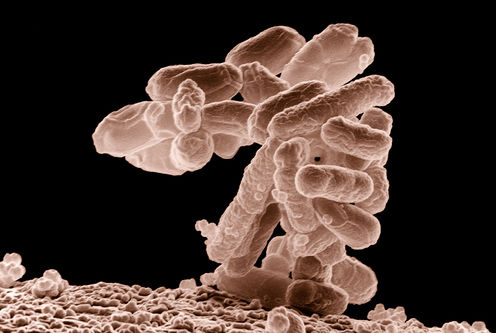





A new system called BASIC could give synthetic biology a boost by creating artificial DNA that is faster, more accurate and more flexible than existing methods. 

To engineer new organisms, scientists build artificial genes from individual molecules and then put these together to create larger genetic constructs which, when inserted into a cell, will create the required product. Various attempts have been made to standardisz the design and assembly process but, until now, none have been completely successful. 
A study has found new evidence linking genetic factors associated with autism to better cognitive ability in people who do not have the condition - which means like many things in genetics it could be a small variation that separates a benefit from a detriment.

Autism is a disability often marked by significant language and speech difficulties but there is no firm relationship between autism and intelligence. Up to 70 percent of individuals with autism do have an intellectual disability but some people with the disorder have well-preserved, or even higher than average, non-verbal intelligence. Non-verbal intelligence is how people solve complex problems using visual and hands-on reasoning skills with little or no use of language.   
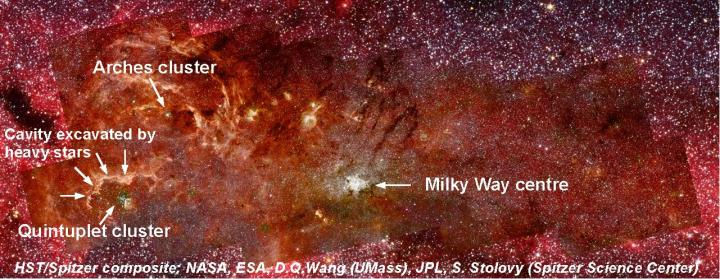
Researchers have detected about 20 rotating dust and gas discs in two clusters hosting exceptionally large and hot stars. The science mystery is how the rotating discs are able to withstand evaporation under such extreme conditions - if there is a Hell, this must certainly be it.

The center of the Milky Way is a nursery for young stars: In its heart, more young stars are born in dark clouds than in any other place in the Galaxy. These stars form in rich groups such as the 'Quintuplet' and 'Arches' clusters. Both star clusters are only a few million years old and contain stars as massive as 100 times the mass of the Sun. 

Clinical trials rely on statistics to show whether drugs are more effective than placebo pills. But how can we be certain?

How should scientists interpret their data?

Emerging from their labs after days, weeks, months, even years spent measuring and recording, how do researchers draw conclusions about the results of their experiments?

By Karin Heineman, (Inside Science TV)

Every day around the world, lightning strikes the ground about 10 times per second. That's nearly one million strikes a day!

In the U.S. there are 20 million strikes on average every year, and now David Romps, an atmospheric scientist at the University of California Berkeley, says we can expect to see that number grow in the coming years.

“What we find by looking in the climate models is that on average they’re predicting a 50 percent increase in the amount of lightning that you get in the United States, during this century, the 21st century," said Romps.

And the cause?

Salt-loving, halophilic, microbes could donate proteins to clean up radioactive strontium and caesium ions from the Fukushima Dai-ichi Nuclear Power Plant incident in Japan.

The X-ray structure of a beta-lactamase enzyme from one such microbe, the halophile Chromohalobacter sp. 560, shows it has highly selective cesium binding sites.  A 1.8 to 2.9 angstrom resolution structure for this enzyme. Anomalous X-ray diffraction also revealed binding sites in the protein for Sr2+ and Cs+ ions, the team reports.

Baby it’s warm inside … we have 200 microbes for every human cell. Agricultural Research Service

We are all populated by microbes – helpful or otherwise – which form a community known as a microbiome. Recent research by Ryan Newton and co-workers has shown that sewage-based analysis of the human microbiome can be used to diagnose health issues at a population level.

Statins are associated with increased risk for diabetes, though it is unclear why. One hypothesis is that statins increase expression of LDL receptors and increase cholesterol uptake into cells including the pancreas, which could cause pancreatic dysfunction. Familial hypercholesterolemia causes decreased LDL transport into cells and researchers have hypothesized that with familial hypercholesterolemia, decreased pancreatic LDL transport would lessen cell death and ultimately lead to lower rates of diabetes.  
 University of Southern Denmark
We may idealize the last century but natural forces have always caused climate on Earth to fluctuate - sometimes quite a bit. But science is about controlling nature and not letting random behavior control our destinies and since we know that some periods were good and some awful, we'd like to avoid the awful.

We can't control everything - the earth is still going to orbit the sun and such orbital forcing of climate change happens over thousands of years and brings ice ages and warming periods. 
mouse-tailed bat Rhinopoma microphyllum and R. Cystops hibernate at warm temperaturesMany mammals, and some birds, escape the winter by hibernating for three to nine months. This period of dormancy permits species which would otherwise perish from the cold and scarce food to survive to see another spring.

The Middle East, with temperate winters, was until recently considered an unlikely host for hibernating mammals.


