A nicotine metabolite once thought to be inactive, cotinine, instead supports learning and memory, by amplifying the action of a primary chemical messenger involved in both, finds a new study.
The new findings indicate cotinine makes brain receptors more sensitive to lower levels of the messenger acetylcholine, which are typical in Alzheimer's, and may boost effectiveness, at least for a time, of existing therapies for Alzheimer's and possibly other memory and psychiatric disorders.
At least five mass extinction events have profoundly changed the course of life on Earth - animal life, at least. Plants have been very resilient to those events, finds a new study.
For over 400 million years, plants have played an essential role in almost all terrestrial environments and covered most of the world’s surface. During this long history, many smaller and a few major periods of extinction severely affected Earth’s ecosystems and its biodiversity.
"1. Interaction with matter changes the neutrino mixing and effective mass splitting in a way that depends on the mass hierarchy. Consequently, results of oscillations and flavor conversion are different for the two hierarchies.
2. Sensitivity to the mass hierarchy appears whenever the matter effect on the 1-3 mixing and mass splitting becomes substantial. This happens in supernovae in large energy range, and in the matter of the Earth.[...]
4. Multi-megaton scale under ice (water) atmospheric neutrino detectors with low energy threshold (2-3 GeV) may establish mass hierarchy with (3-10)σ confidence level in few years. [...]
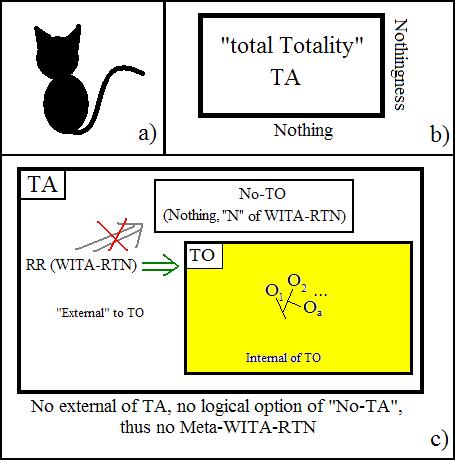
Modern physics is not accidentally relativistic and quantum, or in other words, Einstein-relative as well as Everett-relative (Bell-violating Everett-relativity is the very core of quantum mechanics!). Modern physics becomes ever more relativistic still today, and description relativity has revolutionized fundamental physics (see string theory dualities, Maldacena conjecture, black hole complementarity/holography, and so on). Why? Because we must take the observer’s perspective, and this means the describer’s perspective, ever more into account.
It's a firmly established fact straight from Biology 101: Traits such as eye color and height are passed from one generation to the next through the parents' DNA.
But now, a new study in mice by researchers at Washington University School of Medicine in St. Louis has shown that the DNA of bacteria that live in the body can pass a trait to offspring in a way similar to the parents' own DNA. According to the authors, the discovery means scientists need to consider a significant new factor - the DNA of microbes passed from mother to child - in their efforts to understand how genes influence illness and health.
Caring for offspring is unequal between the sexes in many animal species and a new study suggests evolution is the culprit.
Making babies is one of the fundamental conflicts of interest between the sexes. Care by either partner is beneficial to both partners as it increases the health and survival prospects of the common young, while providing care is costly only to the caring individual. As a result, each partner does best in a situation where most of the care is provided by the other partner--an outcome that is clearly impossible.
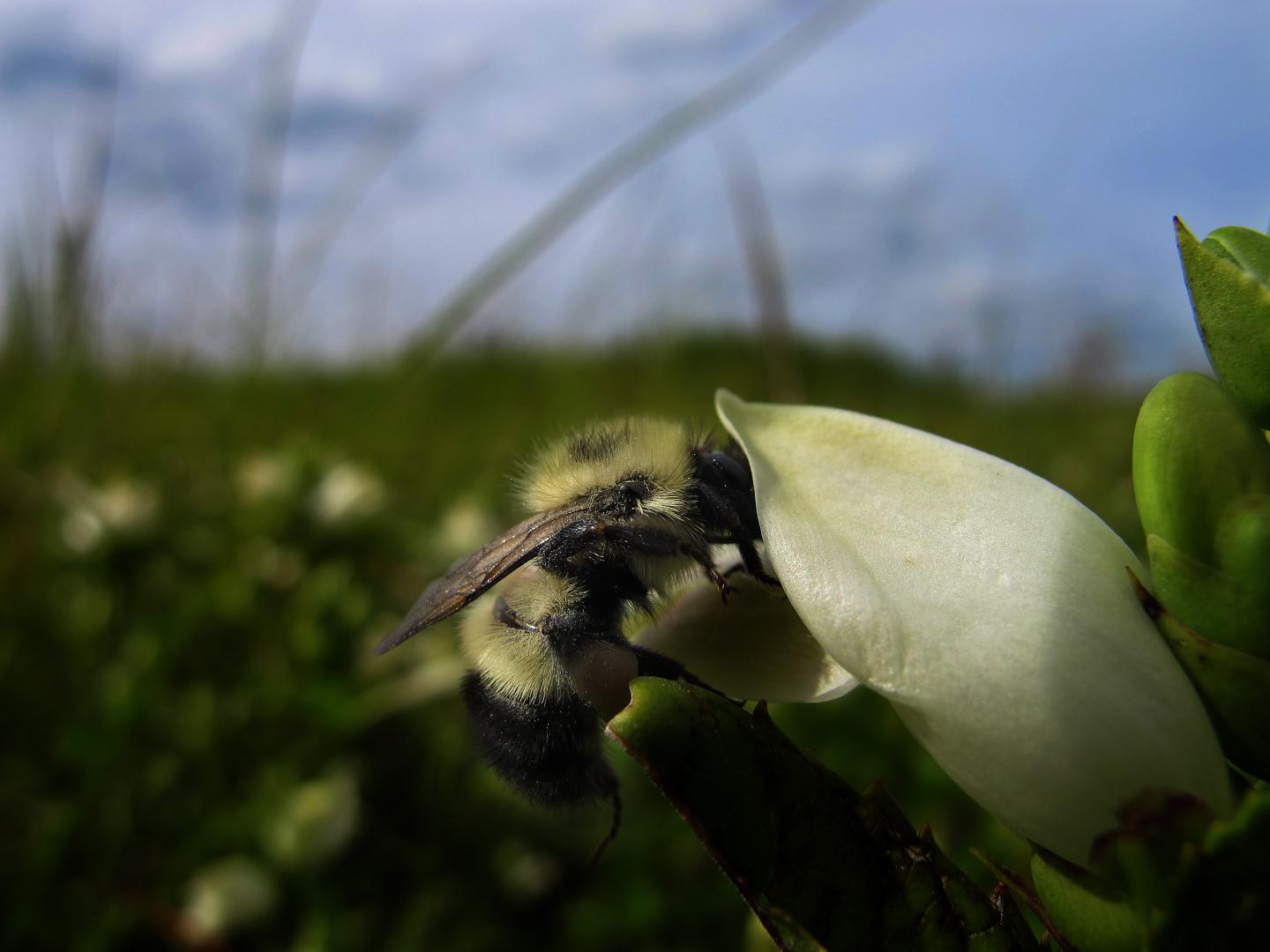
In 2006, there was a large die-off in bees and though their numbers quickly rebounded and have continued upward since, scientists have been looking for ways to make the periodic collapses that occur less dramatic.
The cause the last time it happened was the same plague that bees have endured for as long as science has been able to study them; parasites. But a new study shows that "nature's medicine cabinet" may be able to smooth out those natural booms and busts.
Scientifically engineered tissues intended to repair or regenerate damaged or diseased human tissues require three-dimensional tissue constructs that are densely packed with living cells.
The Bio-P3, an innovative instrument able to pick up, transport, and assemble multi-cellular microtissues to form larger tissue constructs is described in an article in Tissue Engineering, Part C: Methods.
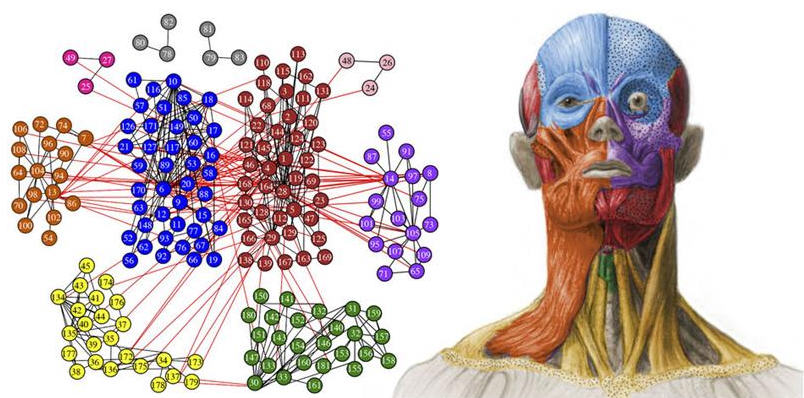
A new mathematical analysis tool can numerically describe the skull as an extended network structured in ten modules.
Anatomical Network Analysis (AnNA) is based on network analysis mathematical tools for studying anatomy and has led to several studies of both the human skeleton and of the rest of terrestrial vertebrates, especially in regard to the development and evolution of the skull.