










Now that Major League Baseball’s regular season has ended with the wild wildcard win by the Kansas City Royals over the Oakland A’s and with the Pittsburgh Pirates being eliminated by the San Francisco Giants, I've once again begun analyzing the probability of each team advancing through each round of baseball’s postseason.

The Los Angeles Dodgers (71%) and the Washington Nationals (68%) have the greatest chance of advancing to the National League Championship Series going into their first Division Series games. The Kansas City Royals (61%) and Baltimore Orioles (64%) after winning the first game of their Division Series have turned themselves from underdogs into favorites.

A new imaging system is capable of obtaining up to twelve times more color information than the human eye and conventional cameras, which implies a total of 36 color channels.

The system involves a new generation of sensors in combination with a matrix of multispectral filters to improve their performance. 

Social network analysis could improve knowledge sharing in the healthcare sector, according to a paper which shows how knowledge management systems (KMS) can be critical in capturing, retaining and communicating project results and staff knowledge. They can prevent knowledge drain and provide training as "lessons learned" following specific occurrences and the resolution of particular problems the staff face.

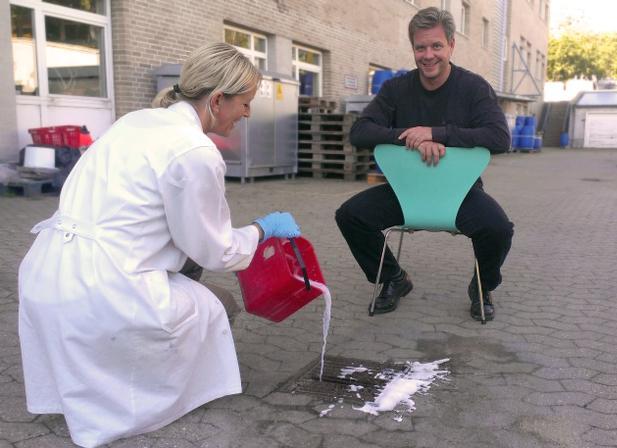
When you take a shower and use soap and then lather, rinse and repeat twice with that shampoo, it gets washed off your body and goes down the drain.

Environmentalists have claimed these soaps and shampoos and washing machine detergents - surfactants - seep into groundwater, lakes and streams, where they could pose a risk to fish and frogs.

But do they? Not likely, finds a new report of the potential impact on the environment of the enormous amounts of common surfactants used day in and day out by consumers all over the world. 


Evidence shows children are getting less unsupervised time outdoors. Credit: Brian Yap (葉)/Flickr, CC BY-NC

By Shelby Gull Laird and Laura McFarland-Piazza


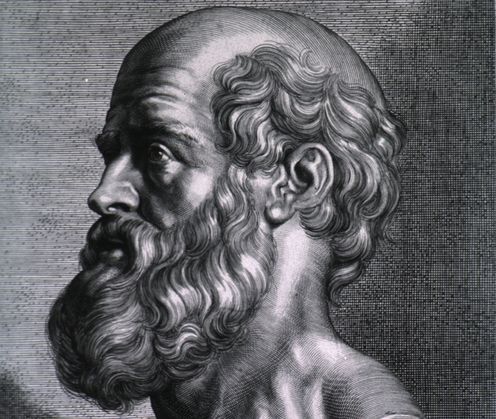
Not the one we have fixed in our imaginations. Peter Paul Rubens, 1638

By Helen King, The Open University

Hippocrates is considered the father of medicine, enemy of superstition, pioneer of rationality and fount of eternal wisdom.

Statues and drawings show him with a furrowed brow, thinking hard about how to heal his patients.

Though it has been researched for decades, the cause of nodding syndrome, a disabling disease affecting African children, is unknown. A new report suggests that blackflies infected with the parasite Onchocerca volvulus may be capable of passing on a secondary pathogen responsible for the spread of the disease. 

Concentrated in South Sudan, Northern Uganda, and Tanzania, nodding syndrome is a debilitating and deadly disease that affects young children between the ages of 5 and 15. When present, the first indication of the disease is an involuntary nodding of the head, followed by epileptic seizures. The condition can cause cognitive deterioration, stunted growth, and in some cases, death.

In third place, Oxford University is the top UK institution in the World University Rankings 2014-15. Image:  Andrew Matthews/PA Archive

By Steven C. Ward, Western Connecticut State University

From the “best beaches” to the “best slice of pizza” to the best hospital to have cardiac surgery in, we are inundated with a seemingly never-ending series of reports ranking everything that can be ranked and even things that probably shouldn’t be.

Look at a fan rotating its blades. Now look somewhat to the side of it. It seems to rotate slower now. Now shift your gaze slowly back toward the center of the fan. The fan seems to pick up speed. There are not just two appearances of its speed, one fast if I stare at it, and one slow if it is in the periphery of my visual field, but instead the fan seems to pick up speed gradually!


Phytosaur: still got it. Credit: BFS Man, CC BY

By Stephanie Drumheller, University of Tennessee; Michelle Stocker, Virginia Tech, and Sterling Nesbitt, Virginia Tech

