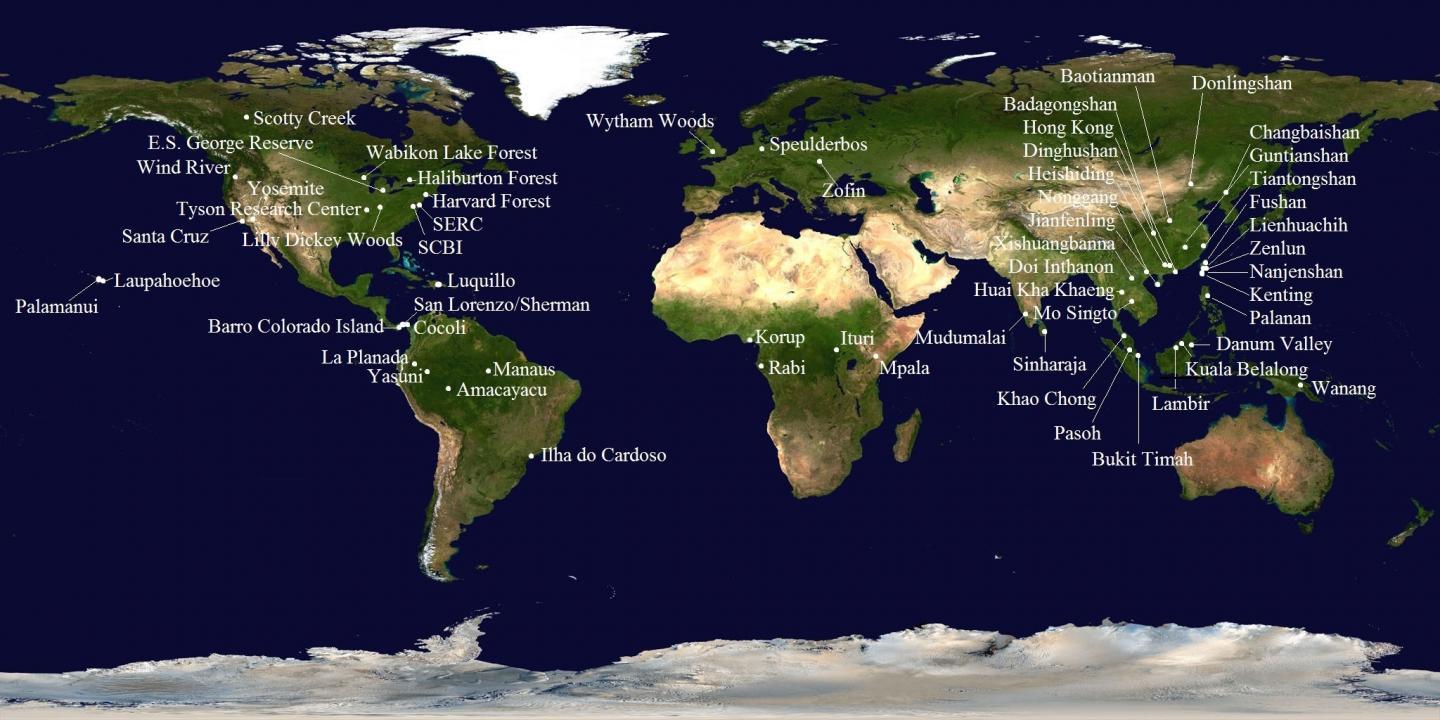





Permafrost thaw kills forests in Canada, while drought kills trees in India and Borneo. In the U.S., in Virginia, over-abundant deer eat trees before they reach maturity, while nitrogen pollution has changed soil chemistry in Panama. 

Continents apart, trees have many similar ways to die. Many of the changes occurring in forests worldwide are attributable to human impacts on climate, atmospheric chemistry, land use and animal populations - no surprise, writing papers lamenting humanity is why many conservation groups exist. And hyperbolic cultural pandering has led to calls for a new geologic period in Earth's history—the Anthropocene, the Age of Humans. 

Tourette syndrome is a developmental disorder characterized by involuntary, repetitive, and stereotyped movements or utterances.

New evidence explains how those with Tourette syndrome in childhood often manage to gain control over those tics.

In individuals with the condition, a portion of the brain involved in planning and executing movements shows an unusual increase compared to the average brain in the production of a primary inhibitory neurotransmitter known as GABA. 

Artifacts from a 325,000-year-old site in Armenia finds that human technological innovation occurred intermittently throughout the Old World, rather than spreading from a single point of origin (usually hypothesized as Africa), as previously thought. 

Electricity and magnetism rule our digital world but they are really 19th century advancements still being optimized in the 21st.

In our current scheme, semiconductors process electrical information while magnetic materials enable long-term data storage but research team has discovered a way to fuse these two distinct properties in a single material.

Scientists have time detected a carbon-bearing molecule with a "branched" structure in interstellar space.

The molecule, iso-propyl cyanide (i-C3H7CN), was discovered in the giant gas cloud Sagittarius B2, a region of ongoing star formation close to the center of our galaxy that is a hot-spot for molecule-hunting astronomers.

If good things come in small packages, then nanoparticles are going to make engineers very happy.

The National Institute of Standards and Technology (NIST) recently issued Reference Material (RM) 8027, the smallest known reference material ever created for validating measurements of these man-made, ultra-fine particles between 1 and 100 nanometers (billionths of a meter) in size.


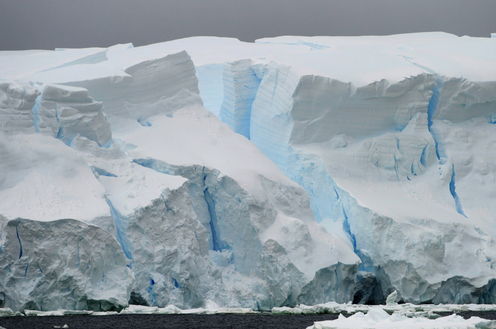
It may already be too late to stop Antarctic ice sliding into the ocean. Credit: EPA

By Eelco Rohling, University of Southampton

Ice sheets respond slowly to changes in climate, because they are so massive that they themselves dominate the climate conditions over and around them. But once they start flowing faster towards the shore and melting into the ocean the process takes centuries to reverse. Ice sheets are nature’s freight trains: tough to start moving, even harder to stop.

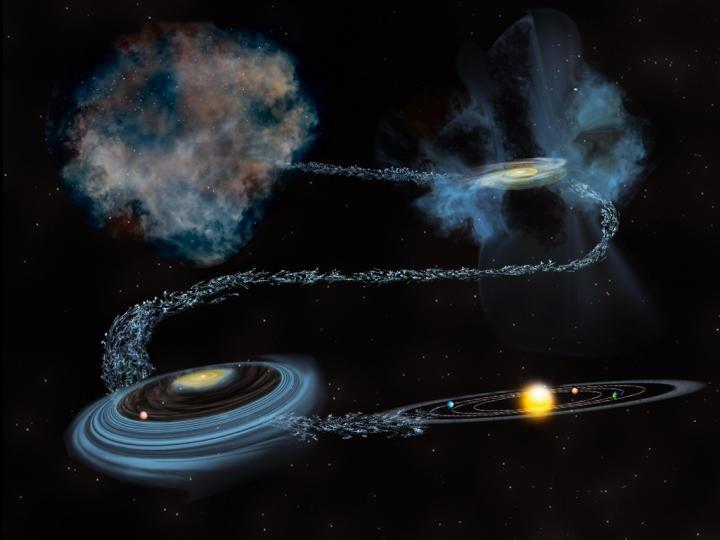
It's no surprise that water was crucial to the formation of life on Earth. What may surprise you is that water on earth is older than the sun itself.

Identifying the original source of Earth's water is key to understanding how life-fostering environments came into being and how likely they are to be found elsewhere. A new paper in Science says that much of our Solar System's water likely originated as ices that formed in interstellar space. Water is found throughout the Solar System, not just on Earth; on icy comets and moons, and in the shadowed basins of Mercury and in mineral samples from meteorites, the Moon, and Mars. 

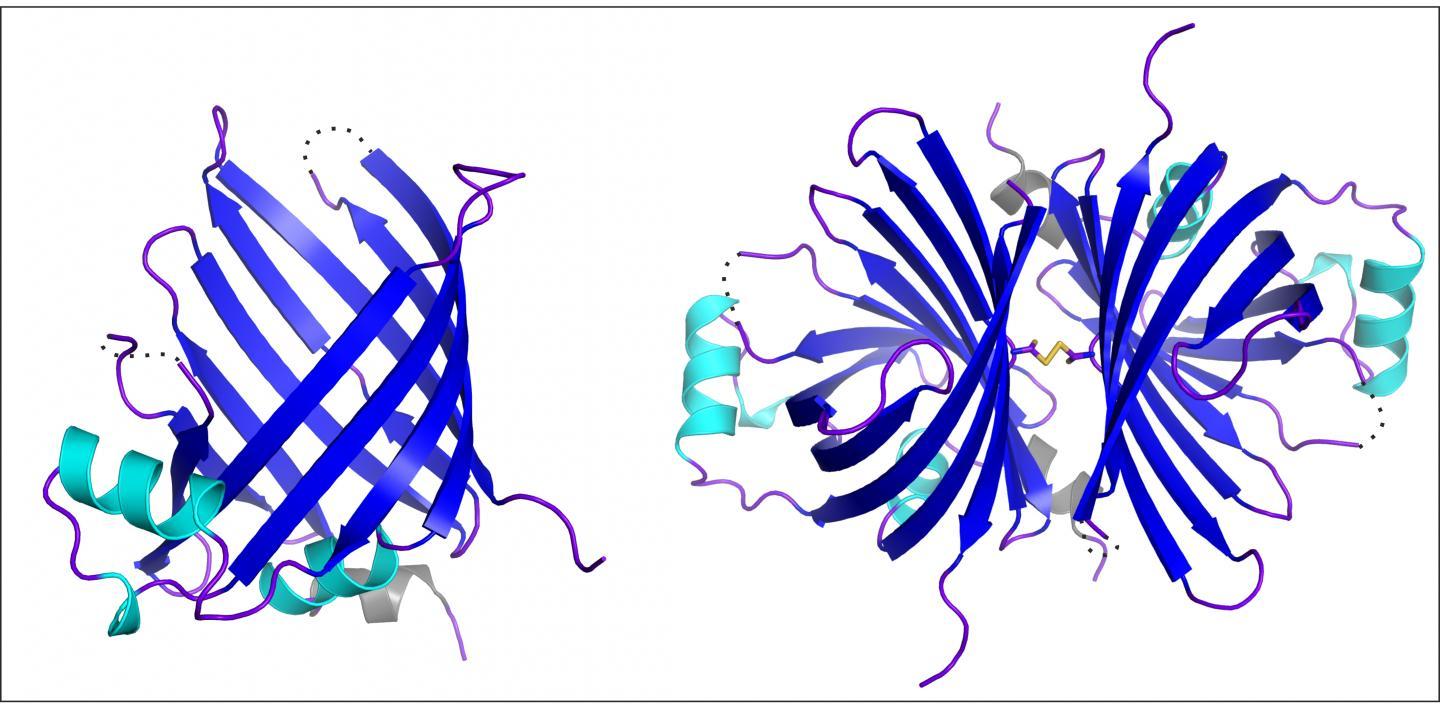
A team of researchers headed by Prof Dr. Nicole Frankenberg-Dinkel at Ruhr-University Bochum have revealed similarities and differences in the assembly of the light-harvesting machinery of the cryptophyte Guillardia theta compared to cyanobacteria and red algae.

Cryptophytes: Matryoshka dolls of the waters

Melatonin, a hormone that governs sleep and jet lag in humans, may also drive the mass migration of plankton in the ocean, according to a report by scientists at the European Molecular Biology Laboratory (EMBL) in Heidelberg. 

Melatonin, is essential to maintain our daily rhythm, and the scientists have now discovered that it governs the nightly migration of a plankton species from the surface to deeper waters. The findings, published online today in Cell, indicate that melatonin's role in controlling daily rhythms probably evolved early in the history of animals, and hold hints to how our sleep patterns may have evolved.


