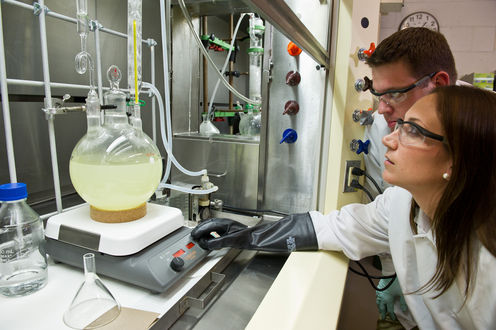





US Army scientists analyze unknown samples to determine whether hazardous. That's typical of research trying to understand the unknowns and expand on our knowledge. Credit: Flickr/US Army RDECOM, CC BY

By Tim Dean

UNDERSTANDING RESEARCH: What do we actually mean by research and how does it help inform our understanding of things? We begin today by looking at the origins of research.

In a global warming scenario, large areas of sea ice melt in the summer and when sea ice freezes over in the winter it is thinner and more reduced.

But warmer Arctic summers could lead to an acceleration of global warming, because reduced sea ice in the Arctic will remove less CO2 from the atmosphere, Danish scientists report.

"If our results are representative, then sea ice plays a greater role than expected, and we should take this into account in future global CO2 budgets", says Dorte Haubjerg Søgaard, PhD Fellow, Nordic Center for Earth Evolution, University of Southern Denmark and the Greenland Institute of Natural Resources, Nuuk.

A person's face is the first thing that others see, and much remains unknown about how it forms — or malforms — during early development. Recently, Chong Pyo Choe, a senior postdoctoral fellow working in the lab of USC stem cell researcher Gage Crump, has begun to unwind these mysteries.

In a September study published in the journal Development, Choe and Crump describe how a mutation in a gene called TBX1 causes the facial and other deformities associated with DiGeorge syndrome.


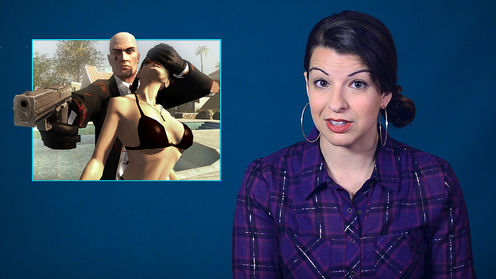
Sarkeesian has been the focus of much online hatred since she started her website Feminist Frequency in 2009. Credit: Anita Sarkeesian

By Jessamy Gleeson, Swinburne University of Technology

Three weeks ago, well-known feminist gaming critic Anita Sarkeesian was forced to leave her San Francisco home due to an ongoing tirade of abuse and threats. Members of a vocal minority of online trolls had threatened to kill her parents, drink her blood, and rape her – all while publishing her personal details online.

Last Friday Samuel Ting, the winner of the 1975 Nobel prize in Physics for the co-discovery of the J/ψ particle, gave a seminar in the packed CERN main auditorium on the latest results from AMS, the Alpha Magnetic Spectrometer installed on the international space station.

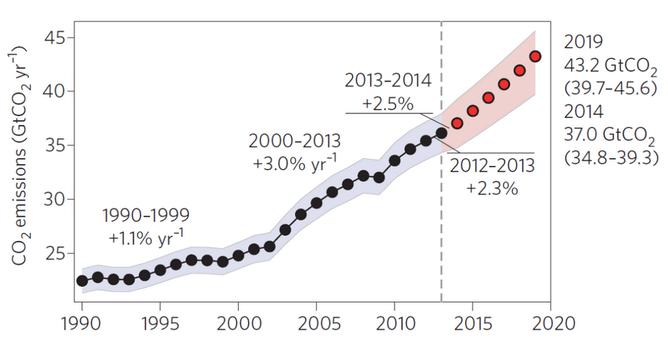
Carbon dioxide emissions, the greenhouse gas that has been most strongly implicated in global warming, will reach a record high of 40 billion tons.

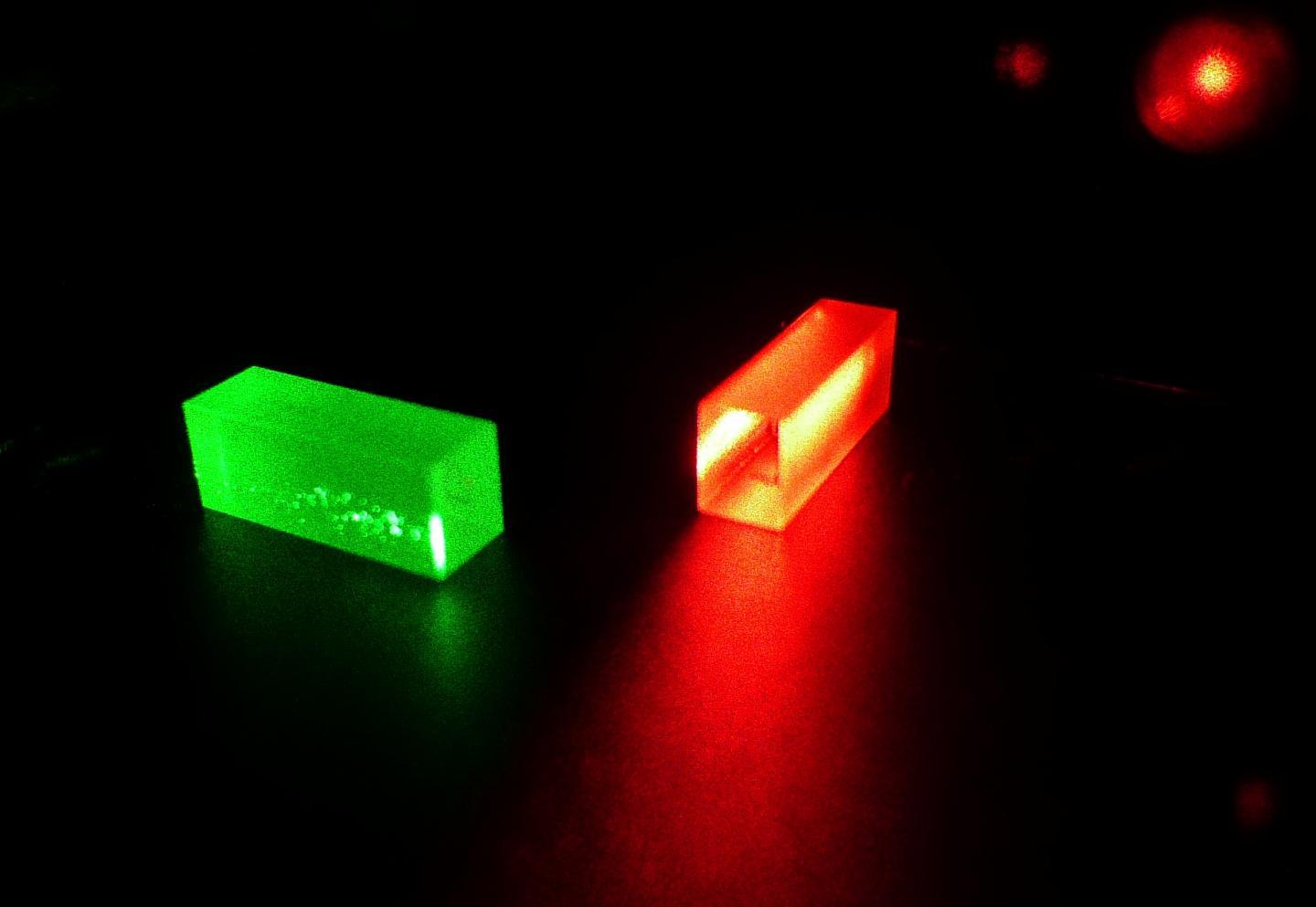
Physicists at the University of Geneva have succeeded in teleporting the quantum state of a photon to a crystal over 25 kilometers of optical fiber.

The experiment shatters the previous record of 6 kilometers achieved 10 years ago by the same  team. Passing from light into matter, using teleportation of a photon to a crystal, shows that, in quantum physics, it is not the composition of a particle which is important, but rather its state, since this can exist and persist outside such extreme differences as those which distinguish light from matter.

The latest experiments have enabled verifying that the quantum state of a photon can be maintained whilst transporting it into a crystal without the two coming directly into contact.


Global carbon dioxide emissions from fossil fuel and cement production. Source: CDIAC, Friedlingstein et al. 2014, Global Carbon Project 2014

By Pep Canadell, CSIRO and Michael Raupach, Australian National University

Breast cancer experts around the world have issued a plea to researchers, academics, drug companies, funders and advocates to carry out high quality research and clinical trials for advanced breast cancer, a disease which is almost always fatal and for which there are many unanswered questions.

In the latest international consensus guidelines for the management of advanced breast cancer, published simultaneously in the leading cancer journals The Breast and Annals of Oncology [1] today (Friday), the experts say that further research and clinical trials are "urgently needed" to find the best treatments for:

  • patients with breast cancer that has spread to the liver, or the space around the lungs (pleural cavity) or the skin;


