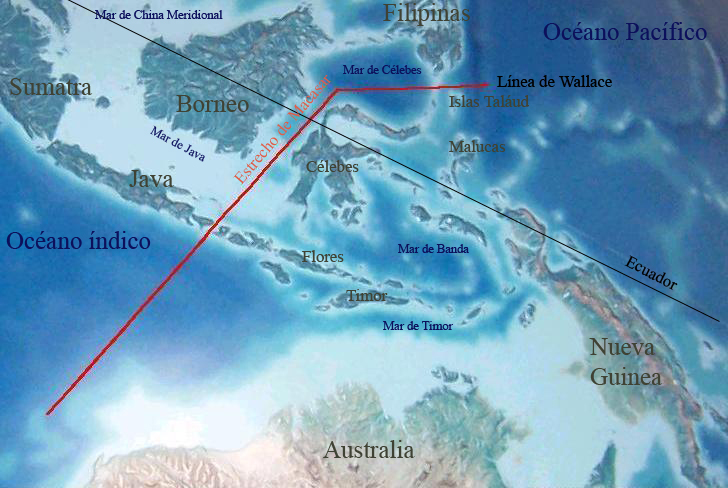
The Wallace Line is called such because when Alfred Russel Wallace made his way to the East Indies to tackle the secrets of biology, he found there was a 'line' in the Malay Archipelago that divides Indonesia into two parts and west of it the species were Asian while to the east they were more Australian.
Since the distance is short in places, Bali and Lombok are only about 35 km apart, it was a prime example of species distinction and biogeography and he wrote on it in The Malay Archipelago.
The abrupt switch in the kinds of mammals found along the Malay Peninsula, from mainland species to island species, in the absence of any daunting geographical barrier has fascinated scientists since then.
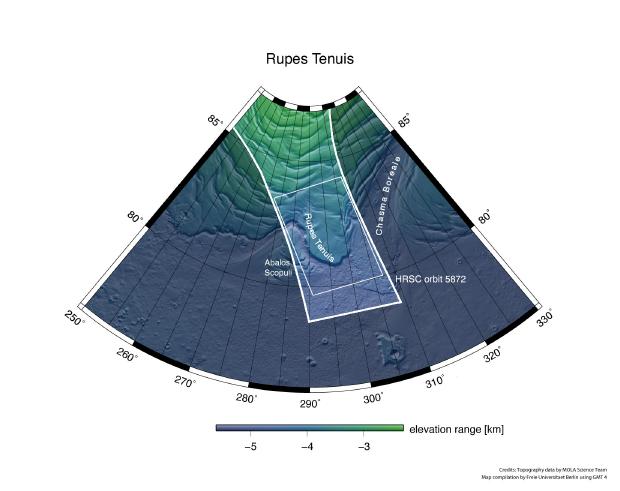
The snow-laden region of Rupes Tenuis on the martian north pole got some images courtesy of ESA’s Mars Express orbiter. The images are centred around 81° north and 297° east and have a ground resolution of 41 m/pixel. They cover an area of about 44 000 km2, almost as large as the Netherlands.
Rupes Tenuis is located at the southern edge of the martian north polar cap, approximately 5500 km northeast of the Tharsis volcanic region.
At present, polar caps contain the largest water reservoir on the Red Planet. Recent data from the Mars Advanced Radar for Subsurface and Ionosphere Sounding (MARSIS) on board Mars Express has revealed that both polar ice caps are 3.5 km thick.
Artemisinin is the most powerful anti-malaria drug in use today and it commonly obtained by extracting the drug from Artemsisia annua, the sweet wormwood tree.
When threatened, many animals release chemicals as a warning signal to members of their own species, who in turn react to the signals and take action. Research by Rice University psychologist Denise Chen suggests a similar phenomenon occurs in humans. Given that more than one sense is typically involved when humans perceive information, Chen studied whether the smell of fear facilitates humans' other stronger senses.
Chen and graduate student Wen Zhou collected "fearful sweat" samples from male volunteers. The volunteers kept gauze pads in their armpits while they were shown films that dealt with topics known to inspire fear.
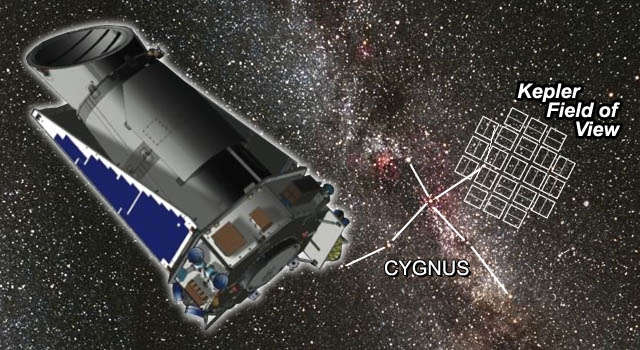
The Kepler spacecraft and its Delta II rocket have been cleared to launch into space at 10:49 p.m. EST Friday night. Its mission; watch a patch of space (see image below) for the next 3.5 years and look for signs of Earth-sized planets moving around stars similar to the sun. The area that Kepler will watch contains around 100,000 stars like the sun and Kepler will look for slight dimming in the stars as planets pass between the star and Kepler. Unlike observatories like Hubble, Kepler will be able to watch the same stars constantly throughout its mission.
Here are 5 quick facts, courtesy of JPL:
According to researchers at University of Florida Proton Therapy Institute, they have progressed the way that we can treat cancerous tumors using advanced proton therapy.
By developing a new way in which protons are delivered, physicians may be able to treat more deeply rooted tumors, larger tumors and tumors located close to vital internal organs. All of these placements have posed serious problems to tumor treatments in the past, as current treatments pose a significant risk to the surrounding body tissue as well as the intruding tumor.
Not only have horses been domesticated longer than we thought but they were also milked, says an article in Science.
The researchers have traced the origins of horse domestication back to the Botai Culture of Kazakhstan circa 5,500 years ago, about 1,000 years earlier than thought and about 2,000 years earlier than domestic horses are known to have been in Europe. Their findings strongly suggest that horses were originally domesticated, not just for riding, but also to provide food, including milk.
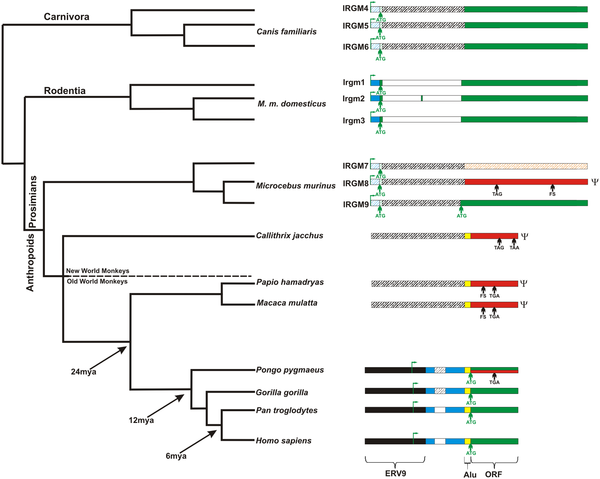
Researchers have discovered that a long-defunct gene was resurrected during the course of human evolution. This is believed to be the first evidence of a doomed gene – infection-fighting human IRGM – making a comeback in the human/great ape lineage.
The truncated IRGM gene is one of only two genes of its type remaining in humans. The genes are Immune-Related GTPases, a kind of gene that helps mammals resist germs like tuberculosis and salmonella that try to invade cells. Unlike humans, most other mammals have several genes of this type. Mice, for example, have 21 Immune-Related GTPases. Medical interest in this gene ignited recently, when scientists associated specific IRGM mutations with the risk of Crohn's disease, an inflammatory digestive disorder.
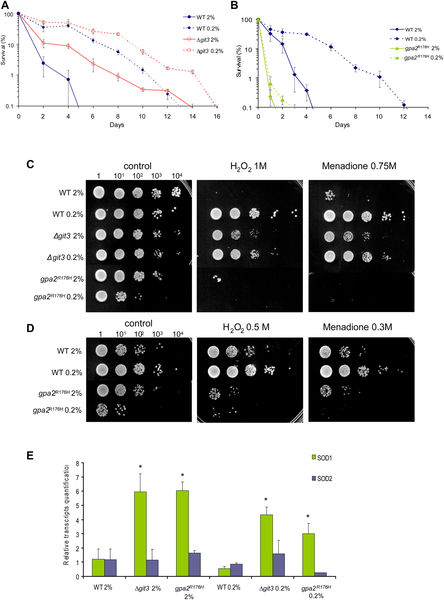
We know that lifespan can be extended in some animals by restricting calories such as sugar intake shortly after birth. Université de Montréal scientists now say that it's not sugar itself that is important in this process but the ability of cells to sense its presence.
Aging is a complex phenomenon and the mechanisms underlying aging are yet to be explained. What researchers do know is that there is a clear relationship between aging and calorie intake. For example, mice fed with half the calories they usually eat can live 40 percent longer. How does this work?
Dual catalysts may be the key to efficiently turning carbon dioxide and water vapor into methane and other hydrocarbons using titania nanotubes and solar power, according to Penn State researchers.
Burning fossil fuels like oil, gas and coal release large amounts of carbon dioxide, a greenhouse gas, into the atmosphere. Rather than contribute to global climate change, producers could convert carbon dioxide to a wide variety of hydrocarbons, but this makes sense to do only when using solar energy.