




Recently, more than 100 cosmologists, particle physicists and observational astrophysicists at least agreed that dark matter is important. Of course, you are not getting invited to a colloquium on dark matter sponsored by the University of Chicago and the National Academy of Sciences unless you have something positive to say about how close we are to detecting it.  

So where do things stand?

Archaeologist William Mills found a treasure-trove of carved stone pipes in southern Ohio a century ago - buried almost 2,000 years earlier.

The Native American site became famous as Tremper Mound. Mills said the pipes had been carved from local stone and that has been accepted to this day. 

But a new analysis spanning nearly a decade tested the stone pipes and pipestone from quarries across the upper Midwest, and concluded that those who buried the pipes in Tremper Mound got most of their pipestone, and perhaps even the finished, carved pipes, from Illinois.

While the overall population of Greece benefits from government services and doesn't want those to change, the people who pay the most also evade the most, says a paper.  If their estimates are accurate, at a tax rate of 40 percent the 28 billion Euros in unreported taxable income could be responsible for up to one-third of Greece's deficit in 2009 or almost 50 percent of the deficit in 2008, according to bank data on household borrowing, which finds that highly paid, highly educated professionals are at the forefront of tax evasion in Greece: doctors, engineers, accountants and lawyers. 

Mandating equality is difficult. 

Synchrotron-based imaging techniques of a 50 million-year-old lizard skin have identified the presence of teeth which are invisible to visible light, demonstrating for the first time that this fossil animal was more than just a skin moult. 

Researchers used Synchrotron Rapid Screening X-ray Fluorescence at the Stanford Synchrotron Radiation Lightsource in California to map the chemical make up of a rare fossil lizard skin - powerful x-rays enabled the team to map the presence of phosphorus from teeth in this ancient reptile.

The process involved in the formation of sperm cells involves symmetry, the equal chance that a mammalian egg will be fertilized by "male" sperm, carrying a Y chromosome or a "female" sperm, carrying an X chromosome, and that symmetry means that roughly the same number of males and females are born, which is necessary for the long-term survival of a species.

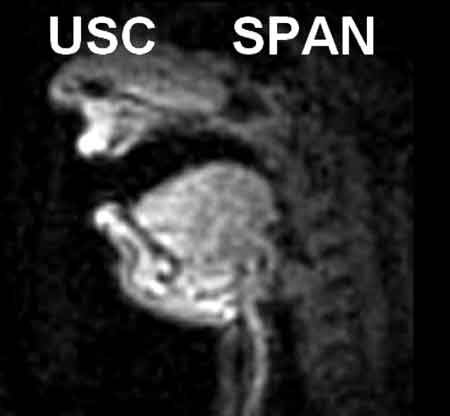
The first scientific study to employ real-time magnetic resonance imaging  (RT) MRI to obtain midsagittal vocal tract sequential image data from a total of 5 soprano singers was published in the Journal of the Acoustical Society of America, November 2010 (Express Letters pp. EL335-EL341)

A study in BMJ's Christmas issue, which spares no effort in its annual attempt to see who in science media rewrites press releases without even reading them, has determined why Rudolph, the famous extra reindeer of Santa we will not show here due to little desire to pay royalties, has a red nose.

Rudolph's nose is red because it is richly supplied with red blood cells which help to protect it from freezing and to regulate brain temperature. This superior "nasal microcirculation" is essential for pulling Santa Claus's sleigh under extreme temperatures, says the BMJ study.

A future without fossil fuels is ideal but impractical in the short term. 

However, for people not afraid of science, a PNAS paper showing that synthetic biology can be used to manipulate hydrocarbon chemicals, found in soaps and shampoos, in cells is some welcome news. This could mean fuel for cars or household power created from naturally-occurring fatty acids. Fossil fuels even more organic than current fossil fuels. Delightful!

The parasite Toxoplasma gondii (T. gondii) is one of the major causes of food-borne diseases but new insights into how the immune system combats T. gondii could lead to the development of long-sought vaccines. 

To fight off pathogens, the immune system relies on Toll-like receptors (TLRs), a class of proteins that recognize microbes and activate immune responses. The important role of TLR11 in recognizing the T. gondii infection was previously demonstrated by a team led by Sankar Ghosh of Columbia University and Alan Sher of the National Institute of Allergy and Infectious Diseases. But scientists had not yet identified any TLRs, including TLR11, that could promote survival in infected animals. 

A new paper detailing research from the rainforests of Panama provides an unprecedented level of detail regarding the diversity and distribution of arthropod species from the soil to the forest canopy - the authors estimate that a 6,000 hectare forest hosts a total of around 25,000 arthropod species, a figure vastly outnumbering that of better-studied organisms.

