



In High-Energy Physics the small p-value of an observation may be the first hint of a discovery about to be made. Here by p-value I just mean the probability, just to be fancy (or brief). Because we rely on the assessment of the rarity of observations to decide whether we have discovered something or not, we physicists are (or should be) really careful with p-values. Today's article aims at demonstrating how easy it is to be carried away into giving more relevance to an observation than we should.

Smoke from Arctic wildfires have been drifting over the Greenland ice sheet, tarnishing the ice with soot and making it more likely to melt under the sun, according to satellite observations.

NASA's Cloud-Aerosol Lidar and Infrared Pathfinder Satellite Observation (CALIPSO) satellite captured smoke from Arctic fires billowing out over Greenland during the summer of 2012. Researchers have long been concerned with how the Greenland landscape is losing its sparkly reflective quality as temperatures rise. The surface is darkening as ice melts away, and, since dark surfaces are less reflective than light ones, the surface captures more heat, which leads to stronger and more prolonged melting.

Rather than just a single sense of location, the brain has a number of "modules" dedicated to self-location. Each module contains its own internal GPS-like mapping system that keeps track of movement, and has other characteristics that also distinguishes one from another.

How many different sense of location?  It's unclear.  At least four and perhaps as many as 10, according to  new research from the Kavli Institute for Systems Neuroscience, at the Norwegian University of Science and Technology.  They say this is also the first time that researchers have been able to show that a part of the brain that does not directly respond to sensory input, called the association cortex, is organized into modules. The research was conducted using rats. 

New cells develop in the heart but how these cardiac cells are born and how frequently they are generated remains unclear. New research from Brigham and Women's Hospital used a novel method to identify these new heart cells and describe their origins - a Multi-isotope Imaging Mass Spectrometry (MIMS) imaging system that demonstrates cell division in the adult mammalian heart. 

The universe has always had some trace of heavy elements, such as carbon and oxygen, for as far back as astronomers could 'see'. These elements, originally churned from the explosion of massive stars, formed the building blocks for planetary bodies and eventually for life on Earth.

No more, say researchers who  analyzed light from the most distant known quasar, ULAS
J112010641, a galactic nucleus more than 13 billion light-years from Earth, and found matter with no discernible trace of heavy elements. 

Cycling is safer than driving for young British males ages 17 to 20 - driving brings an almost five times greater risk per hour of an accident than cyclists of the same age.

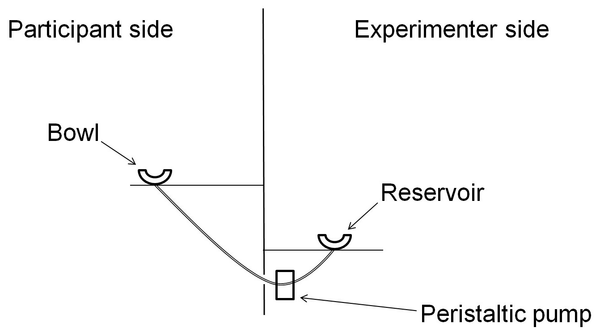
If your pockets are empty and you have no money for roast beast this Christmas, there may still be hope. You could try remembering a better dinner and trick your brain into feeling full. That's episodic memory.

The memory of having eaten a large meal can make people feel less hungry hours after the meal, according to a paper by experimental psychologists at University of Bristol.

What Charles Darwin famously called "an abominable mystery", the apparent sudden appearance and rapid spread of flowering plants in the fossil record, is the topic of a paper which proposes new evidence that flowering plants - angiosperms - evolved and colonized various types of aquatic environments over about 45 million years in the early to middle Cretaceous Period.

Modern-day gypsies,  Europe's widespread Romani population, are now as diverse in language, lifestyle, and religion as any demographic but they all share a common past.

And that past started about 1,500 years ago  in northwestern India, according to the first genome-wide perspective on Romani origins and demographic history. With

If you want to go on a quest for solving the mysteries of deafness, discovering the genetic machinery in the inner ear that responds to sound waves and converts them into electrical impulses, the language of the brain, is your holy grail.

Scientists at The Scripps Research Institute (TSRI) say have identified just such a chalice; a critical component of this ear-to-brain conversion is the protein called TMHS. This protein is a component of the mechanotransduction channels in the ear, which convert the signals from mechanical sound waves into electrical impulses transmitted to the nervous system.

