




The latest issue of Philosophy Now features an interesting collection of articles on human enhancement, with articles arguing that the approach is “essential” to humans in order to avoid catastrophes, that it can be used to extend youthfulness, and so on. There are also a couple of essays that are more cautious about the likely success, and even perils, of enhancement, so the full package (five entries) makes for stimulating reading.
Playing God

Playing God

Jul 29 2012 | comment(s)

I recently came across an article entitled "Synthetic biology: 'playing God' is vital if we are to create a better future for all".  

As you can imagine, the article itself is primarily focused on the advance of science and the counter-arguments that are often viewed as being "anti-science".  Many of the comments support this view by arguing that we have been "playing God" since we domesticated the first animal, or planted the first food plant (1).

One of the primary issues is what this phrase of "playing God", actually means and the article addresses that point (2).
Having cancer takes a toll on the body but the emotional strains are considerable. The stresses of undergoing treatment, along with the impact it has on relationships with family and friends, can be overwhelming and it's common for people with cancer to need help learning how to cope with the many emotions that emerge after receiving a diagnosis. 

When someone is in the middle of a grueling treatment regimen and still trying to mentally process the fact that they have cancer, it can be hard to feel as if anyone understands what they are going through. Toward that, the National Cancer Institute has created easy-to-understand information about ways to cope with cancer.

Here are some web-based "Coping with Cancer" resources that may be of interest:

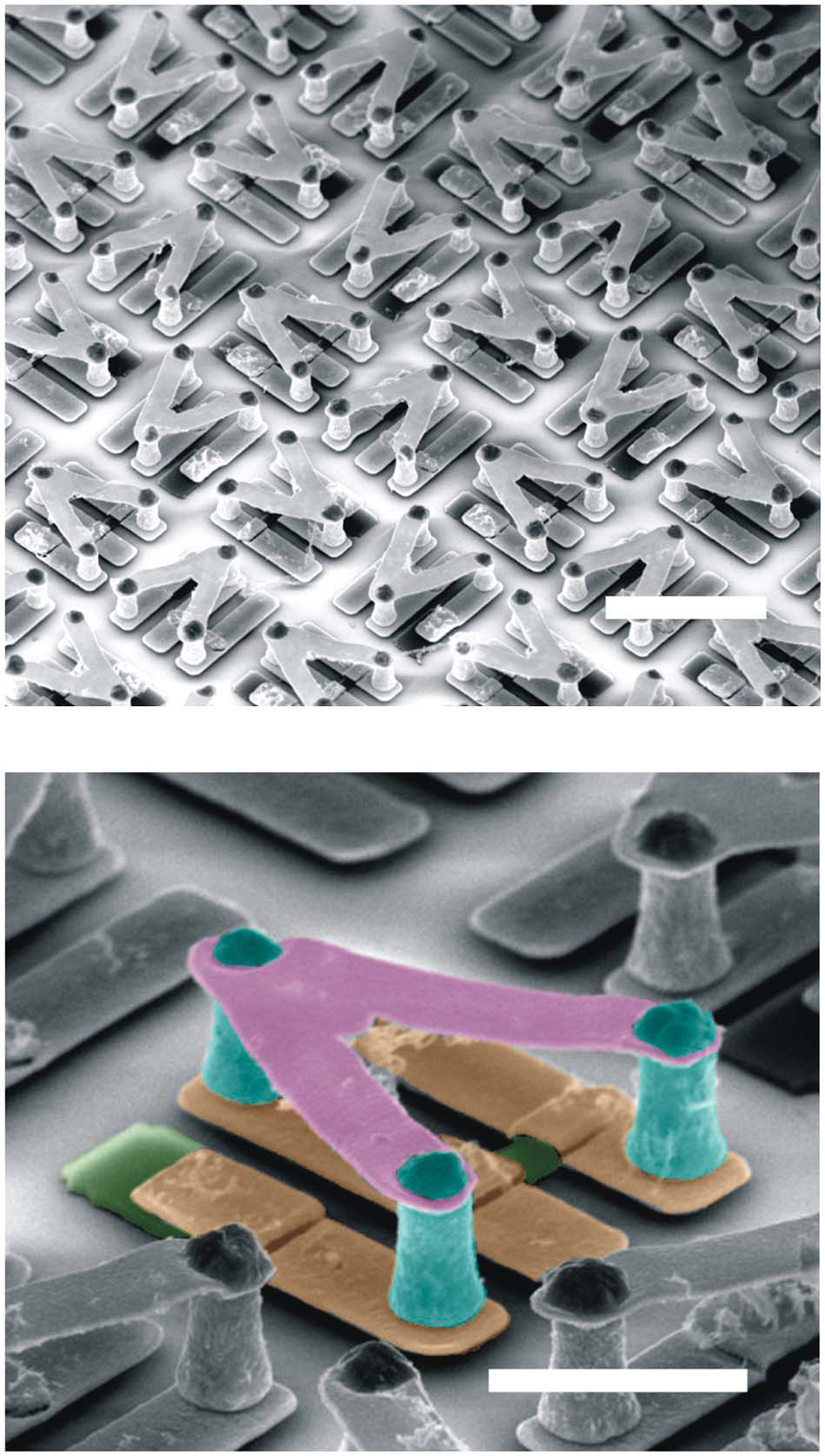
Researchers have created the first artificial molecules whose chirality can be rapidly switched from a right-handed to a left-handed orientation with a beam of light. 

Chirality is the distinct left/right orientation or “handedness” of some types of molecules, meaning the molecule can take one of two mirror image forms. The right-handed and left-handed forms of such molecule are called “enantiomers” and can exhibit strikingly different properties. One enantiomer of the chiral molecule limonene smells of lemon, the other smells of orange. The ability to observe or even switch the chirality of molecules using terahertz (trillion-cycles-per-second) electromagnetic radiation is a much coveted asset in the world of high technology.
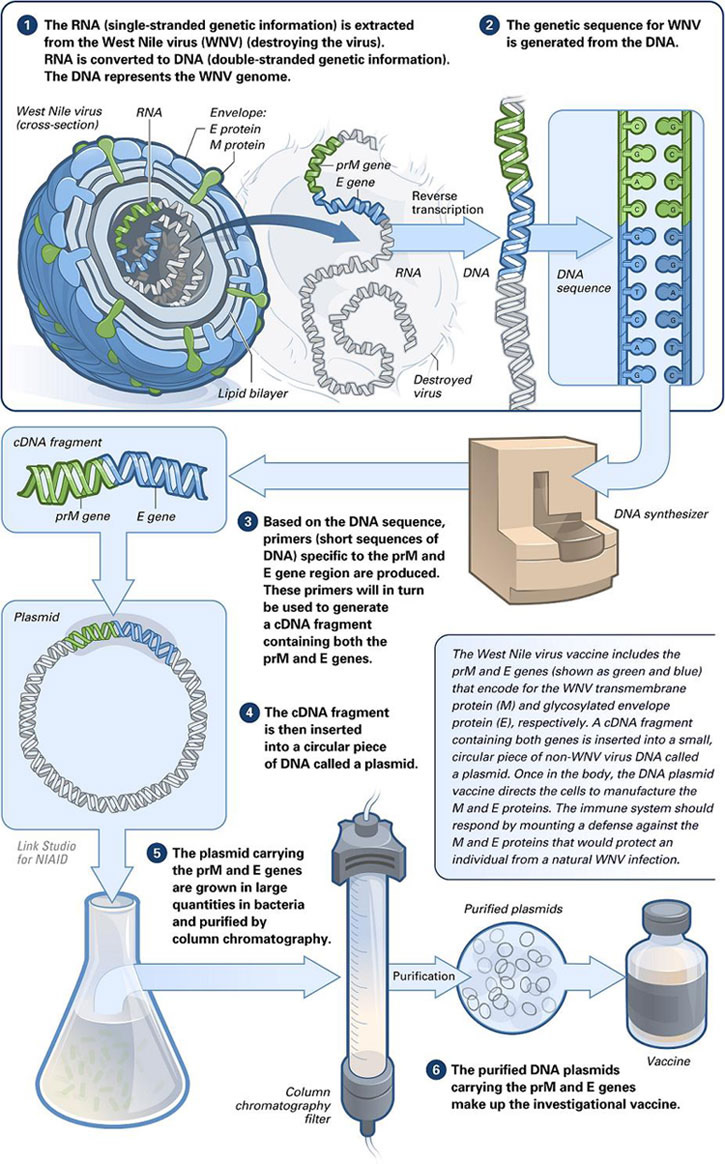
Right now, we protect people and animals against diseases by inoculating them with vaccines based on real infectious agents - but that brings risk of reinfection and the expense of cultivating and handling deadly viruses and bacteria.

The future may mean DNA vaccines, basically cutting out the biological middleman. 

If the odds are in your favor, why not bet some money? There have been plenty of high profile bets in physics. Bets spice up stuff. Moreover: If nobody is willing to take your offer, they effectively publicly admit defeat.


If Laplace believes in a deterministic, classical universe, if he believes to have a method to use his knowledge to force a certain outcome, he is not only consistent when he bets his first born on that outcome. His bet could prove something about nature!


Dick knows that Brian will lose a certain bet with 99% probability, because that is what quantum mechanics tells. Dick proposes a bet, but can this bet prove anything?

One of the things I emphasize to my students in composition classes is that claims require evidence. All claims in a paper should be backed by evidence. Not simply stated and assumed true. Not propped up by fallacies. Backed by evidence.

ThromboGenics NV , a biopharmaceutical company focused on developing ophthalmic medicines, today announced that the US Food and Drug Administration (FDA) Dermatologic and Ophthalmic Drugs Advisory Committee has recommended that the FDA grant ocriplasmin approval for the treatment of symptomatic Vitreomacular Adhesion (VMA).

The communication of science to the general public is a subject dear to me, but unfortunately one that the majority of my colleagues neglect to consider as one to which to devote time and efforts.

In the last decade blogs have started to fill the huge gap that exists between scientific journals and general news media, a gap that no popularization magazine can bridge, given their restricted scope. More recently, I see efforts that employ video and graphics more heavily than before, and this is of course a step in the right direction - reading is harder, or at least less immediate, than watching an image or following a video clip.
Last night I had a sappy mama dream about holding and nursing my baby. Half-waking from it, I found myself wondering if the baby--scheduled to remain comfortably ensconced in my womb for another four months--might have had the same dream.


