A train is heading toward five people who can't escape its path and only you are close enough to do anything. You can reroute the train onto different tracks with only one person along that route.
Would you do it?
A team of Michigan State University researchers recently put participants in a 3-D setting and gave them the power to kill one person (in this case, a realistic digital character) to save five. The results of the moral dilemma? About what you would expect. 90 percent of the participants pulled a switch to reroute the boxcar, affirming that people are okay to take a direct hand in killing someone if it saves a lot more, even if they are against killing people.
Last week I wrote a somewhat half-baked post describing simple numbers that parents can use to pick an elementary school (the first and second were solid!). This week, I called around to get experts’ take on the topic. Here’s what they said.
I just ask. If I look at a glowing something with an antenna, I will not get any signal, I think. This is, I believe, because the radiation comes as photons, more or less, because it is a result of thermal motion. Each of the myriads of electrons in the glowing material moves independently and each emits the energy as a photon. The antennas can not see photons. They can see only electromagnetic waves.
Often when reading about cutting edge physics and the amazing feats of the Large Hadron Collider, we are treated to crazy scenarios involving “virtual particles”, also variously referred to as “ghost particles” or worse. These labels clearly distinguish the involved concepts from "real particles" like atoms. Not being bound by restrictions of reality, virtual particles “borrow” energy from nothing, go faster than light, travel back in time, do an infinite amount of loops creating an infinity of other virtual particles during every single infinitesimal moment.
What's the one thing that could make anti-science progressives dislike genetic modifications and medicine even more than they do now? Putting them both together.
It's Valentine's Day and the wonders of nature are getting in on the act. Luckily, ESA was there to capture the memories.
Here, for your enjoyment, are the numerous ways the cosmos and the Earth hearts you. If you want to see their slideshow with music, go here. If you want all of the science of Valentine's Day, go here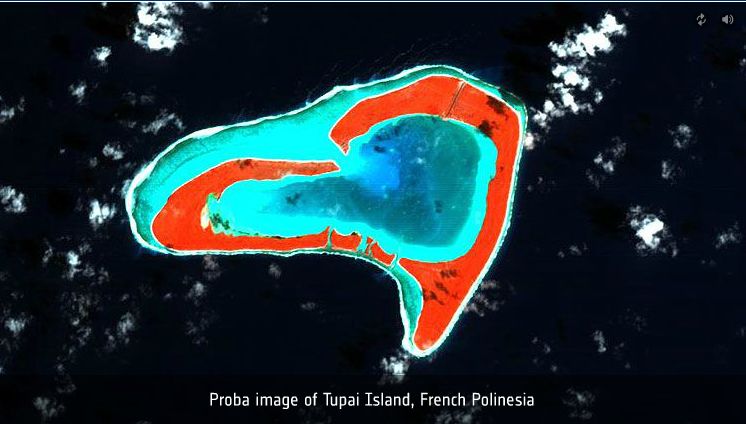
In August of 2011, Hurricane Irene hit the Caribbean and and then traveled up parts of the eastern United States, bringing widespread wreckage in some places and, thanks to threatening midtown Manhattan, even more media coverage. The Category 3 storm whipped up water levels, generating storm surges that swept over seawalls and flooded seaside and inland communities. Some hurricane analysts suggested that Irene was a “100-year event”: a storm that only comes around once in a century.
A note to bird flu virologists: Not all of you have been approaching of this whole
engineered flu pandemic controversy quite optimally. It’s understandable that you weren’t prepared for all the attention. After all, you were only answering calls from both the
NIH and
World Health Organization to better understand the deadly H5N1 bird flu.
There's a joke that goes when a man gets married, his wife changes everything about him and then complains he's not the man she married.
While it isn't entirely true, the sentiment goes both ways. So if your significant other makes a romantic effort this Valentine's Day, give them some credit for trying instead of remembering all the ways they have let you down.
A new Northwestern University survey/study says that the more you believe your partner is capable of change and perceive that he or she is trying to improve, the more secure and happy you will feel in your relationship. That is true even if you think your partner could still do more to be a better partner.
A Cedars-Sinai Heart Institute clinical trial showed that treating heart attack patients with an infusion of their own heart-derived cells helps damaged hearts re-grow healthy muscle. Patients who underwent the stem cell procedure demonstrated a significant reduction in the size of the scar left on the heart muscle by a heart attack. Patients also experienced a sizable increase in healthy heart muscle following the experimental stem cell treatments.












