


Planet Earth: Extreme Beauty – Extreme Danger

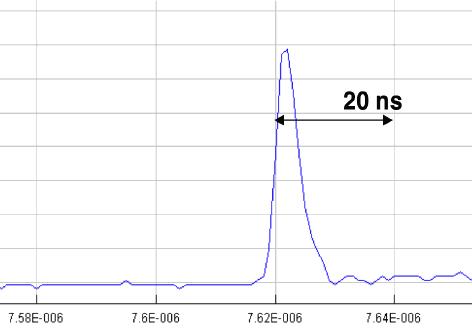
Fresh results from the OPERA collaboration once more confirm the faster than light neutrinos indicated by MINOS. The new findings, available here, also further strengthen a particular scenario: The neutrinos do not travel with superluminal velocity all the way. They only ‘jump’ a small initial distance shorter than 20 meters, after which they settle back and travel as usual with speeds below that of the speed of light. This initial jump would occur at speeds that are more than ten times the speed of light, perhaps even millions of times the speed of light.

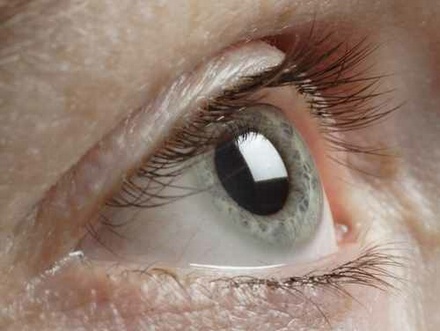
One of the biggest difficulties in understanding and acceptance of evolutionary biology is the eye.  It isn't just detractors who are trying to protect a sectarian viewpoint, it is genuinely curious people, smart people, who don't get it because it isn't easy. Science is difficult and, inside science, evolution is difficult. We've even had prominent biologists here submit the idea that perhaps, given its difficulty, evolution might be better reserved for college students, the same way quantum mechanics is reserved in physics and surgery is reserved for actual doctors even though high school students learn anatomy.
UPDATE: some technical considerations on the measurement are available in a followup post I wrote after attending a seminar on the new result today. In particular, one startling consideration emerges - if the reading of the 20 MHz Opera clock were off by just one tick, the result would be compatible with v=c.

UPDATE: you can download the new Opera paper at this link. You will need to use the username and password "neuvel".

Sheesh, it isn't even Thanksgiving but companies are already advertising Top Ten Lists?  When will it end? 

There are still 37 shopping days until Christmas but The Sunday Times already has its top ten gadgets of 2011 list up. Compiled by their technology panel, the results will also be featured in the inaugural Tech List supplement within the main newspaper this weekend. To coincide with the launch, consumer research was conducted looking at gadget and technology trends together with spending plans this Christmas. 

A group of researchers has created a model they say can identify and predict how multiple relationships form in social networks. The nuance, they say, is that multiple, distinct types of relationships often occur among users of the same network and existing models that explain how relationships form in a network don't account for these variations.

As an example, they note that when people connect with each other through networks, they connect via multiple relationships. Two Facebook users may be "friends" but may not regularly communicate with each other directly and a user commenting on another's profile or otherwise actively communicating represents a different type of relationship in the network.

Why do flies like beer?  It's sweeter than you think.  Entomologists say the flies sense glycerol, the sweet-tasting compound that yeasts make during fermentation.

The researchers examined the feeding preference of the common fruit fly for beer and other products of yeast fermentation, and found that a receptor - a protein that serves as a gatekeeper - called Gr64e is associated with neurons located in the fly's mouth is instrumental in signaling a good taste for beer.

Once a fly has settled on beer, Gr64e detects glycerol and transmits this information to the fly's neurons, which then influences the fly's behavioral response. Flies use other receptors in their sensory organs to find food from a distance.

Numerical models had a tough decade to start off the 2000s.  A field that had shown itself to be both scientific and applied in areas like semiconductor physics was extrapolated out to cultural issues and economics and successfully predicted...nothing.

A new model created by an international research group claims they can now predict which European countries are more likely to become united or which are more likely to break up. It does so by not only considering demographic and economic criteria but also culture and genetics.

What?  Europe? No predicting the Arab Spring?  No riots in China?

Researchers are saying that the perception of nude bodies is boosted at an early stage of visual processing. 

So it may be an overlap with the culturally forbidden nature of scantily clad or nude figures as the driving force behind its appeal in areas as diverse as sexual arousal, art and advertising.  Brain imaging studies have localized areas in the brain which are specialized in detecting human bodies in the environment, but it was unknown whether the brain processes nude and clothed bodies in different ways. 

Researchers at the University of Tampere and the Aalto University, Finland, have now shown that the perception of nude bodies is boosted at an early stage of visual processing.

