



While people are busy with their own knee-jerk reactions trying to stifle my criticizing the scientific community, the Wall Street Journal did what was predicted by that very criticism, namely turning the way that the scientific community deals with the faster than light neutrino results into an asset for global warming denial:


Robert Bryce in “Five Truths About Climate Change”:

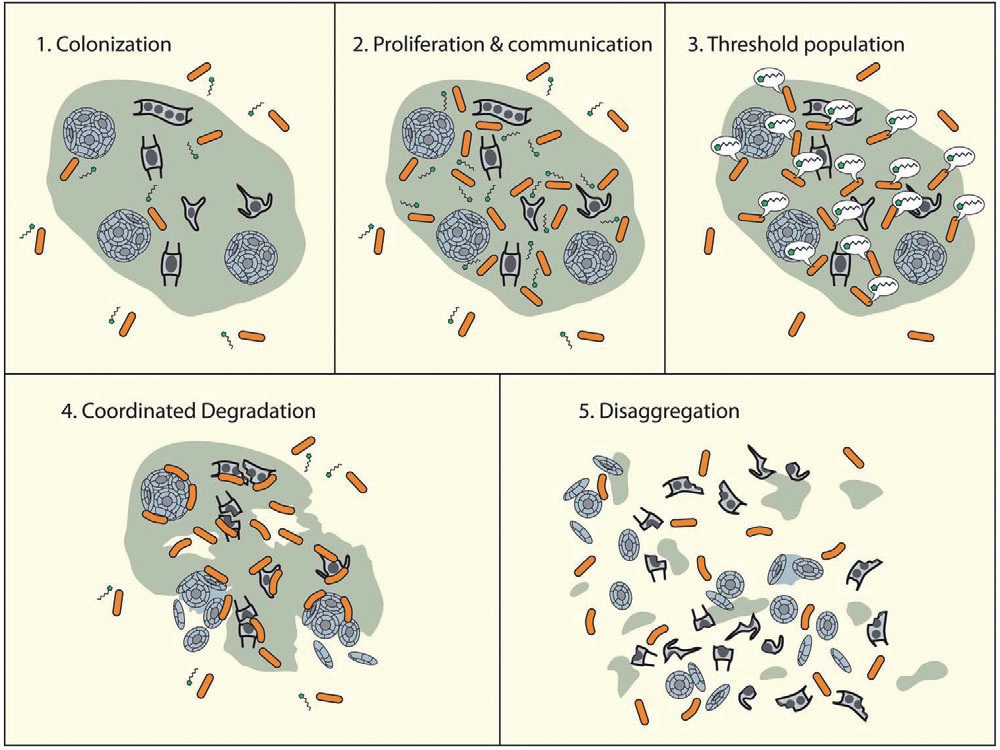
Particulate organic carbon (or POC) is an important factor in the ocean’s carbon cycle. When these tiny particles hit the water, they sink and attract bacteria. These bacteria can feed on the particles, releasing carbon into shallow waters and the atmosphere.

A new study has found that bacteria communicate about whether or not to begin feeding on the particles through quorum sensing (QS), simply put, a process where bacteria release signaling molecules, which, in turn can influence the activity of other bacteria. Or, in the authors’ words:

Number crunchers have never been much of nature lovers. Most venture capitalists, as it were, would rather be content, mulling over their wins and losses in the vagaries of business transactions of a life sciences company, than showering encomiums on the potential benefits of a technology that could potentially double up as a silver bullet for debilitating diseases such as diabetes, cancer or AIDS.

The Wisdom of Crowds: Why the Many Are Smarter Than the Few and How Collective Wisdom Shapes Business, Economies, Societies and Nations”, published in 2004, is a book by James Surowiecki. It discusses, often using anecdotes, that under certain conditions, crowds of people make better decisions than experts. In how far can we (mis)construe this as further proving the democratic doctrine?

Today's post in honor of the 2011 Cephalopod Awareness Days. October 12th is Fossil Day.

I must confess, I'm glad today is the last of the Cephalopod Days. This heady pace is almost more than I can handle! The final day of ICAD is for celebrating fossil cephalopods, timed to coincide with National Fossil Day, which is totally a real thing. (Not that the other Cephalopod Days aren't a real thing, they're just differently real.)

In gene therapy, one or more desired genes are introduced into an adenovirus, a virus that causes the common cold, which is then administered to the patient. Once in the body, the virus enters targeted cells and delivers the desired genes. In heart disease patients, for example, the virus delivers genes that trigger the growth of new blood vessels in damaged heart muscle.

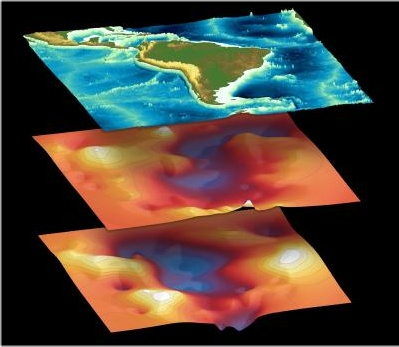
Every 100,000 years a "super-eruption" of a major volcanic system occurs - one of the most catastrophic natural events on Earth - yet it's hard to know what triggers these violent explosions.

The eruption of super-volcanoes dwarfs the eruptions of recent volcanoes and can trigger planetary climate change by inducing Ice Ages and other impacts. One such event was the Huckleberry Ridge eruption of present-day Yellowstone Park about two million years ago, which was more than 2,000 times larger than the 1980 eruption of Mount St. Helens in Washington. These super-eruptions are second only to meteor strikes in their impact.

Today's post in honor of the 2011 Cephalopod Awareness Days. October 11th is Myths and Legends Day.

And what better way to celebrate than with an account of the newly discovered Triassic Kraken, you know, the one who made a self-portrait with the vertebral discs of dinosaurs a couple of millions years ago?

Good news for migraine sufferers.  Your treatment may have gotten a little cheaper.  Exercise is often prescribed as a treatment for migraine, though without sufficient scientific evidence that it really works, but research from the Sahlgrenska Academy at the University of Gothenburg shows that exercise is just as good as drugs at preventing migraines. And so are relaxation techniques.


