Take a decently sized housecat. Let's say a cat that is well-fed and weights 7.5 kilograms. We can all comprehend such a mass. It's not too small, neither too big. A cat is something we can pick up and lift in earth's gravitational field.
 A cascade of powers of six-and-a-half billion
I was going to write about this
article in the
Kitsap Sun, which highlighted my advisor's recent research trip off the WA coast. I thought that was pretty cool, but the article had a few science points confused, so I was going to clarify them. But then I got to the end of the article and was blown away by the most egregious mistake yet:
Eggs have never been seen by researchers, but females probably hide their eggs in rocks, as other squid do.
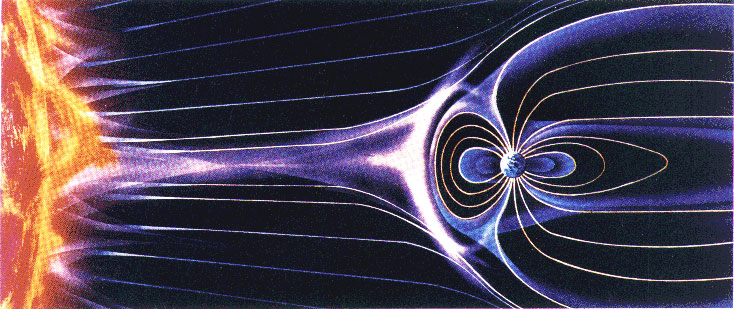
New research says that sunspots provide an incomplete measure of changes in the sun's impact on Earth over the course of the 11-year solar cycle - good news for global warming proponents concerned that lower temperatures (and higher ones) may correspond to solar activity.
The study led by scientists at the National Center for Atmospheric Research (NCAR) and the University of Michigan found that Earth was bombarded last year with high levels of solar energy at a time when the sun was in an unusually quiet phase and sunspots had virtually disappeared.
Scientists say they have discovered the chemical reaction that forms the molecule triacetylene in the ultra-cold atmosphere of Titan, one Saturn's more popular moons for researchers since Titan's current atmosphere is thought to resemble Earth's early one.
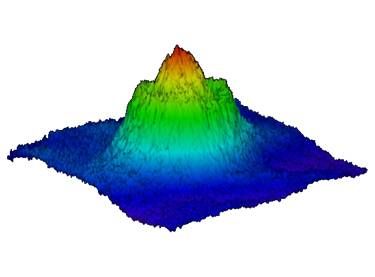
Transitions are exciting because at temperatures close to absolute zero the transition from one quantum phase to another can provide a deeper understanding of fundamental laws of the universe. A team of scientists at the University of Chicago has created the first direct images of the transition between phases of ultracold cesium gas, as it changes from normal to superfluid to Mott insulator, making it possible to 'see' the phenomenon as it happens.
The most striking visual feature of this phase transition? A many-layered wedding cake structure.
So much science education happens in informal ways--outside of the classroom. These experiences can be so valuable and sometimes even more influential than the classic approaches taken for so long by the public school system of the American culture.
You can think of it as the United Nations of knowledge - except no dictators wearing pistols are allowed to get up and spout nonsense. Or you could think of it as the Wikipedia of knowledge, without letting marketing people and activists control what gets seen.
Europeans call it DRIVER and it already has millions of documents.
The backbone of DRIVER is a technological breakthrough that enables institutions to link repositories of knowledge together into one huge, networked online ‘library of libraries’. The software, called D-NET, can link information collected on diverse computer platforms, using legacy software which can still ‘talk’ or work with older systems.
I like Penn&Teller, the magicians and debunkers of pseudoscience and general inanity. I regularly use clips from their show in my critical reasoning class, despite cringing every time Penn indulges in his “fuck this” and “motherfucker that” exercise in free speech (it distracts the students from the real point, not to mention the always lurking possibility of an administrator asking me about the appropriateness of foul language in a philosophy class).
I'm torn. There's two ways I would make a new smash video game, "Astronomy Hero".
In the first, you are doing night observing runs, trying to accumulate enough light from each target while evading clouds. Different targets appear at different times of night, and you have to balance whether to finish a given target (accumulate enough photons) or switch to something that just appeared in hopes that you can do better there. Targets of different brightness or dimness require different 'stare' times that you're focusing on them, so you're constantly trying to maximize total on-target time while making sure the more valuable targets get done.
If you want to solve big network security problems, sometimes it pays to think small - as in ants.
A concept called 'swarm intelligence' adapts quickly to changing threats and it uses 'digital ants' to wander through computer networks looking for those threats, such as computer 'worms', those self-replicating programs designed to steal information or facilitate unauthorized use of machines. When a digital ant detects a threat, it doesn't take long for an entire army of ants to converge at that location, which also draws the attention of human operators who step in to investigate.