Cancer impacts millions of lives for the worse every year. Despite this difficult reality, it appears that we are becoming increasing successful in our efforts to stem the tide of patients who fall victim as time goes on.
According to a recently published report in the journal Cancer Research, cancer mortality rates have been steadily dropping over the last three decades.
“Our efforts against cancer, including prevention, early detection and better treatment, have resulted in profound gains, but thesegains are often unappreciated by the public due to the way the data are usually reported," said Eric Kort, M.D., one of the study’s authors and former research scientist at Van Andel Research Institute (VARI) in Grand Rapids, Mich.
Diesel and gasoline fuel sources both bring unique assets and liabilities to powering internal combustion engines. But what if an engine could be programmed to harvest the best properties of both fuel sources at once, on the fly, by blending the fuels within the combustion chamber?
Such an engine just might be possible thanks to the University of Wisconsin-Madison engine research group headed by Rolf Reitz. The research team is developing a diesel engine that produces significantly lower pollutant emissions than conventional engines, with an average of 20 percent greater fuel efficiency as well.
Researchers who want to include surgeries in studies have to make first contact through non-medical administration staff who act as roadblocks, says a group of researchers whose planned leg ulceration study was hamstrung by a physician recruitment rate of 2% and who have published the reasons why so many surgeons did not participate.
The qualitative information, featured in the open access journal BMC Medical Research Methodology, may be of use to those designing trials of their own. Given the current health care debate in America, another layer of bureaucracy and the impact on research studies is one facet of the discussion that has been least considered.
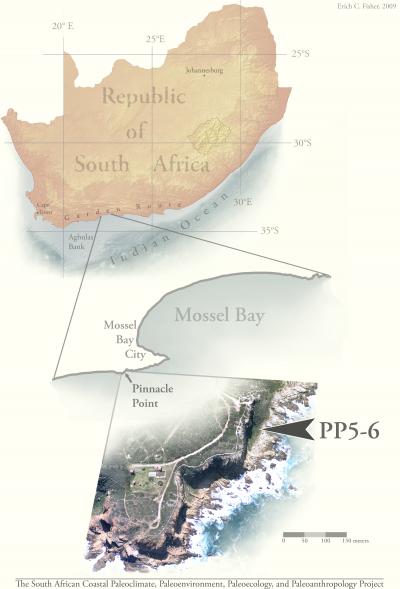
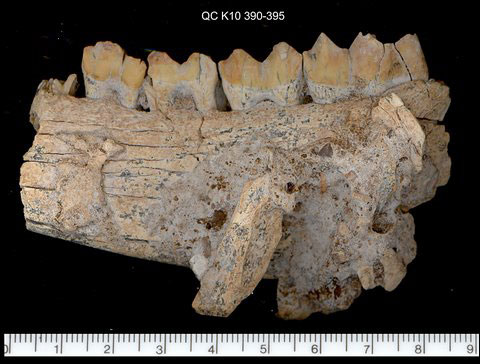
Early modern humans living on the southern Africa coast employed pyrotechnology, the controlled use of fire, 72,000 years ago, to increase the quality and efficiency of their stone tool manufacturing process, according to a report in Science.
The international team of researchers deduces that "this technology required a novel association between fire, its heat, and a structural change in stone with consequent flaking benefits." Further, they say their findings ignite the notion of complex cognition in early man.
If their findings hold up, it could mean humans' ability to solve complex problems may have occurred at the same time their modern genetic lineage appeared, rather than developing later as has been widely speculated.
A real life Alice In Wonderland story is a little closer to reality now that researchers in China have created the first tunable electromagnetic gateway.
In a new paper, researchers from the Hong Kong University of Science and Technology and Fudan University in Shanghai have described the concept of a "a gateway that can block electromagnetic waves but that allows the passage of other entities" like a "'hidden portal' as mentioned in fictions."
The gateway uses transformation optics and an amplified scattering effect from an arrangement of ferrite materials called single-crystal yttrium-iron-garnet that force light and other forms of electromagnetic radiation in complicated directions to create a hidden portal.
The green of a tree's leaves is from the larger proportion of the chlorophyll pigment in the leaves. As days get shorter, less chlorophyll is produced and green is no longer dominant because yellow xanthophylls and orange carotenes are also present in the chloroplasts.
But why will the leaves of some trees be red in America yet yellow in Europe?
Did late Lower Paleolithic people hunt or were they scavengers? A University of Arizona anthropologist says that humans living at a Paleolithic cave site (Qesem Cave) in central Israel between 400,000 and 250,000 years ago were as successful at big-game hunting as were later stone-age hunters at the site, but earlier humans shared meat differently.
Qesem Cave ("Qesem" means "surprise") people hunted cooperatively, then carried the highest quality body parts of their prey to the cave, where they cut the meat with stone blade cutting tools and cooked it with fire.
Garter snakes like to eat newts. Newts don't like to be eaten, and to deter snakes from eating them, they have evolved a seriously lethal neurotoxin. This toxin, called
tetrodotoxin (TTX), is chemically similar to that found in pufferfish, and a few milligrams is enough to take out a hefty adult human.
But some garter snakes really like newts, and instead of searching for other prey, several species of garter snakes have managed develop resistance to newt neurotoxins.
PALO ALTO, California, August 10 /PRNewswire/ --
- Proof of Concept Study Investigating NS4B-RNA Binding Inhibitor
Eiger BioPharmaceuticals, Inc., a biotechnology company developing antiviral therapies, announced today that the first patients have been dosed in an innovative clinical trial in patients chronically infected with the hepatitis C virus (HCV). The trial, run in centers in Australia and New Zealand, will investigate the antiviral effect of clemizole monotherapy in the absence of interferon.
LONDON, August 11 /PRNewswire/ -- The Royal Pharmaceutical Society of Great Britain (RPSGB) has called on the Prime Minister to introduce parity between nurses and pharmacists in the prescribing of controlled drugs.
In its evidence to the Prime Minister's Commission on the Future of Nursing and Midwifery, the RPSGB points to the existing discrepancy between the ability of nurses to prescribe controlled drugs in certain conditions as independent prescribers, when pharmacist independent prescribers cannot so prescribe, even when the medicine in question is a controlled drug which they can sell as ingredients in over the counter medicines.