


Photosynthesis converts light energy into chemical energy in plants, algae, phytoplankton and some species of bacteria and archaea. Photosynthesis in plants involves an elaborate array of chemical reactions requiring dozens of protein enzymes and other chemical components. Most photosynthesis occurs in a plant’s leaves.

Now University of Illinois researchers have built a plant that produces more leaves and fruit without needing extra fertilizer using a computer model that mimics the process of evolution. Theirs is the first model to simulate every step of the photosynthetic process.

The research findings appeared in Plant Physiology and will be presented today at the BIO-Asia 2007 Conference in Bangkok, Thailand.

Eating too much fructose and glucose can turn off the gene that regulates the levels of active testosterone and estrogen in the body, shows a new study in mice and human cell cultures that’s published this month in the Journal of Clinical Investigation. This discovery reinforces public health advice to eat complex carbohydrates and avoid sugar.

Table sugar is made of glucose and fructose, while fructose is also commonly used in sweetened beverages, syrups, and low-fat food products. Estimates suggest North Americans consume 33 kg of refined sugar and an additional 20 kg of high fructose corn syrup per person per year.

Glucose and fructose are metabolized in the liver. When there’s too much sugar in the diet, the liver converts it to lipid.

A tiny “electronic nose” that MIT researchers have engineered with a novel inkjet printing method could be used to detect hazards including carbon monoxide, harmful industrial solvents and explosives.

Led by MIT professor Harry Tuller, the researchers have devised a way to print thin sensor films onto a microchip, a process that could eventually allow for mass production of highly sensitive gas detectors.

“Mass production would be an enormous breakthrough for this kind of gas sensing technology,” said Tuller, a professor in the Department of Materials Science and Engineering (MSE), who is presenting the research at the Composites at Lake Louise Conference in Alberta, Canada, on Oct. 30.

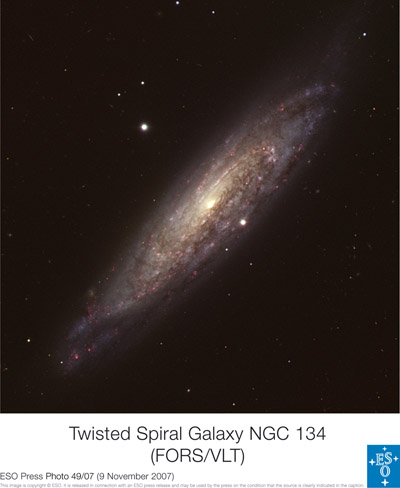
Known until now as a simple number in a catalogue, NGC 134, the 'Island in the Universe' that was observed by the European Commissioner for Science and Research Janez Potočnik on a visit to ESO's Very Large Telescope at Paranal is replete with remarkable attributes, and the VLT has clapped its eyes on them.

Just like our own Galaxy, NGC 134 is a barred spiral with its spiral arms loosely wrapped around a bright, bar-shaped central region.

One feature that stands out is its warped disc. While a galaxy's disc is often pictured as a flat structure of gas and stars surrounding the galaxy's centre, a warped disc is a structure that, when viewed sideways, resembles a bent record album left out too long in the burning Sun.

Overweight children and adults have low levels in their blood of a protein known as SHGB, which transports sex steroids and regulates their entry into tissues. Low levels of SHGB are a marker of the metabolic syndrome, a combination of medical disorders that increase an individual’s risk of developing type 2 diabetes and heart disease.

An explanation as to why low levels of SHGB are such a good marker of the metabolic syndrome are now provided by Geoffrey Hammond and colleagues at the University of British Columbia, Vancouver.

Tumor progression can now be mapped less to mathematical standards and more to individual patients according to a new study by researchers at Harvard and Johns Hopkins Universities. The study provides a new paradigm in calculating tumor development, showing that it appears to be driven by mutations in many genes.

Our understanding of the progression of cancer has long been based on streamlined models where cancer is driven by mutations in only a few genes. Niko Beerenwinkel et al. show how tumor progression can be driven by hundreds of genes. As many as 20 different mutated genes might be responsible for driving an individual tumor’s development.

The inconsistent expressions related to schizophrenia are newly structured in a recent study by researchers at the Universitas Pompeau Fabra (Barcelona), and Oxford University. Marco Loh, Edmund Rolls and Gustavo Deco have created a dynamical system framework to discuss the disorder.

People with schizophrenia are known to have difficulty in maintaining attention, unstable thoughts, and reduced emotions. Creating a unifying and statistical model to understand these symptoms has always posed a challenge to researchers and clinicians. For this study Loh et al. developed a top-down analytical approach based on the different types of symptoms and related them to instabilities in attractor neural networks in a statistical dynamical framework.

Which gender is the most talkative? (1) No matter your answer, you are partially right.

A recent Gallup poll showed that both men and women believe that women possess the gift of gab and some even believe women are biologically built for conversation but all of that is challenged in research published in the November issue of Personality and Social Psychology Review.

In a recent set of meta-analyses conducted by Campbell Leaper and Melanie Ayres, they collected all of the available evidence from decades of scientific study and systematically combined the findings into an overall picture of the differences between men and women regarding talkativeness.

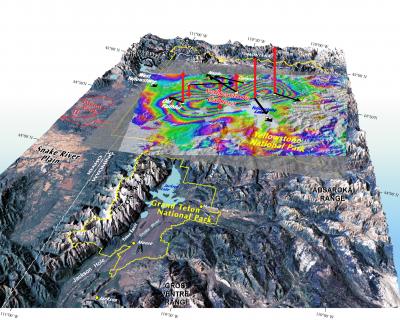
Yellowstone is North America’s largest volcanic field, produced by a “hotspot” – a gigantic plume of hot and molten rock – that begins at least 400 miles beneath Earth’s surface and rises to 30 miles underground, where it widens to about 300 miles across.

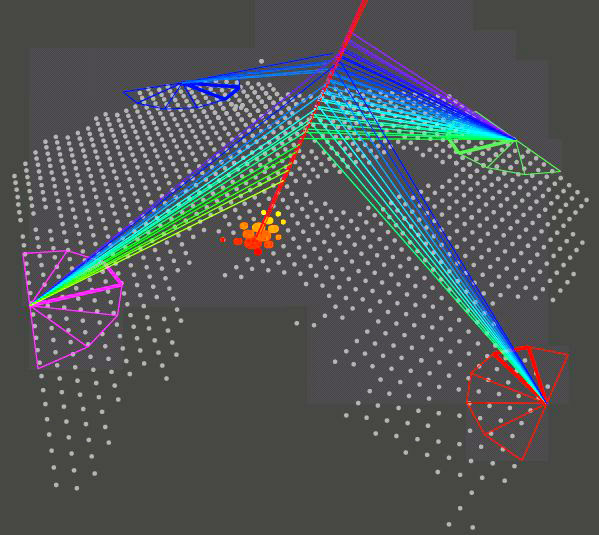
Scientists using the largest cosmic ray observatory in the world, the Pierre Auger Observatory in Argentina, have made an important discovery about the highest-energy cosmic rays that hit the Earth - and the discovery leads back to supermassive black holes.

In Science, the Pierre Auger Collaboration announces that Active Galactic Nuclei - thought to be powered by supermassive black holes that devour large amounts of matter - are the most likely candidate for the source of the highest-energy cosmic rays that hit Earth.

The scientists found that the sources of the highest-energy particles are not distributed uniformly across the sky.

