



Unprecedented fossilized body imprints of amphibians have been discovered in 330 million-year-old rocks from Pennsylvania. The imprints show the unmistakably webbed feet and bodies of three previously unknown, foot-long salamander-like critters that lived 100 million years before the first dinosaurs.

"Body impressions like this are wholly unheard of," said paleontologist Spencer Lucas, a curator at the New Mexico Museum of Natural History and Science. Lucas will present the discovery on Tuesday, 30 October 2007, at the annual meeting of the Geological Society of America in Denver.

A series of monumental volcanic eruptions in India may have killed the dinosaurs 65 million years ago, not a meteor impact in the Gulf of Mexico. The eruptions, which created the gigantic Deccan Traps lava beds of India, are now the prime suspect in the most famous and persistent paleontological murder mystery, say scientists who have conducted a slew of new investigations honing down eruption timing.

"It's the first time we can directly link the main phase of the Deccan Traps to the mass extinction," said Princeton University paleontologist Gerta Keller. The main phase of the Deccan eruptions spewed 80 percent of the lava which spread out for hundreds of miles.

Fame was fleeting for the 16-solar-mass black hole in the galaxy M33, announced on October 17 as the record holder for the heaviest black hole orbiting a star.

A new black hole, with a mass 24 to 33 times that of our Sun, is more massive than scientists have detected - or expected - for a black hole that formed from a dying star.

The newly discovered object belongs to the category of "stellar-mass" black holes. Formed in the death throes of massive stars, they are smaller than the monster black holes found in galactic cores.

A fuel cell converts chemically stored energy directly into electricity and is already more efficient in converting fuel to power than the internal combustion engine usually found in automobiles. However, the cost for the catalysts alone make fuel-cell vehicles out of reach of most consumers and therefore impractical for manufacturers.

If the efficiency were to get higher, the cost would come down substantially. In addition, if an auto fuel cell ran on hydrogen and air, there would be no combustion, no noise and no vibration - and the only by-product would be water. All good things.

With the average price of gasoline around $3 per gallon nationwide, fuel cell research is accelerating.

You can call it optical tweezers, microtools for chips, or even a cellular Death Star. MIT researchers have found a way to use a “tractor beam” of light to pick up, hold, and move around individual cells and other objects on the surface of a microchip.

The idea of using light beams as tweezers to manipulate cells and tiny objects has been around for at least 30 years. But the MIT researchers have found a way to combine this powerful tool for moving, controlling and measuring objects with the highly versatile world of microchip design and manufacturing.

Optical tweezers, as the technology is known, represent “one of the world's smallest microtools,” says assistant professor Matthew J. Lang. “Now, we're applying it to building [things] on a chip.”

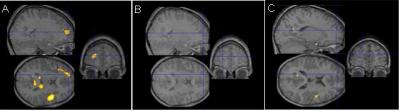
Children with developmental dyslexia confuse letters and syllables when they read. According to a brain-imaging study published this month in the journal Restorative Neurology and Neuroscience, some children with dyslexia struggle to read because their brains aren't properly wired to process fast-changing sounds - and learning sounds early impacts later reading.

The study found that sound training via computer exercises can literally rewire children's brains, correcting the sound processing problem and improving reading.

A pair of galaxies, known collectively as Arp 87, is one of hundreds of interacting and merging galaxies known in our nearby Universe. Arp 87 was originally discovered and catalogued by astronomer Halton Arp in the 1970s. Arp’s Atlas of Peculiar Galaxies is a compilation of astronomical photographs using the Palomar 200-inch Hale and the 48-inch Samuel Oschin telescopes.

The resolution in the Hubble image shows exquisite detail and fine structure that was not observable when Arp 87 was first discovered in the 1970’s.


Panning on the interacting galaxies Arp 87. Credit: ESA/Hubble (M. Kornmesser & L. L.

Polyphenols are commonly found in red wine, fruits, vegetables, and green tea. In a new study, French scientists describe how high and low doses of polyphenols have different effects. Most notably, they found that very high doses of antioxidant polyphenols shut down and prevent cancerous tumors by cutting off the formation of new blood vessels needed for tumor growth.

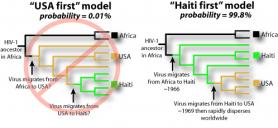
New research is the first to definitively pinpoint when and from where HIV-1 entered the United States and shows that most HIV/AIDS viruses in the U.S. descended from a single common ancestor. The actual ancestral HIV entered the U.S. long before the storied "Patient Zero," senior author Michael Worobey said.

The AIDS virus entered the United States via Haiti, probably arriving in just one person in about 1969, earlier than previously believed, according to new research.

After the virus, HIV-1, entered the U.S., it flourished and spread worldwide.

Scientists at Newcastle University have developed a cancer fighting technology which uses UV light to activate antibodies which very specifically attack tumours.

Therapeutic antibodies have long been recognised as having excellent potential but getting them to efficiently target tumour cells has proved to be very difficult.

Now, Professor Colin Self and Dr Stephen Thompson from Newcastle University have developed a procedure to cloak antibodies which can then be activated by UV-A light and so can be targeted to a specific area of the body just by shining a probe at the relevant part.

This procedure maximizes the destruction of the tumour while minimising damage to healthy tissue.

