

Soils may dictate the array of fall colors as much as the trees rooted in them, according to a forest survey out of North Carolina.

By taking careful stock and laboratory analyses of the autumn foliage of sweetgum and red maple trees along transects from floodplains to ridge-tops in a nature preserve in Charlotte, N.C., former University of North Carolina at Charlotte graduate student Emily M. Habinck found that in places where the soil was relatively low in nitrogen and other essential elements, trees produced more red pigments known as anthocyanins.

Habinck's discovery supports a 2003 hypothesis put forward to explain why trees bother to make red pigments, by plant physiologist William Hoch of Montana State University, Bozeman.

Attention Deficit Hyperactivity Disorder (ADHD) is a neurobiological disorder that manifests as a persistent pattern of inattention and/or hyperactivity-impulsivity that is more frequent and severe than is typically observed in individuals at a comparable level of development.

Approximately 7.8 percent of all school-age children, or about 4.4 million U.S. children aged 4 to 17 years, have been diagnosed with ADHD at some point in their lives, according to the U.S. Centers for Disease Control and Prevention (CDC).

Shire plc announced the results of a phase III trial which demonstrated that adults with ADHD experienced significant improvements in ADHD symptom control within one week of treatment with VYVANSE (lisdexamfetamine dimesylate), the first prodrug stimulant.

For almost 75 years, astronomers have believed that the Universe has a large amount of unseen or ‘dark’ matter, thought to make up about five-sixths of the matter in the cosmos. With the conventional theory of gravitation, based on Newton’s ideas and refined by Einstein 92 years ago, dark matter helps to explain the motion of galaxies, and clusters of galaxies, on the largest scales.

Now two Canadian researchers at the Perimeter Institute for Theoretical Physics suggest that the motion of galaxies in a distant cluster is more easily explained by a Modified Gravity (MOG) theory than by the presence of dark matter.

Dr. Vernon Grose, a former member of the National Transportation Safety Board shares many of my interests, including, but certainly not limited to the TWA Flight 800 disaster. Dr. Grose has recently published his long time coming book, "Science but Not Scientists," published at last after a 30-year delay. The book includes a foreword by none other than Dr. Wernher von Braun, father of America’s space program.

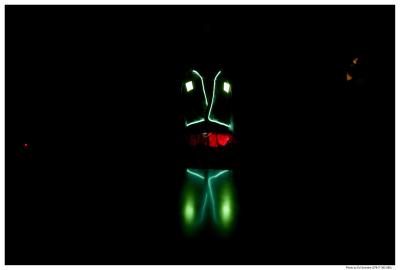
Researchers at The University of Manchester have developed high-tech textile yarns that can be used to make clothing glow in the dark, ideal for late-night bicyclists and joggers.

Current high visibility products – such as those used by emergency services and highway maintenance workers – depend on external light sources to make them visible.

They can be ineffective in low light situations and require a light source from something like vehicle headlights to make them visible.

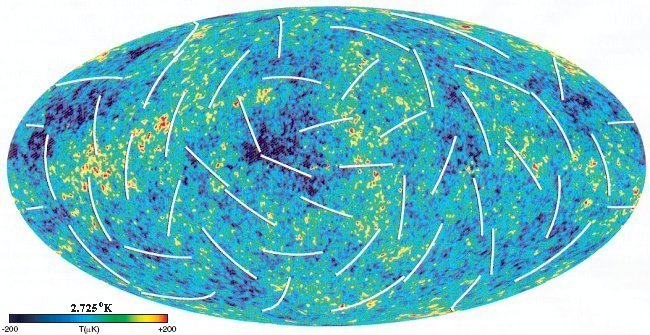
Scientists from the Institute of Physics of Cantabria (IFCA) and the University of Cambridge may have discovered an example of a cosmic defect, a remnant from the Big Bang called a texture. If confirmed, their discovery, reported today in Science, will provide dramatic new insight into how the universe evolved following the Big Bang.

Textures are defects in the structure of the vacuum left over from the hot early universe. Professor Neil Turok of Cambridge’s Department of Applied Mathematics and Theoretical Physics first showed how textures form in the 1990s, highlighting that some would survive from the Big Bang and should be visible in today’s universe.

For thousands of years, people have used clay to heal wounds, soothe indigestion, and kill intestinal worms. Though the practice has declined in modern times, the recent rise of drug-resistant germs has scientists looking more closely at these ancient remedies to learn exactly what they can do and how they do it.

A French clay that kills several kinds of disease-causing bacteria is at the forefront of new research into age-old, nearly forgotten, but surprisingly potent cures. Among the malevolent bacteria that it has been shown to fight is a "flesh-eating" bug (M.

Agricultural soil erosion is not a source of carbon dioxide to the atmosphere, according to research published in Science. The study was carried out by an international team of researchers from UC Davis, the Catholic University of Leuven in Belgium, and the University of Exeter in the U.K.

Carbon emissions are of great concern worldwide because they, and other greenhouse gases, trap heat in the Earth's atmosphere and are a major cause of global climate change.

"There is still little known about how much carbon exactly is released, versus captured, by different processes in terrestrial ecosystems," said Johan Six, a professor of agroecology at UC Davis and one of the study's authors.

It's historically been the case that fossil remains of Neanderthals paint an incomplete picture; they can't tell us about their cognitive skills or really give us details of what they looked like.

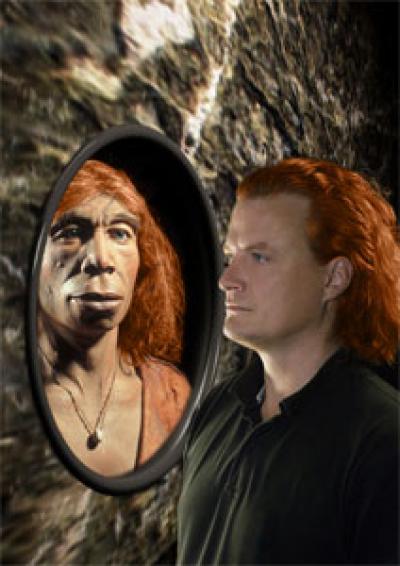
But scientists at the Max Planck Institute in Leipzig started looking into the DNA of Neanderthals and they made some astonishing discoveries. They discovered the human variant of the FOXP2 gene in our nearest relatives and an interesting detail: at least one percent of the Neanderthals in Europe may have had red hair.

Only two percent of the world's population have naturally red hair - caused by a mutation in the gene mc1r.

A new study explores the role of natural enemies, such as predators and parasites, for mixed mating, a reproductive strategy in which hermaphroditic plants and animals reproduce through both self- and cross-fertilization. The findings highlight the possible evolutionary consequences of these interactions.

Mating systems are a complex set of traits that reflect interactions among genetics, population structure, demography, and numerous environmental factors that influence mating success. These traits have profound consequences for genetic variation.

