




On November 13-15 astronomers will meet at the "Astrophysics 2020: Large Space Missions Beyond the Next Decade" conference at the Space Telescope Science Institute in Baltimore, Md. to discuss the space observatories and science investigations that could be realized in the 2020-2030 decade.

Though the Hubble Space Telescope was launched in 1990, NASA started planning two decades earlier by establishing, in 1970, committees to plan the engineering of the space telescope and to determine the scientific goals of the mission.

The year 2020 is 13 years away, but astronomers now need to start envisioning astrophysics that could be accomplished from space in the 2020 era and beyond. Lead times of at least a decade are required for the most ambitious of space observatories.

In process that is shrouded in mystery, rod-shaped bacteria reproduce by splitting themselves in two. By applying advanced mathematics to laboratory data, a team led by Johns Hopkins researchers has solved a small but important part of this reproductive puzzle.

The findings apply to highly common rod-shaped bacteria such as E. coli, found in the human digestive tract. When these single-celled microbes set out to multiply, a signal from an unknown source causes a little-understood structure called a Z-ring to tighten like a rubber band around each bacterium’s midsection. The Z-ring pinches the rod-like body into two microbial sausages that finally split apart.

Washington state climatologist Philip Mote, one of the lead authors of the recently released Fourth Assessment Report of the Intergovernmental Panel on Climate Change, will deliver a public lecture on global warming at the American Vacuum Society's (AVS) 54th International Symposium & Exhibition in Seattle. The lecture is free and open to the public (see details below).

“Climate change is real and it is a problem,” says Mote, a researcher with the University of Washington Climate Impacts Group.

The best views of the hydrocarbon lakes and seas on Saturn's moon Titan taken by the Cassini spacecraft are being released today.

A new radar image comprised from seven Titan fly-bys over the last year and a half shows a north pole pitted with giant lakes and seas, at least one of them larger than Lake Superior in the USA, the largest freshwater lake on Earth. Approximately 60% of Titan's north polar region, above 60° north, has been mapped by Cassini's radar instrument. About 14% of the mapped region is covered by what scientists interpret as liquid hydrocarbon lakes.

"This is our version of mapping Alaska, the northern parts of Canada, Greenland, Scandinavia and Northern Russia," said Rosaly Lopes, Cassini radar scientist at the Jet Propulsion Laboratory, USA.

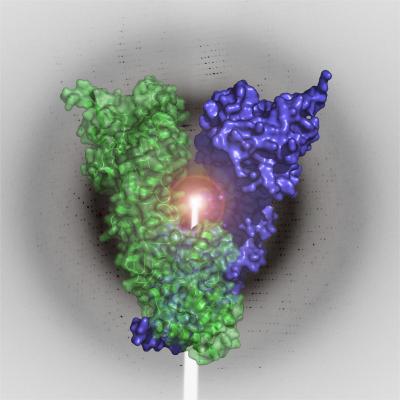
Dr. Dan Gewirth, Hauptman-Woodward senior research scientist, has just solved the structure of the first mammalian GRP94 protein implicated in immune diseases such as sepsis, AIDS and certain cancers. His work is being published today in a cover article in a top scientific journal - Molecular Cell.

Gewirth’s study confirms his 2001 hypothesis that this protein – GRP94 – is from the same family as the better known HSP90 proteins. As ligand-regulated chaperones – proteins that help other cellular proteins achieve their active shapes, the HSP90s are key players in cellular regulation and recognition.

Were Neanderthals direct ancestors of contemporary humans or an evolutionary side branch that eventually died out?

This is one of the enduring questions in human evolution as scientists explore the relationship of fossil groups, such as Neanderthals, with people alive today.

The simultaneous publication of two studies with Neanderthal nuclear DNA sequences [1,2] was a technological breakthrough that held promise for answering a longstanding question in human evolution: Did “archaic” groups of humans, such as Neanderthals, make any substantial contribution to the extant human gene pool? The conclusions of the two studies, however, were puzzling and possibly contradictory.

The cow as killer of the climate: this more recent portrayal of our bovine friends is because their digestion causes them to produce methane almost continuously and pound for pound methane has a much larger impact on global warming than carbon dioxide.

Now a team of German and Czech scientists say these animals also boost the production of methane from soil.

Grass lands that are not used for crops generally act as sinks for greenhouse gases like methane, carbon dioxide and nitrous oxide. However, once these grasslands become pastures for cattle a change occurs. This was especially noticeable in the winter, when cows stayed in a smaller area, reducing the spread of waste and increasing the density of the soil due to the animals' weight.

Researchers in the UK are gearing themselves up for an influx of help. Forty thousand people have already run the LHC@home program on their home or office computers, to help scientists discover the secrets of matter and this week researchers at Queen Mary, University of London, officially launched the new base for LHC@home, which has moved from CERN, the European particle physics laboratory in Geneva.

LHC@home is a collaboration between CERN, the Helsinki Institute of Physics, the Niels Bohr Institute in Copenhagen, Queen Mary University of London and TRIUMF in Vancouver.

The Norwegian Nobel Committee has decided that the Nobel Peace Prize for 2007 is to be shared, in two equal parts, between the Intergovernmental Panel on Climate Change (IPCC) and Albert Arnold (Al) Gore Jr. for their efforts to build up and disseminate greater knowledge about man-made climate change, and to lay the foundations for the measures that are needed to counteract such change.

How do global warming studies merit a peace prize?

In the words of the committee, extensive climate changes may alter and threaten the living conditions of much of mankind, inducing large-scale migration and greater competition for the earth's resources.

The enzyme TPPII may contribute to obesity by stimulating the formation of fat cells, suggests a study in EMBO reports this week. The enzyme, TPPII, has previously been linked to making people feel hungry, but Jonathan Graff and colleagues now show that it may be even more deeply involved in causing obesity.

The team found that TPPII actually stimulated the formation of fat cells in worms and mammalian cells and that by reducing it, fat stores decreased. Mice with lower levels of TPPII were thinner than their wild type littermates, although their food intake was comparable.


