






Scientists have made an important advance in understanding the genetic processes that give flowers, leaves and plants their bright colours. The knowledge could lead to a range of benefits, including better understanding of the cancer-fighting properties of plant pigments and new, natural food colourings. The research is highlighted in the new issue of Business from the Biotechnology and Biological Sciences Research Council (BBSRC).

The scientists, at the John Innes Centre and Institute of Food Research in Norwich, have pinpointed a key group of enzymes involved in the production of plant pigments. The pigments, called anthocyanins, are what give some plants the vivid colours that they use to attract insects and foraging animals.

The gender ratio in math science and engineering is approximately 3 men to every 1 woman, say Stanford psychologists Mary Murphy and Claude Steele, and situational cues, like being outnumbered, may contribute to a decrease in women’s performance expectations, as well as their actual performance.

Murphy and colleagues showed a group of advanced MSE undergraduates a gender balanced or unbalanced video depicting a potential MSE summer leadership conference. To assess identity threat, the researchers measured the participant’s physiological arousal during the video, cognitive vigilance, sense of belonging and desire to participate in the conference.

C02 Storage is an intriguing idea but there are many questions that need to be resolved before it can be realistically implemented.

The first significant genetic finding in premenstrual dysphoric disorder (PMDD) has now been reported. PMDD is a very severe form of the more commonly known premenstrual syndrome, or PMS.

PMDD is heritable, affects 5-8% of women, and is associated with severe emotional and physical problems, such as irritability, marked depressed mood, anger, headaches, weight gain and more, to such an extent that quality of life is seriously impacted.

Previously, researchers have shown that women with PMDD have an abnormal response to normal hormone levels and, thus, are differentially sensitive to their own hormone changes.

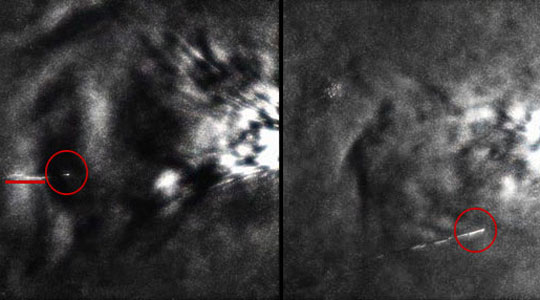
Scientists at the Naval Research Laboratory report they have captured the first images of a collision between a comet and a solar hurricane. It is the first time scientists have witnessed such an event on another cosmic body.

The phenomenon was caused by a coronal mass ejection, a large cloud of magnetized gas cast into space by the sun. The collision resulted in the complete detachment of the plasma tail of Encke's comet. Observations of the comet reveal the brightening of its tail as the coronal mass ejection swept by and the tail's subsequent separation as it was carried away by the front of the ejection. The researchers combined the images into a movie.

"We were awestruck when we saw these images," says Angelos Vourlidas, lead author and researcher at NRL.

Just under 30 percent of Americans continue to smoke despite repeated warnings about its impact on health - that number has held consistent for a decade, which means young people are still picking up the habit. That percentage is 44.6 percent among young adults aged 18 to 25, according to a National Institute On Drug Abuse study in 2004. The reason young smokers take up this habit despite billions of dollars spent in awareness campaigns? Not adolescent rebellion, say University of California San Francisco researchers, but ... movies.

Stanton Glantz, PhD, professor of medicine and director of the UCSF Center for Tobacco Control Research and Education says this is the first time that smoking among young adults has been associated with their exposure to smoking scenes on screen.

Many studies have suggested that moderate red wine consumption is beneficial to cardiovascular health. But what if you’d like to skip the alcohol?

Take heart: laboratory research, just presented at the WINEHEALTH 2007 conference in Bordeaux, France, showed that Concord grape juice stimulated an arterial relaxation effect in a similar fashion to red wine. The French researchers also reported that the Concord grape juice induced a prolonged relaxation effect that has not yet been reported with red wine.

Dr. Valérie Schini-Kerth and a team of researchers of the Université Louis Pasteur de Strasbourg, France, found that Concord grape juice stimulated the production of nitric oxide in endothelial cells, providing a vasorelaxation effect.

Some of the elements necessary to support life on Earth are widely known - oxygen, carbon and water, to name a few. Just as important in the existence of life as any other component is the presence of adenine, an essential organic molecule. Without it, the basic building blocks of life would not come together. Scientists have been trying to find the origin of Earth's adenine and where else it might exist in the solar system. University of Missouri-Columbia researcher Rainer Glaser says he may have the answer.

Life exists on Earth because of a delicate combination of chemical ingredients. Using a theoretical model, Glaser is hypothesizing the existence of adenine in interstellar dust clouds.

Tom Goetz wrote a thoughtful article "It's Time to Free the Dark Data of Failed Scientific Experiments" in Wired this week.
So what happens to all the research that doesn't yield a dramatic outcome —or, worse, the opposite of what researchers had hoped? It ends up stuffed in some lab drawer. The result is a vast body of squandered knowledge that represents a waste of resources and a drag on scientific progress. This information — call it dark data — must be set free. ... There are some islands of innovation. Since 2002, the Journal of Negative Results in Biomedicine has offered a peer-reviewed home to results that go negative or against the grain.

In public imagination, the sabre-toothed cat Smilodon ranks alongside Tyrannosaurus rex as the ultimate killing machine. Powerfully built, with upper canines like knives, Smilodon was a fearsome predator of Ice-Age America's lost giants.

For more than 150 years, scientists have debated how this iconic predator used its ferocious fangs to kill its prey. Now a new Australian study, published today in the US Proceedings of the National Academy of Science, hopes to lay the arguments to rest. And the results will put in dent in Smilodon's reputation.

Scientists from the University of New South Wales and University of Newcastle have used a computer-based technique called Finite Element Analysis (FEA) to test the bite force and feeding mechanics of the fearsome predator.

