




Several times over the past century, scientists and environmental engineers have proposed spreading slurries of dissolved iron into the oceans in order to “fertilize” the waters and promote vast blooms of marine plants (phytoplankton). Phytoplankton consume carbon dioxide as they grow, and this growth can be stimulated in certain ocean basins by the addition of iron, a necessary micronutrient.

Though common on land, dissolved iron is often rare in the ocean. Some researchers and commercial interests have recently proposed to provide that missing nutrient on a large scale in order to create artificial blooms.

Consuming large amounts of caffeine while taking acetaminophen, one of the most widely used painkillers in the United States, could potentially cause liver damage, according to a preliminary laboratory study reported in the Oct. 15 print issue of ACS’ Chemical Research in Toxicology.

The toxic interaction could occur not only from drinking caffeinated beverages while taking the painkiller but also from using large amounts of medications that intentionally combine caffeine and acetaminophen for the treatment of migraine headaches, menstrual discomfort and other conditions, the researchers say.

Health experts have warned for years that consuming excess alcohol while taking acetaminophen can trigger toxic interactions and cause liver damage and even death.

Researchers in Portugal have discovered that a specific mutation of the COX2 gene seems to play a role in the onset of ovarian cancer, increasing women’s susceptibility to developing the disease.

The discovery raises the possibility that, if the findings are confirmed by further studies, it might be possible to use non-steroidal anti-inflammatory drugs (NSAIDs), such as aspirin and ibuprofen, which are used already for other conditions, to prevent ovarian cancer developing in women with the COX2 mutation.

Building aircraft wings with a special aluminium fibre combination makes them nearly immune to metal fatigue.

The application of this technology, partly developed at Delft University of Technology, will lead to substantial savings. The unusual qualities of this special material (called CentrAl, an abbreviation of Central Reinforced Aluminium) can make a significant contribution to the development of truly energy-efficient, ‘green’ aircraft. Lower fuel consumption and reduction of maintenance costs could lead to worldwide savings as high as $100 billion.

Fatigue is a phenomenon that affects materials after long-term exposure to cyclic loading. As a result of varying loads, fractures eventually occur.

Researchers at the Centre for Addiction and Mental Health (CAMH) have clarified the link between alcohol consumption and the risk of head and neck cancers, showing that people who stop drinking can significantly reduce their cancer risk.

So enjoy it while you can. Governments will outlaw drinking in bars next.

According to CAMH Principal Investigator Dr. Jürgen Rehm, existing research consistently shows a relationship between alcohol consumption and an increased risk for cancer of the esophagus, larynx and oral cavity. Dr.

New research in radiotherapy has found acupuncture does not relieve nausea caused by cancer treatment, despite widespread belief among cancer patients and health care professionals that it does. Maybe that's good enough.

The study evaluated the effectiveness of acupuncture in 215 patients with various types of cancer who got either active acupuncture or a sham treatment that involved an identical looking and feeling needle that retracted into the handle on contact with the skin.

The treatment, in the forearm, was given two or three times a week during the whole period of radiotherapy, which is a common schedule. The patients documented their nausea and vomiting in diaries and completed questionnaires during and after the radiotherapy course.

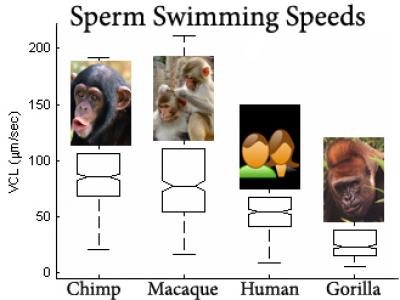
Researchers at UC San Diego and UC Irvine have found evidence that supports the theory that reproductive competition during the evolution of primate species has occurred at the level of sperm cell motility.

A team led by Michael Berns, an adjunct professor of bioengineering at UCSD and a professor of biomedical engineering at the Beckman Laser Institute at UC Irvine, and UCSD Ph.D.

Cryptochromes, which fulfill the molecular requirements for sensing the magnetic reference direction, have recently been found in retinal neurons of migratory birds (Mouritsen et al., PNAS, 2004). Furthermore, studies investigating what parts of a migratory bird´s brain are active when the birds use their magnetic compass showed that the cryptochrome-containing neurons in the eye and a forebrain region (“Cluster N”; Mouritsen et al., PNAS, 2005; Liedvogel et al., EJN, 2007) are highly active during processing of magnetic compass information in migratory birds. Sensory systems process their particular stimuli along specific brain circuits.

Researchers say they have found a key biochemical cycle that suppresses the immune response, thereby allowing cancer cells to multiply unabated. The research shows how the biomolecules responsible for healthy T-cells, the body’s first defenders against hostile invaders, are quashed, permitting the invading cancer to spread. The same cycle could also be involved in autoimmune diseases such as multiple sclerosis.

The scientists used special molecular “nanosensors” for the work.

“We used a technique called fluorescence resonance energy transfer, or FRET, to monitor the levels of, tryptophan, one of the essential amino acids human cells need for viability,” explained lead author and Carnegie Institution Department of Plant Biology scientist Thijs Kaper.

Do you like The Beatles but only certain kinds of their songs? What if you want music to go jogging but you don't know the names of artists you might like for that?

UC San Diego researchers are working on a music search engine that lets you use natural language to find what you want.

In a new paper, the researchers demonstrate that an online music game they created provides crucial data for building the back-end of a music search engine that allows users to type in words in order to find songs.

“When my mom gets up in the morning and is like, ‘I need some energy to go jogging,’ she has no clue what title or artist is going to help her with that,” said Gert Lanckriet, the UCSD electrical engineering professor overseeing the project.

