






Huntington disease (HD) is a neurological disorder resulting from degeneration of brain cells. The degeneration causes uncontrolled limb movements and loss of intellectual faculties, eventually leading to death. There is no treatment. HD is a familial disease, passed from parent to child through a mutation in the normal gene. The disorder is estimated to affect about one in every 10,000 persons.

Ray Truant, professor in the Department of Biochemistry and Biomedical Sciences at McMaster University and PhD candidate Randy Singh Atwal, have discovered a small protein sequence in huntingtin that allows it to locate to the part of the cell critical for protein quality control.

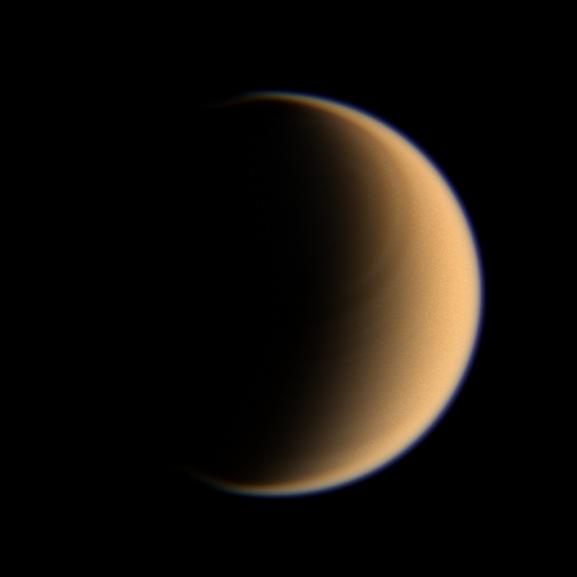
The question of whether Titan can retain its thick, organic atmosphere for the rest of its lifetime could hinge on how efficiently methane molecules were packed inside water “crates” during a period of the moon’s formation.

Dr Vasili Dimitrov, who spoke at the European Planetary Science Congress in Potsdam, said, “If Titan runs out of methane and loses its ‘veil’, it will become a completely different type of astrophysical body. Methane drives the chemical reactions in Titan’s atmosphere but, because it’s so highly reactive and therefore short-lived, it must be replenished. We need to find out just how much methane is stored in the primordial reserve in Titan’s interior at a level where it can escape to the surface.

Evidence from laboratory experiments on rats and on human colon cancer cells also suggests that anthocyanins, the compounds that give color to most red, purple and blue fruits and vegetables appreciably slow the growth of colon cancer cells.

The findings also bring scientists a step closer to figuring out what exactly gives fruits and vegetables their cancer-fighting properties.

“These foods contain many compounds, and we're just starting to figure out what they are and which ones provide the best health benefits,” said Monica Giusti, the lead author of the study and an assistant professor of food science at Ohio State University.

Giusti presented the findings, which represent the collaborative efforts of Giusti and her colleagues, on August 19 at the national meeting of the Ameri

A Virginia Tech researcher is working on a device to create biofuels from bird litter - bedding, manure, feathers, spilled feed and everything else on the floor of chicken coops.

Foster Agblevor, associate professor of biological systems engineering, and a team are developing transportable pyrolysis units that will convert the waste into bio-oil by heating the litter until it vaporizes. The vapor is then condensed to produce the bio-oil, and a slow release fertilizer is recovered from the reactor. The gas can then be used to operate the pyrolysis unit, making it a self-sufficient system.

Three value-added products from one device. It can help produce some energy and get rid of pollution.

Ever heard of cynical shyness? Researchers at the Shyness Research Institute in Indiana say this extreme form of shyness is behind the school shootings in the last decade.

Conveniently, it predominantly affects males and can lead to violent behavior.

Presenting at the 115th Annual Convention of the American Psychological Association (APA), psychologist Bernardo Carducci, PhD, and Kristin Terry Nethery, BA, examined the cases involving eight individuals between 1995 and 2004 who had committed shootings at their high schools.

They examined the news accounts of these shootings for personal and social indicators of cynical shyness—lack of empathy, low tolerance for frustration, anger outbursts, social rejection from peers, bad family relations and access to weapons.

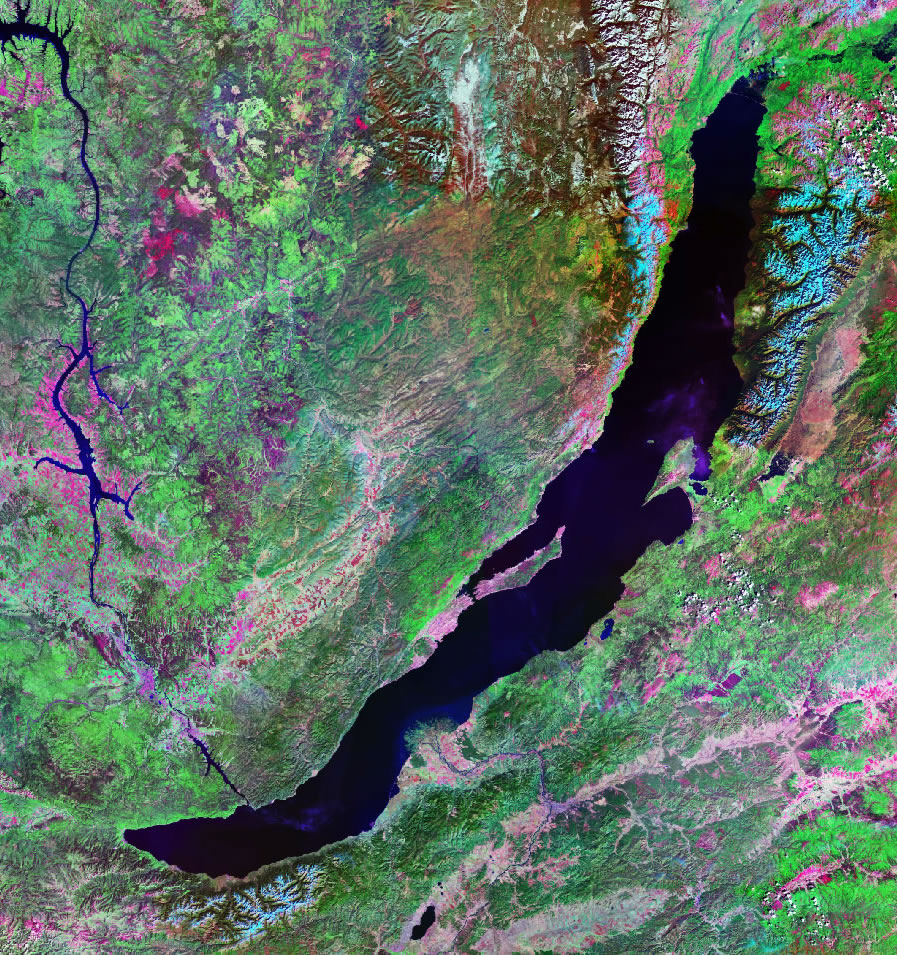
Called by some the Blue Eye of Siberia and by others the Sacred Sea, Lake Baikal, at more than 5,000 feet ( 1,620 meters ), is the world’s deepest lake. The lake has many other interesting features also. For example, more than 330 rivers flow in but only the Angara flows out.

Even the potential for oil-related environmental disaster along the Eastern Siberia–Pacific Ocean pipeline was enough to get that project moved farther away from one one of UNESCO's world heritage objects.

What do you do when Mother Nature herself starts leaking the oil?


Image by geology.com using NASA Landsat data

This five-minute data visualization shows all 27 named storms of the 2005 Atlantic hurricane season, including sea surface temperature, clouds, storm tracks and storm strength.

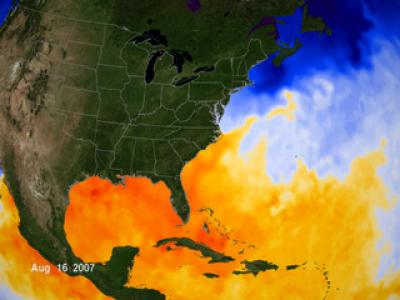
Orange and red colors represent ocean temperatures at 82 degrees F or higher - the temperature required for hurricanes to form.

All vertebrates use geometric cues like walls and corners to figure out how to go from place to place. Some, like rats and human children, are so influenced by these geometric cues that they often ignore more reliable features such as a distinctive object or colored wall.

This surprising reliance on geometry has led researchers to suggest the existence of a geometric module in the brain. However, since both humans and laboratory animals typically grow up in environments not entirely made up of right angles and straight lines, the prevalent use of geometry could reflect nurture rather than nature.

Sea surface temperatures are one of the key ingredients for tropical cyclone formation and they were warming up in the Gulf of Mexico, Caribbean and eastern Atlantic Ocean by the middle of August. As a result, they helped spawn Hurricane Dean in the central Atlantic, and Tropical Storm Erin in the Gulf of Mexico, both during the week of August 13.

By late June, sea surface temperatures in the Gulf of Mexico were all over 80 degrees Fahrenheit. That's one thing that hurricane forecasters watch for because sea surface temperatures of 80 degrees Fahrenheit or warmer are needed to power tropical depressions into tropical storms and grow them into hurricanes.

These areas or warm sea surface waters (80 degrees F or higher) are depicted in yellow, orange, and red.

Yes, the sun has its own magical tune and if you want to hear it, click below. Even more interesting, the earth dances in rhythm.

David Thomson and Louis Lanzerotti, team members of the HISCALE experiment on board Ulysses, together with colleagues Frank Vernon, Marc Lessard and Lindsay Smith have proven that sounds generated deep inside the Sun cause the Earth to shake and vibrate in sympathy. They show that distinct, isolated tones, predicted to be generated by pressure and gravity waves in the Sun, are present in a wide variety of terrestrial systems.

Using statistical analysis they have discovered the same distinct tones emitted by the Sun in seismic data here on Earth.

