


Researchers in an ongoing U.S.-Cuban archaeological expedition, co-led by The University of Alabama, are attempting to learn more about the native people Christopher Columbus encountered on his first voyage to the New World.

UA’s department of anthropology and the Central-Eastern Department of Archaeology of the science ministry in Cuba are partnering in the effort, funded by the National Geographic Society and focused on a former large native village, El Chorro de Maita, in eastern Cuba.

“This season, the team is mapping the site and determining the size and location of residential areas within it,” said Dr. Jim Knight, professor of anthropology at UA who set up the project and is advising it.

Two drugs commonly prescribed to treat diabetes double the risk of heart failure, according to new research by the University of East Anglia (UEA).

Rosiglitazone (Avandia) and Pioglitazone (Actos) are recommended by the National Institute of Clinical Excellence (NICE) for the treatment of Type II Diabetes. Prescriptions for the drugs, known as thiazolidinediones, have doubled over the last three years and they were taken by more than 1.5 million people in England last year.

The new research was undertaken by Dr Yoon Loke, a clinical pharmacologist at UEA’s School of Medicine, Health Policy and Practice, working with colleagues at Wake Forest University in the US. The results are published in the August edition of the journal Diabetes Care.

In the hot springs of Yellowstone National Park, a team of researchers have discovered a new genus and species of chlorophyll-producing bacterium that transforms light into chemical energy. The discovery is described in a paper written by Don Bryant of Penn State University and David M. Ward of Montana State University.

Yellowstone National Park is a tourist's wonderland because of its wildlife, mountains, geysers and hot springs. But the park is also a scientific reservoir that harbors what may be the world's largest diversity of thermophilic (heat-loving) microorganisms.

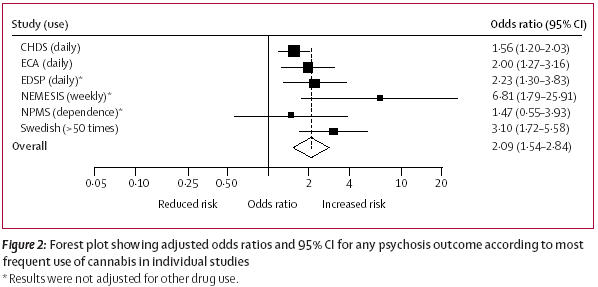
There is now enough evidence to warn young people that using cannabis could increase their risk of developing a psychotic illness later in life by more than 40%, conclude authors of an Article published in this week’s edition of The Lancet. “Governments would do well to invest in sustained and effective education campaigns on the risks to health of taking cannabis.”

Cannabis, or marijuana, is the most commonly used illegal substance in most countries, including the UK and USA.

Only a quarter of the $1.5 billion donated by G8 leaders to eradicate disease among poor children will be spent on the costs of vaccines, while three-quarters will go to profits. G8 should instead negotiate the lowest, sustainable, non-profit price in order to maximize the number of lives saved and children who can benefit.

The blue coloring in tortillas is more than just appearance. The color is due to the presence of anthocyanins in the corn and these are the same health promoting compounds found in purple berries and red wine.

Scientists in Mexico, home of the taco, found that tortillas made from blue corn had less starch and a lower glycæmic index than their white counter parts. They also found that the blue tortillas had 20% more protein than white.

The glycæmic index (GI) ranks carbohydrates according to their effects on blood glucose levels. Foods with a lower GI are considered healthier as they slowly release sugar into the bloodstream. This reduces fluctuations in our blood glucose and insulin levels, helping to maintain a steady supply of energy.

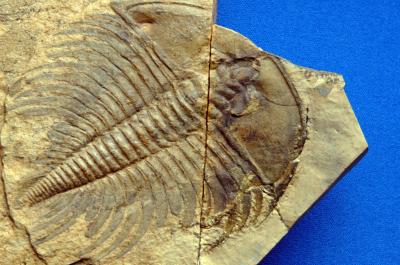
The abundant diversity of characteristics within species likely helped fuel the proliferation and evolution of an odd-looking creature that emerged from an unprecedented explosion of life on Earth more than 500 million years ago.

“From an evolutionary perspective, the more variable a species is, the more raw material natural selection has to operate on,” said paleontologist Mark Webster, an Assistant Professor in Geophysical Sciences at Chicago.

Paleontologists for decades have suspected that highly variable species evolved more rapidly than others, said Nigel Hughes, Professor of Earth Sciences at the University of California, Riverside.

Isoprene is a hydrocarbon volatile compound emitted in high quantities by many woody plant species, with significant impact on atmospheric chemistry.

The Australian Blue Mountains and the Blue Ridge Mountains in the Eastern United States are called such because of the spectral properties of the huge amounts of isoprenes emitted from the trees growing there.

The correlation between leaf temperature and isoprene emission in plants is well known but the physiological role of isoprene emission, quite costly to the plant, is still under debate.


This image illustrates infrared thermographic images of Grey poplar leaves under different leaf temperatures.

Large quantities of ozone-depleting chemicals have been discovered in the Antarctic atmosphere by researchers from the University of Leeds, the University of East Anglia, and the British Antarctic Survey, but sea salt and algae are more to blame than mankind, say researchers.

The team of atmospheric chemists carried out an 18-month study of the make-up of the lowest part of the earth's atmosphere on the Brunt Ice Shelf, about 20 km from the Weddell Sea. They found high concentrations of halogens - bromine and iodine oxides – which persist throughout the period when there is sunlight in Antarctica (August through May). A big surprise to the science team was the large quantities of iodine oxide, since this chemical has not been detected in the Arctic.

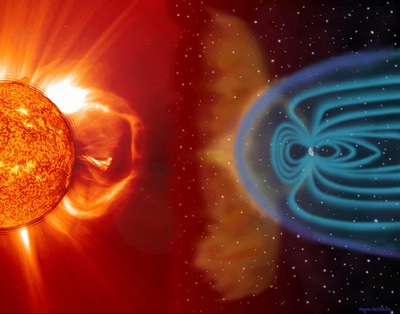
‘Killer’ electrons are highly energetic, negatively charged particles found in near-Earth space. They can critically, and even permanently, damage satellites in orbit, including telecommunication satellites, and pose a hazard to astronauts.

Several theories have been formulated in the past to explain the origin of killer electrons, and many uncoordinated observations have already been performed. Recently, scientists got a boost in their understanding of this hazardous phenomenon. This was possible thanks to a unique set of data, collected simultaneously, by a global armada of ground and space observatories during the recovery phase of a large geomagnetic storm.

