




Birds use songs to attract mates and mark their territory but according to University of Washington researchers, it's a naturally occurring steroid that improves their brains and not practice.

Neuroscientists have long attempted to understand if structural changes in the brain are related to sensory experience or the performance of learned behavior. Eliot Brenowitz and colleagues at the University of Wisconsin have showed that the Gambel’s white-crowned sparrow uses testosterone, a naturally occurring steroid, to trigger the seasonal growth of these brain regions.

Their finding is counter to some previous work with other birds and rodents that indicated environmental factors can influence brain development and create more neuronal connections.

Scientists at the Weizmann Institute have proposed a mechanism which explains the precision of prognoses for trinucleotide repeat diseases and say it may lead researchers in the direction of a possible prevention or cure.

Based on the literature on some twenty known trinucleotide repeat diseases and their knowledge of the mechanisms governing somatic mutation, the team has proposed a mechanism that explains the precise relations between the patient's age of onset and the number of repeats in the diseased gene in the patient's genome. Using computer simulations and mathematical analysis of the mechanism the scientists have characterized the way in which the disease progresses.

People with serious cases of writer’s cramp have brain abnormalities, according to a study published in the July 24, 2007, issue of Neurology®.

People with writer’s cramp had less brain tissue than healthy people in three areas of the brain that connect the senses and movement with their affected hand.

Writer’s cramp is a form of dystonia, an involuntary, sustained muscle contraction. Writer’s cramp often occurs in people who have used the same muscles repeatedly for years.

Dr. Ronald Evans (Salk Institute) and colleagues have discovered that mutations in the mouse gene encoding PPARγ adversely affect lactation milk quality, and have serious health consequences for nursing pups.

“By examining PPARγ functions in vivo, our work reveals an unexpected link between diet, inflammation and the quality of mothers milk, “ explained Dr. Evans.

PPARγ (peroxisome proliferator-activator receptor gamma) is a nuclear receptor that is known to regulate metabolism and inflammation in various organisms. In fact, human PPARγ is the main target of the drug class of thiazolidinediones (TZDs), which is used to manage diabetes.

Improved sensing and detection to combat terrorism has brought the need for advanced defense technologies to the forefront and laser-based defense systems are now being designed for this need, including the use of infrared countermeasures to protect aircraft from heat-seeking missiles and highly sensitive chemical detectors for reliable early detection of trace explosives and other toxins at a safe distance for personnel.

Since practical systems must be easily portable by a soldier, aircraft or unmanned vehicle, they must be lightweight, compact and power efficient. In addition, such systems also would need to be widely deployable and available to all soldiers, airplanes and public facilities, which requires a low production and operating cost.

The answer is, of course... it depends. But with gas prices as high as they are these days, it’s good to know when it’s worthwhile to drive a few miles to save five cents a gallon, or when it’s just better to fill up at the station around the corner.

To determine where you should top off your tank, it’s just a matter of running the numbers.

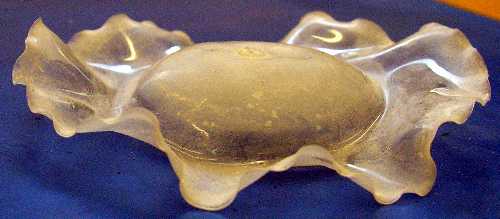
There are many objects in nature, such as flowers, that are “pre-programmed” to develop into delicate, beautiful and intrically shaped forms. But can this pre-determined process be duplicated by man starting with plain, flat surfaces?

Yes, say Dr. Eran Sharon and his co-workers, Yael Klein and Efi Efrati, at the Hebrew University of Jerusalem Racah Institute of Physics, who have succeded for the first time anywhere in programming polymer sheets to bend and wrinkle by themselves into prescribed structures. Their work was described in the journal Science.

They made flat discs of a soft gel that, when warmed gently, curved into domes, saddles and even sombrero shapes.

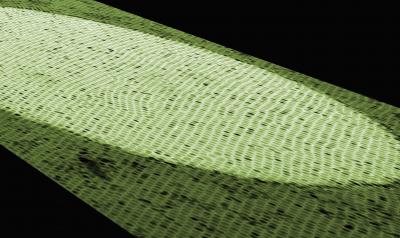
“It’s an amazing little marvel,” said Heinrich Jaeger, Professor in Physics at the University of Chicago. “This is not a very fragile layer, but rather a robust, resilient membrane.”

Even when suspended over a tiny hole and poked with an ultrafine tip, the membrane boasts the equivalent strength of an ultrathin sheet of plexiglass that maintains its structural integrity at relatively high temperatures.

When nicotine binds to a neuron, how does the cell know to send the signal that announces a smoker’s high?

As with other questions involving good sensations, the answer appears to be sugar. A University of Southern California study proposes a role for sugar as the hinge that opens a gate in the cell membrane and brings news of nicotine’s arrival.

Structural biologist Raymond Stevens of The Scripps Research Institute, who was not involved in the study, called it “a landmark accomplishment for the fields of structural biology and neuronal cell signaling.”

The driving forces behind major shifts in recent human evolution and adaptation have been the subject of intense debate for more than 100 years.

