
They're among the oldest fungi on Earth, yet they could hold the keys to solving some modern problems: Anaerobic gut fungi, being studied by UC Santa Barbara chemical engineer Michelle O'Malley, have proven especially effective at breaking down plant material and unlocking sugars that can be processed into compounds that can be used in a variety of applications.

"We've gotten a global view into how these really old fungi work," said O'Malley, corresponding author of a paper that appears today in the journal Science.

Regions of the brain can "dance" on their own but when they work together they fall in step to a well-timed choreography: according to a study just published in PLOS Biology, when a rat is engaged in a sensory recognition task and needs to make a spatial choice based on previous knowledge, the sensory, motor, and memory regions of the animal's brain (but similar mechanisms are also likely to exist in the human brain), make the rhythms of electrical activity coherent with each other. The study's co-first authors are Natalia Grion and Athena Akrami, research scientists at the International School for Advanced Studies (SISSA) of Trieste, and the study leader is Mathew Diamond, professor of cognitive neuroscience and deputy director of SISSA.

An international team of scientists, led by researchers at University of California, San Diego School of Medicine and the J. Craig Venter Institute (JCVI), have created the first comprehensive, cross-species genomic comparison of all 20 known species of Leptospira, a bacterial genus that can cause disease and death in livestock and other domesticated mammals, wildlife and humans.

Researchers have harvested a robust collection of antibodies from a survivor of the recent Ebola outbreak, and one subset of antibodies was found to be particularly potent for neutralizing the virus in mice. This group of antibodies, which target the stalk of a particular protein in the virus's membrane, could lead to new therapies to fight Ebola. Plasma harvested from one survivor of the 2014 Zaire outbreak demonstrated a particularly strong immune response to the virus three months after infection, and so Zachary Bornholdt et al. analyzed this donor's immune system in greater detail. The authors isolated 349 antibodies from the donor's B cells, which "memorize" pathogens, that work to neutralize Ebola.

Researchers have created a library of fungi-secreted enzymes that breakdown plant biomass, which is no easy feat for man, and mapped out how these enzymes function together. The results could help simplify and lower the costs of biofuel production. Lignocellulose, or plant dry matter, is the most abundant material available on Earth for the production of biofuels, including ethanol. Yet current methods to convert such biomass into fuel require costly pretreatment processes. Fungi within the guts of herbivores are highly efficient at breaking down lignocellulose. Therefore Kevin Solomon et al. took samples of feces of herbivorous mammals with different diets, isolating three previously uncharacterized cultures: Anaeromyces robustus, Neocallimastix californiae, and Piromyces finnis.

RICHLAND, Wash. - Nature's figured it out already, how to best break down food into fuel. Now scientists have caught up, showing that fungi found in the guts of goats, horses and sheep could help fill up your gas tank too.

The researchers report in the journal Science on Feb. 18 that these anaerobic gut fungi perform as well as the best fungi engineered by industry in their ability to convert plant material into sugars that are easily transformed into fuel and other products.

"Nature has engineered these fungi to have what seems to be the world's largest repertoire of enzymes that break down biomass," said Michelle O'Malley, lead author and professor of chemical engineering at the University of California, Santa Barbara.

The mitochondrion isn't the bacterium it was in its prime, say two billion years ago. Since getting consumed by our common single-celled ancestor the "energy powerhouse" organelle has lost most of its 2,000+ genes, likely to the nucleus. There are still a handful left--depending on the organism--but the question is why. One explanation, say a mathematician and biologist who analyzed gene loss in mitochondria over evolutionary time, is that mitochondrial DNA is too important to encode inside the nucleus and has thus evolved to resist the damaging environment inside of the mitochondrion. Their study appears February 18 in Cell Systems.

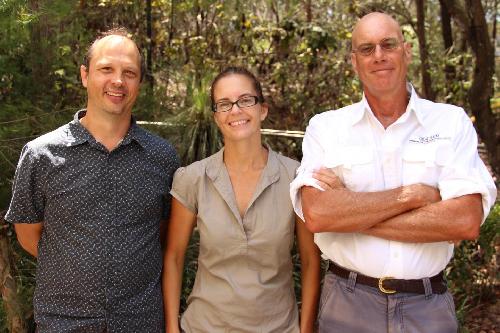
Ecotourism can provide the critical difference between survival and extinction for endangered animals, according to new research from Australia's Griffith University.

Using population viability modelling, the Griffith team of Professor Ralf Buckley, Dr Guy Castley and Dr Clare Morrison have developed a method that for the first time quantifies the impact of ecotourism on threatened species.

Their findings are published in the journal PLOS ONE.

pic

Griffith University researchers, from left, are Dr Guy Castley, Dr Clare Morrison and Professor Ralf Buckley. Credit: Griffith University

Imagine living on a world where, every 69 years, the sun disappears in a near-total eclipse that lasts for three and a half years.

That is just what happens in an unnamed binary star system nearly 10,000 light years from Earth. The newly discovered system, known only by its astronomical catalog number TYC 2505-672-1, sets a new record for both the longest duration stellar eclipse and the longest period between eclipses in a binary system.

When Ebola hysteria broke out in the United States in 2014, mainstream media got a little crazy. While one person was afflicted, 28,000 people got heart disease with far less fanfare. Meanwhile, the National Institutes of Health engaged in political theater and claimed it couldn't work on Ebola because they lacked the budget. Science 2.0 noted that they had gotten $300 billion while one tiny company strugged to get money for clinical trials - and it's only help was from the Defense Threat Reduction Agency, rather than the NIH. Nonetheless, Congress gave the NIH more money.

