
TORONTO, CANADA - Cognitive scientists have found more evidence that aging brains work differently than younger brains when performing the same memory task, pointing to a potentially new direction for age-related cognitive care and exploration.

The study, led by the Rotman Research Institute at Baycrest Health Sciences, found that younger and older adults show very different brain wave patterns when performing the same memory task. The study was published online in January in the journal Neurobiology of Learning and Memory.

Ocean acidification (the ongoing decrease in the pH of the Earth's oceans, caused by the uptake of CO2 from the atmosphere), is affecting the formation of the skeleton of coralline algae which play an important part in marine biodiversity, new research from the University of Bristol, UK has found.

Coralline red algae form maerl beds which provide important habitat in shallow waters, including the UK coastal shelf. Maerl hosts a high diversity of organisms by providing habitats, shelter and nursery areas for, amongst others, fish larvae and young scallops. Both coralline algae and the maerl beds they generate are protected by national and international regulation as they form biodiversity hotspots and support fisheries.

South Africa's Australopithecus sediba, discovered in 2008 at the renowned archaeological site of Malapa in the Cradle of Humankind World Heritage Site, is again helping us to study and understand the origins of humans.

Research published in 2012 garnered international attention by suggesting that this possible early human ancestor had lived on a diverse woodland diet including hard foods mixed in with tree bark, fruit, leaves and other plant products.

The first time back to the gym after a long break usually results in sore muscles. Fortunately, the return trip a few days later--if it happens--is generally less painful.

Scientists have studied this reduced-soreness phenomenon for decades and even have a name for it--the repeated bout effect. Despite all those years of research, they still can't figure out exactly why people feel less sore the second time around.

What they do know is the immune system plays some role in how the muscle repairs itself and protects against additional damage. But now exercise science researchers at BYU have produced evidence that shows for the first time the surprising presence of very specific immune workers: T-cells.

With a long delay, last week I was finally able to have a look at the book "From the Great Wall to the Great Collider - China and the Quest to Uncover the Inner Workings of the Universe", by Steve Nadis and Shing-Tung Yau. And I would like to report about my impressions here.

The combination of erosion and melting ice caps led to a massive increase in volcanic activity at the end of the last ice age, according to new research. As the climate warmed, the ice caps melted, decreasing the pressure on the Earth's mantle, leading to an increase in both magma production and volcanic eruptions. The researchers, led by the University of Cambridge, have found that erosion also played a major role in the process, and may have contributed to an increase in atmospheric carbon dioxide levels.

In 2010, a research team garnered attention when it published evidence of finding the first animals living in permanently anoxic conditions at the bottom of the sea. But a new study, led by scientists at the Woods Hole Oceanographic Institution (WHOI), raises doubts.

One alternative scenario is that cadavers of multicellular organisms were inhabited by bacteria capable of living in anoxic conditions, and these "bodysnatchers" made it seem that the dead animals were living, said Joan Bernhard, a geobiologist with WHOI and the lead author of the new study published in the December 2015 issue of the scientific journal BMC Biology.

Research from the University of Rochester finds that caring for others dips during adolescence. But when young people feel supported from their social circles, their concern for others rebound.

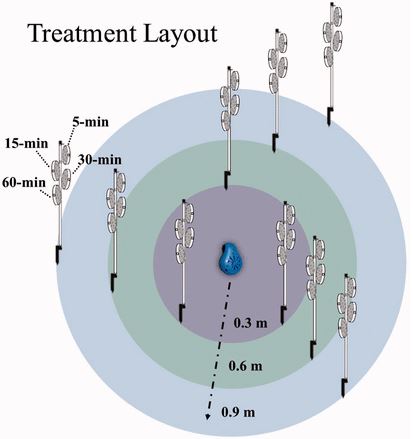
A product called the OFF! Clip-On repellent device could be an effective tool for preventing bites from the Aedes aegypti mosquito, the primary vector of Zika, chikungunya, dengue, and yellow fever, though DEET, a permethrin or even good old-fashioned DDT will also do the trick, unless you are a Joe Mercola or SourceWatch reader and think science is a vast, right-wing conspiracy out to give you cancer. 

A genome-wide association study has identified genetic variants associated with being a morning person. The authors identified 15 locations in DNA (loci) associated with "morningness."

