

We don’t need to be Christian to celebrate Christmas. That’s been true for a long time. We don’t even need to be religious. Considering the commercialization of the holiday, that might be an advantage.

But there is no way to get around the religious iconography. Jesus, nativity scenes and Christian symbols are everywhere. So how do you explain this to your children – or someone else’s children – if you and they are not religious?

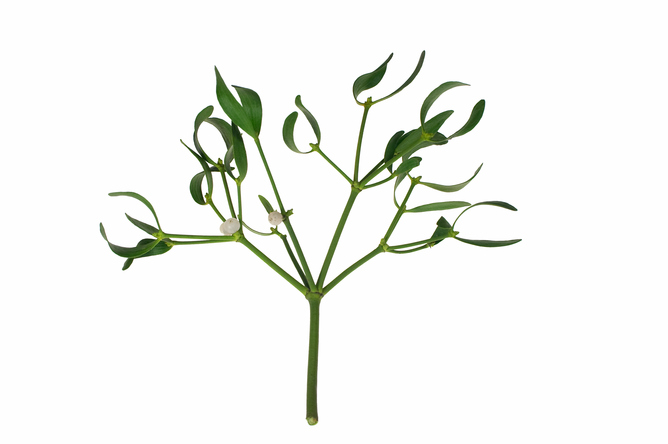
Every year, almost without thinking about it, we incorporate certain plant species into our Christmas celebrations. The most obvious is the Christmas tree, linked historically in England to Prince Albert – but its use in British homes goes back to at least 1761 when Charlotte wife of George III put up a tree at the royal court. (It’s probably worth noting here that the first artificial-brush Christmas tree was produced using the same machinery that was originally designed to produce toilet brushes.)

During winter it can sometimes feel that the whole day passes in the blink of an eye and that evening darkness comes far too quickly. While more daylight would be a lovely thing, the early darkness has one big advantage: the stars. On a clear evening you can look up and see far into space. I’ve spent many winter evenings with my children, on our way home from activities, looking for Orion (and other constellations), following its path through the seasons.

Stars and space are two of the most popular science topics, whatever the age of the child.

PITTSBURGH, Dec. 22, 2015 - Children younger than 5 who live in economically disadvantaged areas had a greater risk of medication poisoning that resulted in referral to a health care facility, according to scientists at the University of Pittsburgh Graduate School of Public Health and the University of California, San Diego. These areas were rural and experienced high unemployment, along with lower rates of high school graduation and lower household income.

The analysis of Pittsburgh Poison Center data, published online and scheduled for print in the January issue of Clinical Toxicology, gives insight into potential geographic targets for poison prevention outreach.

CHAMPAIGN, Ill. -- A number of drugs already approved to treat parasitic infections, cancers, infertility and other conditions also show promise as antibiotic agents against staph and tuberculosis infections, according to a new study by University of Illinois chemists and collaborators. Because these agents act against multiple targets within the bacteria, it may be harder for bacteria to develop resistance.

The new study, led by Illinois chemistry professor Eric Oldfield, was published in the Proceedings of the National Academy of Sciences.

NEW YORK, NY - Cannabidiol (CBD), a medical marijuana derivative, was effective in reducing seizure frequency and well-tolerated and safe for most children and young adults enrolled in a year-long study led by epilepsy specialists at NYU Langone Medical Center.

Vultures are poor flappers and need to soar in order to fly, relying on updrafts to gain altitude. Spend enough time watching vultures, though, and you'll notice them wobbling at low altitudes as well as circling high in the air. New research in The Auk: Ornithological Advances shows how vultures use small-scale turbulence to stay aloft even when weather conditions don't favor the formation of thermals. The mechanism and purpose of this behavior, which researchers have dubbed 'contorted soaring,' are explained for the first time in the forthcoming article.

December 23, 2015--(BRONX, NY)--Ebola virus and bats have been waging a molecular battle for survival that may have started at least 25 million years ago, according to a study led by researchers at Albert Einstein College of Medicine, the University of Colorado-Boulder (CU-Boulder) and the U.S. Army Medical Research Institute of Infectious Diseases (USAMRIID) that published online today in the journal eLife. The findings shed light on the biological factors that determine which bat species may harbor the virus between outbreaks in humans and how bats may transmit the virus to people.

Johns Hopkins has demonstrated in animals that applying a pacemaker's mild electrical shocks to push the heart in and out of normal synchronized contraction for part of each day may be an effective way to slow down the progression of heart failure, a disorder that afflicts millions of Americans.

MINNEAPOLIS - The hepatitis C virus may be associated with an increased risk of developing Parkinson's disease, according to a study published in the December 23, 2015, online issue of Neurology®, the medical journal of the American Academy of Neurology. Parkinson's disease is considered the second most common degenerative brain disorder after Alzheimer's disease. Hepatitis C is a liver infection caused by a virus.

