The dye business of the 19th century was a mature, fast-moving and international industry, according to an analysis of four purple dresses. The study found that a brand new purple dye went from first synthesis to commercial use in just a few years.

Before the 1800s, purple dye came at a premium, so it was usually restricted to royalty -- hence the connection between royals and purple. The 19th century saw the discovery of several synthetic purple dyes, making purple textiles more affordable and readily available. Understanding where these dyes came from and were used is therefore of historical interest.

Falling oxygen levels caused by global warming could be a greater threat to the survival of life on planet Earth than flooding, according to an estimate led by Sergei Petrovskii, Professor in Applied Mathematics from the University of Leicester's Department of Mathematics.

Their mathematical model estimates that an increase in the water temperature of the world's oceans of around six degrees Celsius, which the most aggressive claims (two degrees is the scientific consensus) say could occur as soon as 2100, could stop oxygen production by phytoplankton by disrupting the process of photosynthesis. 

The clinical potential and ethical difficulty posed by gene-editing technology, which can “find and replace” targeted genes, is seemingly endless.

But while public attention is focused on whether we should use it to change the genes of embryos, application of the technology to genetically modify pig tissues and organs for transplantation into humans could potentially have a bigger and more immediate impact on human health.

An experiment to study aging in yeast cells followed molecular processes inside and discovered that an overproduction of the proteins needed to make new proteins which could be the root cause of the cellular processes that eventually kill the cells. 

Baker's yeast is extensively used to study aging. A 'mother cell' can produce some twenty daughters in about four days, following which it dies. But as mothers and daughters are mixed in any yeast culture, it is virtually impossible to follow the aging process in great detail. 

Russian scientists have found that neoadjuvant chemotherapy in patients with breast cancer can stimulate evolution of the tumor. The results of the research conducted by Nicholay Litvyakov, D.Sc. at Cancer Research Institute, Head of the Tumor Virology Laboratory, and TSU researcher Marina Ibragimova, were published in "Siberian Journal of Oncology."

Scientists conducted a study in which they analyzed biopsies of women with breast cancer and preparing for operation. In each biopsy, researchers examined the genetic landscape - chromosomal abnormalities that are present in it.

ROCHESTER, Minn. -- Burnout among U.S. physicians is getting worse. An update from a three-year study evaluating burnout and work-life balance shows that American physicians are worse off today than they were three years earlier. These dimensions remained largely unchanged among U.S. workers in general, resulting in a widening gap between physicians and workers in other fields. The study conducted by Mayo Clinic researchers in partnership with the American Medical Association compared data from 2014 to metrics they collected in 2011 and found that now more than half of U.S. physicians are experiencing professional burnout. The findings appear in Mayo Clinic Proceedings.

Scientists have identified a network of nine genes that play a key role in the onset of Alzheimer's Disease.

The finding could help scientists develop new treatments to delay the onset of the disease, said lead researcher Associate Professor Mauricio Arcos-Burgos from The Australian National University (ANU).

In a study of a family of 5,000 people in Columbia, scientists identified genes that delayed the disease, and others that accelerated it, and by how much.

pic

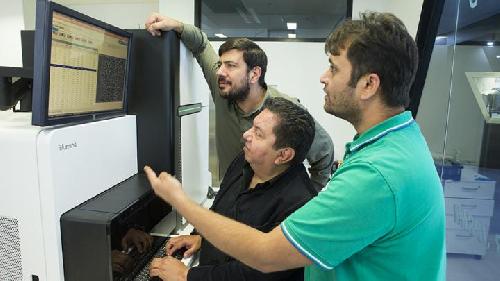
Associate Professor Arcos-Burgos (centre) with Dr Claudio Mastronardi and Dr Hardip Patel. Credit: Stuart Hay, ANU

Folsom, Calif., (Dec. 1, 2015) - A new study published in the Journal of Nutrition found that one serving of walnuts (1oz) may provide 146 calories, which is 39 calories less, or 21 percent fewer, than the 185 calories listed in the USDA Nutrient Database. (1) The study takes into account the digestibility of walnut pieces and halves, and further research is needed to better understand the results of the study and how this technique for calculating calories could potentially affect the calorie count of other foods. The research was led by Dr. David J. Baer, PhD, Supervisory Research Physiologist at the Agricultural Research Service, United States Department of Agriculture (USDA).

Many goals, from finding your dream job to finding a date to the movies, can feel completely out of your control. A common piece of advice to manage this uncertainty is: "Always have a backup plan." But is it actually wise to invest time and energy into backup plans, or is it better to focus all of your energies on trying one way to achieve a goal? To address these questions, psychologists from the University of Zurich developed a new theoretical model to study the use and usefulness of backup plans, which will be published in the January issue of Perspectives on Psychological Science.

Cancer cells are continuously produced in our bodies, where most of them are recognized by our immune systems and destroyed. Some, however, escape this innate surveillance system and find a place to survive and grow.

Several factors expelled by tumor cells are concentrated in the area immediately surrounding the tumor, called the tumor microenvironment. While it is established that these factors support and enhance cancer cell growth and multiplication, it was not known whether these factors influence neighboring normal cells.