



At the flip of a switch, neuroscientists can send a sleeping mouse into dreamland.

The researchers did it by inserting an optogenetic switch into a group of nerve cells located in the ancient part of the brain called the medulla, allowing them to activate or inactivate the neurons with laser light. 

When the neurons were activated, sleeping mice entered REM sleep within seconds. REM sleep, characterized by rapid eye movements, is the dream state in mammals accompanied by activation of the cortex and total paralysis of the skeletal muscles, presumably so that we don't act out the dreams flashing through our mind.

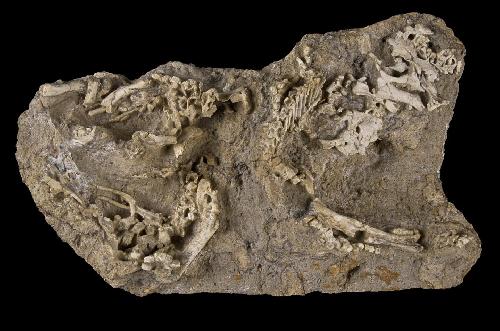
Scientists describe a perinatal group of Saurolophus angustirostris, a giant hadrosaur dinosaur, all likely from the same nest, found at the Dragon's Tomb in Mongolia, in a new study.

The Dragon's Tomb is a location famous for finding Late Cretaceous dinosaur fossils in the Gobi Desert, Mongolia, the authors of this study described three or four perinatal specimens or "babies" and two associated eggshell fragments. The young dinosaurs were likely part of a nest originally located on a river sandbank, and the authors suggest they are likely Saurolophus angustirostris (meaning 'lizard crest'), a dinosaur that is known from multiple well-preserved complete skeletons.  

The use of prescription-only painkillers by athletes is hardly new, but debate about their (ab)use in Australia has recently been brought into focus by the emergency hospitalization of South Sydney NRL players Aaron Gray and Dylan Walker, both of whom suffered a life-threatening reaction to a combination of controlled drugs. These athletes were recovering from post-season surgery to address injuries, with painkillers prescribed by their surgeons to assist with post-operative discomfort.

One of every nine infants in the United States is born early and, thus, with increased risk of cognitive difficulties, problems with motor skills, and attention deficit-hyperactivity disorder (ADHD), autism spectrum disorders and anxiety.

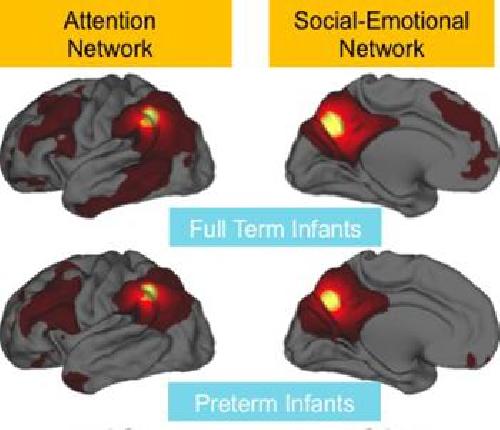
Babies born prematurely face an increased risk of neurological and psychiatric problems that may be due to weakened connections in brain networks linked to attention, communication and the processing of emotions, new research shows. 

Studying brain scans from premature and full-term babies, researchers zeroed in on differences in the brain that may underlie such problems.

Children with the genetic disorder tuberous sclerosis complex (TSC) often need epilepsy surgery for severe, uncontrollable seizures and a new study finds that seizure control is improved for patients undergoing more extensive surgery.

Seizures occurring in TSC are related to development of brain tumors, known as "tubers," that develop in this disorder. But the new study by Dr. Aria Fallah of Miami Children's Hospital and colleagues finds better outcomes when surgery includes the entire "epileptogenic zone" from which seizures are originating--not just the tuber itself.

Epilepsy Surgery for Tuberous Sclerosis--Study from Six Specialty Centers

The accuracy and reliability of expert advice is often compromised and needs to be interrogated with the same tenacity as research data to avoid weak and ill-informed policy, according to risk analysis scholars writing in Nature.

This is a particularly silly story about Nibiru, published today (in the Daily Telegraph): The end of the world now predicted for December say doomsday groups: "Terrifying stuff. Apparently, the planet due to collide with us is often visible, you may have seen it already. If you spot a blob next to the sun when you take a photograph, it could be the deadly planet, not a reflection."

A threatened tree species in Alaska could serve as a model for integrating ecological and social research methods in efforts to safeguard species that are vulnerable to climate change effects and human activity.

In a new study, scientists assessed the health of yellow cedar, a culturally and commercially valuable tree that is experiencing climate change-induced dieback and that is found throughout coastal Alaska.

In an era when climate change threatens to touch every part of the globe, the traditional conservation approach of setting aside lands to protect biodiversity may no longer sufficient to protect species.

Cervical cancer is an "enormous burden" for Latin American society, and the third leading cause of cancer deaths among women in the region, say Drs. María Correnti and María Eugenia Cavazza of the Central University of Venezuela, Caracas, Venezuela. 

"In contrast to other types of cancer, cervical cancer is a preventable and curable disease if it is diagnosed and treated early," say Drs Correnti and Cavazza in an accompanying editorial.

"But the absence of an effective prevention strategy leads to delayed diagnosis, and turns it into one of the leading causes of death among young women."

It sounded ridiculous when Gina McCarthy claimed nature was fixing itself after they created a toxic waste disaster in Colorado but that future methane needed the EPA to halt it right now, yet science has again shown that nature is more resilient than political bodies think.

Biodiversity can often help protect ecosystems from extreme conditions, according to a study of 46 grasslands in North America and Europe. The results showed that increasing plant diversity decreased the extent to which extremely wet or dry conditions disrupt grassland productivity.

