
It’s always heartwarming when an elected official jumps on a hot topic, opens his or her yap, at which point very little resembling the truth comes out, and scores a few cheap points with the public. If this makes things worse, hey, no one is perfect. And it sure sounds good on the evening news.

The schmuck du jour is Peter Shumlin, the Governor of Vermont. He has a lot to say about narcotic abuse and addiction in his state. So much, in fact, that he is apparently willing to “bend” the truth just a teensy bit. And who would be surprised if he just happened to throw in a bit of irrelevant and incorrect information. After all, and he makes his point rather convincingly. Or does he?

Things have been a little intense lately and the little voice in my head keeps begging, "How did I get here?"  

In other times of quiet introspection the little voice in my head says, "What would you have done differently?"

What the heck happened? 

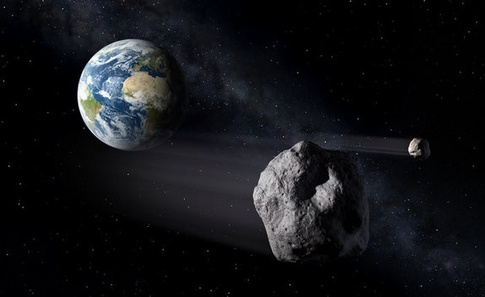
Is anything going to happen on September 24th? Well, the astronomers say, no. It is an ordinary day in space, nothing remarkable of note at all on that day by way of asteroid flybys.

Yes, it's true, as some news stories say, there is a distant flyby by a rather unremarkable asteroid. It is one of dozens that pass by Earth every month. It's not especially large as asteroids go. Indeed there's one more than double its size, passing closer, at a faster speed, on October 4th that nobody is interested in except perhaps a few astronomers.

With an aging baby-boomer population and an estimated 10 million Americans predicted to develop some form of brain disease, supplements claiming to help brain function are flooding the market. Wisconsin-based Quincy Bioscience, the self-proclaimed industry leader, has sold more than two million bottles of its jellyfish-based supplement Prevagen since its launch in 2007 on the premise that it is clinically proven to improve memory. But an investigation by ad watchdogTINA.org has found that the company does not have reliable scientific evidence to back up its claim and the organization has filed a deceptive advertising complaint with the Federal Trade Commission.

MGA Entertainment has developed Project Mc², a new doll line with science experiment kits based in S.T.E.M. / S.T.E.A.M. (Science, Technology, Engineering, Art and Math) curriculum. ​​Designed with the help of a former CIA agent and a science PhD​, h​ere are a couple examples from the new line:
-McKeyla McAlister: doll and experiment activity set that guides through the process of creating a lava lamp with ingredients from the kitchen.​
-Camryn Colye, the doll that comes with blueprint instructions to engineer a skateboard from materials found around the home.

As Nevada and California endure a fourth year of unprecedented drought and this year’s Sierra Nevada snowpack is verified as a 500-year low, a group of Ph.D. scientists from Nevada are knocking on the front door of the tech-industry with a pitch for investment in next generation weather intelligence.

Extreme weather events such as the ongoing drought and mega-fires in the West, record-setting hurricanes in the East, and flash floods across the Mid-West cause upwards of $11 billion in damages each year in the United States.

Research published recently in Science as Culture suggests that men are surprisingly positive and open to the concept of having cancer-detecting biosensors implanted within their bodies – effectively making them cyborgs.

Such auto biotechnologies can aid in the treatment or repair of tissue and organs without external human direction or control. They represent version 2.0 of cyborgs as originally invented by Clynes and Kline in the early 1960’s, referred to as the bodily adaptations required by individuals to live in outer space. Since then, science and technology have made giant leaps forward, leading to the innovative concept of ‘everyday cyborgs’, now increasingly forming an integral part of our reality.

We each give off millions of bacteria from our human microbiome to the air around us every day, and that cloud of bacteria can be traced back to an individual. New research focused on the personal microbial cloud -- the airborne microbes we emit into the air -- examined the microbial connection we have with the air around us.

The findings demonstrate the extent to which humans possess a unique 'microbial cloud signature.'

The challenge of providing Ph.D. students in Physics with an overview of statistical methods and concepts useful for data analysis in just three hours of lectures is definitely a serious one, so I decided to take it as I got invited to the "Indian Summer School" in the pleasant lakeside town of Traunkirchen, Austria. 
Is the public jaded to Internet marketing campaigns concerning overseas crises?