




A large international analysis of 174,000 patients has shown conclusively that statin treatment reduces the risk of cardiovascular disease in women.

Caloric restriction in mice has been touted for accomplishing everything from increasing longevity to lowering cholesterol, but those animals are weaned on that from birth, and humans will go to jail trying it with their children.

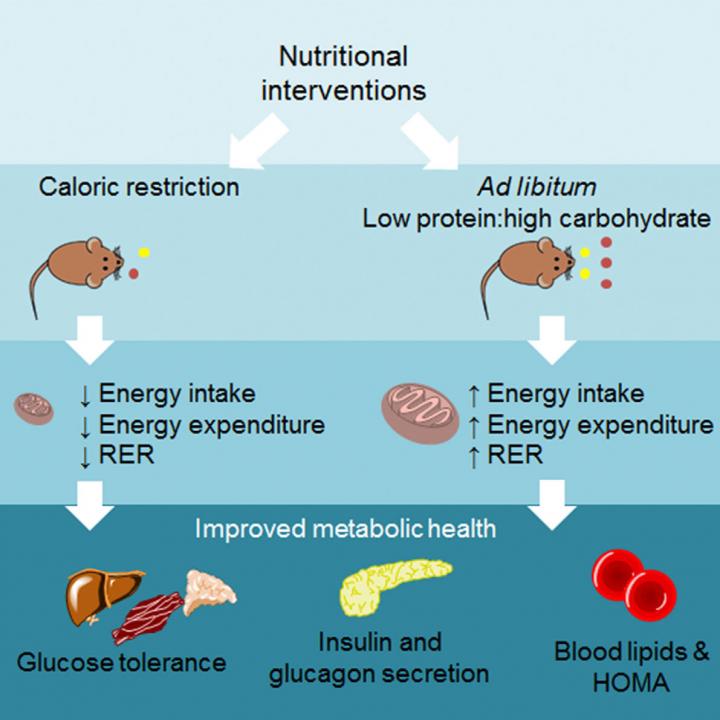
It may be unnecessary - and the diet advice we have gotten for the last 30 years may be also. A new study found that a diet of high carbohydrates and low protein - the opposite of what has been recommended - improves insulin sensitivity and can provide benefits similar to those obtained with calorie restriction.

Should doctors recommend homeopathy? Sometimes placebos work, that is why placebo has an Effect named after it and, because they are inert, they can't do any harm. But when patients or taxpayers are coughing up money for it, the issue is more murky.

Peter Fisher, Director of Research at the Royal London Hospital for Integrated Medicine, says that of all the major forms of complementary medicine, homeopathy is the most misunderstood. He says how regular medicine reviews homeopathy is. For example, in a recent report by the Australian National Health and Medical Research Council which stated that "there are no health conditions for which there is reliable evidence that homeopathy is effective." 

The incidence of serious strep infections has risen dramatically in the last three decades, and this increase is largely attributed to the spread around the globe of a single strain of strep known as the invasive M1T1 clone.

Researchers at the University of California, San Diego (UCSD) School of Medicine and the University of Wollongong in Australia have discovered that, 30 years ago, a virus infected the strep bacteria – creating a deadly strain of “flesh-eating” bacteria that has evolved to produce serious human infections worldwide.

Population studies indicate that up to 90 percent of cases of autism and what are referred to as autism spectrum disorders have some genetic component, but only 10 percent of cases can be attributed to known genetic and chromosomal syndromes.

Since several of those conditions involve deletions or duplications of chromosomal segments – including an inherited deletion of a region of chromosome 15 – investigators have conducted a complete genome scan of samples from the Autism Genome Research Exchange, which contains DNA from families in which at least one child has autism or a related disorder.

STOCKHOLM, August 30, 2010 /PRNewswire/ -- According to the results of a late-breaking analysis involving more than 200 000 patients who participated in recent clinical trials, antihypertensive treatments with renin-angiotensin system (RAS) inhibitors significantly differ in their ability to preserve lives.(1) This new analysis, presented today at the European Society of Cardiology (ESC) Congress, revealed that patients receiving a treatment including a RAS inhibition with perindopril had a significantly greater improvement in life expectancy.


There's no one universal 'intelligence gene' but many thousands each contributing a small increment – and here are three.Credit: Andrew Huff/Flickr (cropped), CC BY

By Beben Benyamin, The University of Queensland and Peter Visscher, The University of Queensland

Forget the Turing and Lovelace tests on artificial intelligence: I want to see a robot pass the Frampton Test.

Let me explain why rock legend Peter Frampton enters the debate on AI.

For many centuries, much thought was given to what distinguishes humans from animals. These days thoughts turn to what distinguishes humans from machines.

More Americans than ever before are supporting their local food markets, but it's not just because they believe the food is fresher or tastes better.

Instead, people are shopping at farmers markets and joining food co-ops in record numbers because these so-called "locavores" are driven to eat locally grown produce by desire to feel a part of something greater than themselves; part of a community that shares their passion for a healthy lifestyle and a sustainable environment. 

By using medicines in unconventional ways and treating patients with a 'stepped care' approach (where the most effective yet least intensive treatment is delivered to patients first), scientists have successfully improved blood pressure control among patients with severe intolerance to antihypertensive medication. 

The study devised a novel treatment strategy for 55 patients, involving fractional dosing with tablets (halving or quartering pills), liquid formulations of antihypertensive drugs and patch formulations of antihypertensive drugs - plus use of unlicensed drugs that lower blood pressure.

