Ongoing developments in stem cell science mean that researchers often have no idea how, one year down the line, they will use specimens of human biological material.


But when a scientist takes a swab of your saliva, a sample of your blood or a piece of your skin to research a particular disease, how do you know that it’s going to be used for the intended purpose? And when it is used for research in a different condition, can you take any action? This is where informed consent comes in.

Perhaps you saw the news recently about astronauts in the International Space Station eating their first home grown lettuce? It's just a beginning, but in the future, could they grow all their own food and get all their oxygen from plants?

Toronto researchers have discovered that a single molecular event in our cells could hold the key to how we evolved to become the smartest animal on the planet.

Benjamin Blencowe, a professor in the University of Toronto's Donnelly Centre and Banbury Chair in Medical Research, and his team have uncovered how a small change in a protein called PTBP1 can spur the creation of neurons - cells that make the brain - that could have fuelled the evolution of mammalian brains to become the largest and most complex among vertebrates.

One day, it might be possible to detect the spread of life among the stars through panspermia--a hypothetical process of life distributed throughout the Milky Way by asteroids, comets, and even spacecraft. Henry Lin and Abraham Loeb of the Harvard-Smithsonian Center for Astrophysics propose, “If future surveys detect biosignatures in the atmospheres of exoplanets,” it ought to be possible to detect the spread of life between stars even without knowing how life spread from host star to host star. That is, we probably wouldn’t be able to detect the mechanisms of panspermia such as asteroid, spacecraft, or what have you.

My husband is used to hearing snark about being a lobbyist. As the owner of a lobbying firm in Chicago, he takes most derogatory comments about his profession in stride. So imagine my surprise when he became outraged reading aloud a boilerplate description of Washington lobbyists in our daughter’s new high school textbook:

In reality, many lobbyists in Washington are ‘fixers’ who offer to influence government policies for a price. Their personal connections help to open doors to allow their paying clients to ‘just get a chance to talk’ with top officials.

There was more to get his Irish up:

A man goes into a butcher shop to buy some steak.

Man: "How much is your steak?"
Butcher: "$4.99 a pound."
Man:       "That's ridiculous! The butcher across town sells steak for $3.99 a pound!"
Butcher: "Then buy it from him."
Man:       "I tried, but he's all out."
Butcher:  "Well, when I'm out, I'll sell it for $1.99 per pound!"

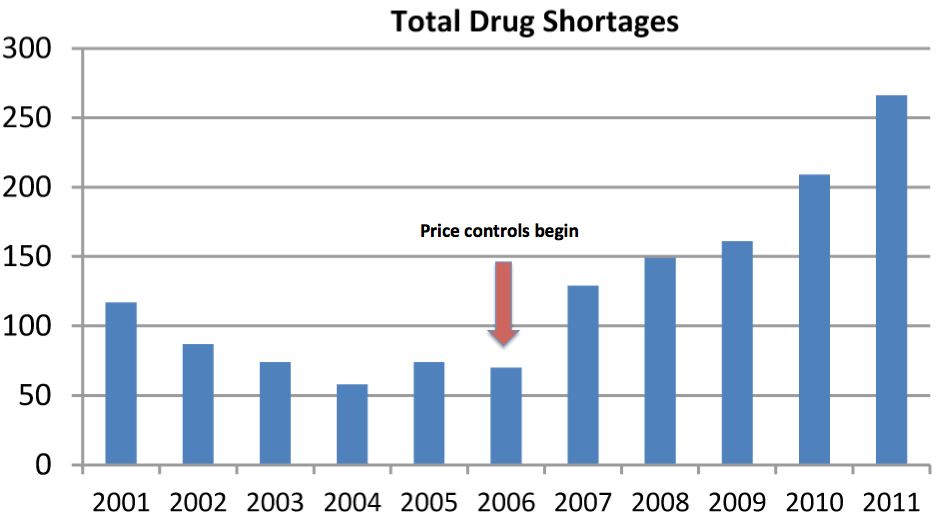
Pretty good joke, but even better when it's applied to what's going on now with generic drug prices. That is, assuming you can figure it out.

But, one thing is clear: They are going up, and really fast.

Vitamin D is being blamed for or is linked to curing everything in 2015, and so it is little surprise a paper uses a genetic study to bolster observational evidence that lower vitamin D levels are associated with increased risk of multiple sclerosis.

Researchers have unraveled the mystery cause of the emerging wheat disease White Grain Disorder, by isolating three previously undiscovered fungi from infected wheat samples and sequenced their genomes.

Australian wheat exports are worth more than $6 billion a year with diseases costing the industry around $1 billion a year. White Grain Disorder emerged about 20 years ago and has sporadically affected crops in Southern Queensland and South Australia, but until now has been poorly understood.

One of the important things in life is to have a job you enjoy and which is a motivation for waking up in the morning. I can say I am lucky enough to be in that situation. Besides providing me with endless entertainment through the large dataset I enjoy analyzing, and the constant challenge to find new ways and ideas to extract more information from data, my job also gives me the opportunity to gamble - and win money, occasionally.

The dominant antibody type present in the blood of transplant recipients may indicate their likelihood of experiencing organ rejection, according to a study which may help doctors identify patients who need aggressive treatments to safeguard the health of their new organ.

Transplant recipients who receive a kidney, heart, or lung often develop an immune response to the foreign tissue in the form of antibodies referred as donor-specific HLA antibodies. Some patients may already have these antibodies before their transplant because they have been exposed to blood products or previous transplants. Although the presence of donor-specific HLA antibodies in a recipient is usually not a good sign, not all patients who have them experience a poor outcome.