





Each cell in the body contains a whole genome, 3 billion of "letters" known as bases, so the data packed into a few DNA molecules could fill an entire hard drive.

Instead of having one reference genome for study, more and more people are having their DNA sequenced, and that is a truly massive amount of data that will require massive computational and storage capabilities beyond anything previously anticipated, says a new assessment from computational biologists and computer scientists at the University of Illinois and Cold Spring Harbor Laboratory.

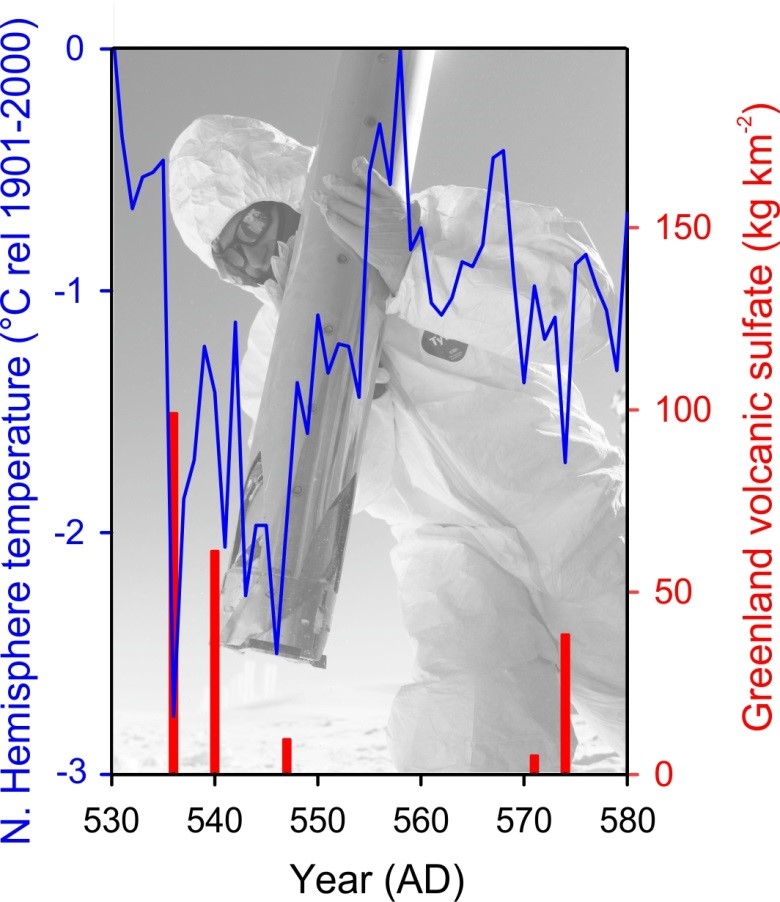
It is well established that volcanic eruptions contribute to climate variability but quantifying those impacts has proven challenging due to inconsistencies in historic atmospheric data observed in ice cores and corresponding temperature variations seen in climate proxies such as tree rings.

A new study in Nature resolves those inconsistencies with a new reconstruction of the timing and associated radiative forcing of nearly 300 individual volcanic eruptions extending as far back as the early Roman period.

A mutation found in most melanomas rewires cancer cells' metabolism, making them dependent on a ketogenesis enzyme, researchers at Winship Cancer Institute of Emory University have discovered. The finding points to possible strategies for countering resistance to existing drugs that target the B-raf V600E mutation, or potential alternatives to those drugs. It may also explain why the V600E mutation in particular is so common in melanomas.

The growth-promoting V600E mutation in the gene B-raf is present in most melanomas, and also in some cases of colon and thyroid cancer. Drugs such as vemurafenib are available that target this mutation, but in clinical trials, after a period of apparent remission, cancers carrying the V600E mutation invariably develop drug resistance.

Bringing reusable bags to the grocery store brings self-identification as an environmentally friendly shopper, but it also influences the things you buy, according to a new paper in the Journal of Marketing.

Reusable bags were correlated to organic food - no surprise there - but also junk food. 

Think you're a foodie? Adventurous eaters, known as "foodies," are often associated with indulgence and excess. However, a new Cornell Food and Brand Lab study shows just the opposite -adventurous eaters weigh less and may be healthier than their less-adventurous counterparts.

More than 34 million children's lives have been saved since 2000 because of investments in child health programs at a cost of as little as $4,205 per child, according to a new analysis in The Lancet.

This analysis builds off the work of an international collaboration of researchers and, for the first time, creates a scorecard that allows governments, policymakers, and donors to track investments in child health and to link those investments to child deaths averted across countries in a comparable manner.  

A common arthritis drug may also be an effective way to help treat patients with blood cancers—at one thousandth the cost of another drug that works the same way.

Myeloproliferative neoplasms (MPN) cause an overproduction of blood cells resulting in symptoms that include night sweats, itching, and tiredness. MPNs are most often diagnosed in people in their 50s and 60s. Current treatment is limited to aspirin, removal of excess blood, and mild chemotherapy. 

Researchers at the University of Georgia have a message for Southern tree farmers worried about unexplainable pine tree deaths: Don't panic.


It is well known that muscles need resistance (gravity) to maintain optimal health, and when they do not have this resistance, they deteriorate. A new report published in the July 2015 issue of The FASEB Journal, however, suggests that this might not be true for all muscles, offering hope that there may be ways to preserve muscle mass and strength for individuals in low-resistance environments, whether it be the microgravity of space, extended periods in a hospital bed, or a 9-5 job behind a desk.

Across the entire world, women have a greater life expectancy than men. But why? Was this always the case?

According to a new study led by University of Southern California Leonard Davis School of Gerontology researchers, significant differences in life expectancies between the sexes first emerged as recently as the turn of the 20th century. As infectious disease prevention, improved diets and other positive health behaviors were adopted by people born during the 1800s and early 1900s, death rates plummeted, but women began reaping the longevity benefits at a much faster rate.

