The Shackled Man hypothesis rightly notes that if two people are running a race, and one has leg irons on, the shackled person is going to perform poorly. 50 yards into the race, if we remove the leg irons, claiming that everyone now has an equal chance to win is silly. 

For that reason, affirmative action when it came to college admissions made perfect sense two generations ago. We know there was institutional racism and we knew it would take time to cure (racists had to retire or die off, and each generation would be less bigoted, but that doesn't happen right away) so giving a minority that likely did not have access to the same education, but had no less ability, a temporary boost, was both ethical and unnecessary.
Government-funded science spends a lot of money promoting the idea that only government-funded science is real science, even though almost 60 percent of basic research and almost 100 percent of applied research is done by the private sector.

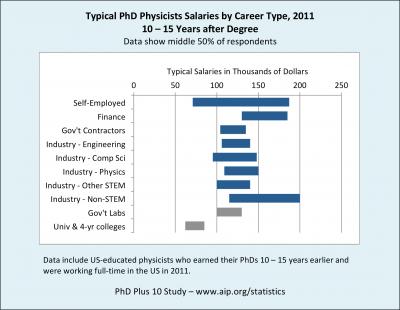
It has worked. When people picture a hard science like physics, they picture a university-based lab. In reality, physicists often leave academia for jobs in the private sector, pursuing careers that are traditionally not tracked in workforce surveys of the physics field. Investment banking loves people who can create models that may translate to the real world, for example.

Studies have shown that men find female faces more attractive when women are ovulating, but how they might know - the visual clues that allow this - are unclear.

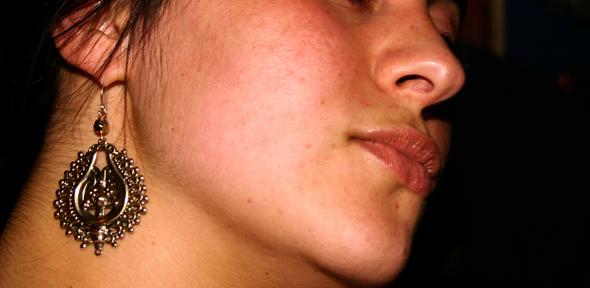
New research research sought to show it might be subtle changes in skin color and that women's faces do increase in redness during ovulation. The scholars found it was so, but the levels of change are just under the detectable range of the human eye. They speculate that facial redness in females was once an involuntary signal for optimal fertility, but has since been "dampened" by evolution - it's best not to look too fertile walking down those city streets and psychologists think that is how evolution works. 

A collaborative group of Japanese researchers has demonstrated that the Earth's daily rotation period (24 hours) is encoded in the KaiC protein at the atomic level, a small, 10 nm-diameter biomolecule expressed in cyanobacterial cells.

The results of this joint research will help elucidate a longstanding question in chronobiology: How is the circadian period of biological clocks determined? The results will also help understand the basic molecular mechanism of the biological clock. This knowledge might contribute to the development of therapies for disorders associated with abnormal circadian rhythms.

Mice that have a genetic version of mitochondrial disease can easily be mistaken for much older animals by the time they are nine months old: they have thinning gray hair, osteoporosis, poor hearing, infertility and heart problems.

Despite having this disease at birth, these mice have a “secret weapon” in their youth that staves off signs of aging for a time - a longevity hormone helps these mice, born with thousands of mutations in their energy-generating mitochondria, maintain metabolic homeostasis at a young age. 

When rats rest, their brains simulate journeys to a desired future such as a tasty treat, finds new UCL research funded by the Wellcome Trust and Royal Society.

The researchers monitored brain activity in rats, first as the animals viewed food in a location they could not reach, then as they rested in a separate chamber, and finally as they were allowed to walk to the food. The activity of specialised brain cells involved in navigation suggested that during the rest the rats simulated walking to and from food that they had been unable to reach.

The study, published in the open access journal eLife, could help to explain why some people with damage to a part of the brain called the hippocampus are unable to imagine the future.

In Akira Kurosawa's timeless 1950 masterpiece (http://www.imdb.com/title/tt004287

A vegan diet remains controversial because it is in defiance of our evolutionary mandate - it is unnatural in humans to only eat meat the same way it is in cats.

But diets are popular for lots of reasons that defy scientific explanation and regardless of the evidence basis, they work. People who eat all meat, for example, lose weight, and people who eat only animal products lose weight. In most cases, it is because people who go on any diet tend to live healthier in multiple ways but a new review of 12 studies determined that people on a vegan diet lose around two kilograms more in the short term than dieters on a normal plan.

Sleep seems simple enough to define, it is a state of rest and restoration that almost every vertebrate creature must enter regularly in order to survive.

Yet the brain responds differently to stimuli when asleep than when awake, and it is not clear what brain changes happen during sleep.

A key question is why - it is the same brain, same neurons and similar requirements for oxygen so what is the difference between these two states?

In a recent paper, Rodolfo Llinás, a professor of neuroscience at New York University School of Medicine , and colleagues announced that a specific calcium channel plays a crucial role in healthy sleep, a key step toward understanding both normal and abnormal waking brain functions.

Males and females process pain using different cells, a new study with mice suggests.
The findings could help researchers develop the next generation of medications for chronic pain—the most prevalent health condition humans face.

“Research has demonstrated that men and women have different sensitivity to pain and that more women suffer from chronic pain than men, but the assumption has always been that the wiring of how pain is processed is the same in both sexes,” says co-senior author Jeffrey Mogil, professor of pain studies at McGill University and director of the Alan Edwards Centre for Research on Pain.