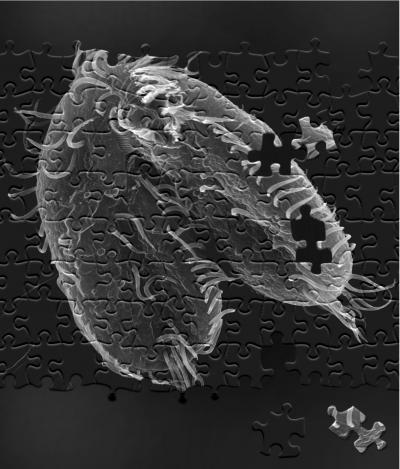



A new study has found that the pond-dwelling, single-celled organism Oxytricha trifallax has the remarkable ability to break its own DNA into nearly a quarter-million pieces and will then rapidly reassemble those pieces when it's time to mate.

Why? No one knows, sometimes nature gets drunk and creates things that make no sense. The organism internally stores its genome as thousands of scrambled, encrypted gene pieces. Upon mating with another of its kind, the organism rummages through these jumbled genes and DNA segments to piece together more than 225,000 tiny strands of DNA. This all happens in about 60 hours.

Immunotoxins are targeted antibodies that go after deadly toxins like ricin.

In the quest to find targeted therapies for cancer - that kill cancer but spare the surrounding tissue, immunotoxins make perfect sense. But they have not succeeded in part because cancer cells share many molecules with normal cells and because it can be challenging to unlock the deadly chemical only after the antibody has homed to the diseased tissue.

Talk of a 'secret sauce' in decision-making and charges that government groups like the Environmental Protection Agency are politically motivated are not new. Every president has its opposition party contending that the administration is manipulating science to suit its agenda - in the 1990s, Democrats got it for scuttling the Superconducting Super Collider and gutting the NIH and NASA while a decade later Republicans were called anti-science for limiting federal funding for human embryonic stem cells to existing lines.

No one voted or did not vote for a candidate because of the SSC or hESCs, they were simply talking points to confirm decisions.

Feeling comfortable in our own skin when it comes to clothes is more complicated than just “being yourself”. Image: Flickr, Maria Morri
By Rosie Findlay, University of Sydney.

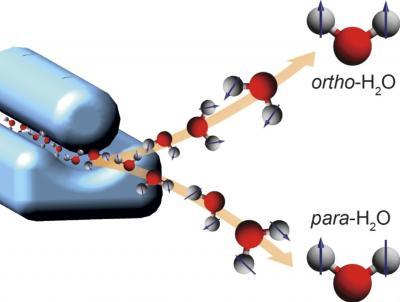
At first glance, water seems to be a simple molecule because a single oxygen atom is bound to two hydrogen atoms - but it is more complex when taking into account hydrogen's nuclear spin, a property reminiscent of a rotation of its nucleus about its own axis. 

The spin of a single hydrogen can assume two different orientations, symbolized as up and down. So, the spins of water's two hydrogen atoms can either add up, called ortho water, or cancel out, called para water. Ortho and para states are also said to be symmetric and antisymmetric, respectively.

In 2014, there will be an estimated 22,240 new cases of ovarian cancer in the United States and over 40,000 new cases in the European Union. Ovarian cancer is one of the most lethal gynecologic cancers. Women with recurrent or persistent ovarian cancer recur within 6-12 months of completion with a platinum-containing regimen and there remains a high unmet need for improved treatment options.

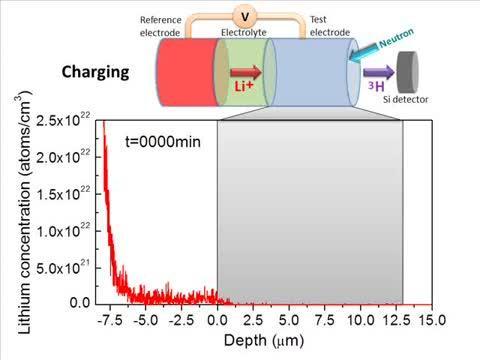
Using a neutron beam, researchers at The Ohio State University have able to track the flow of lithium atoms into and out of an electrode in real time as a battery charged and discharged, providing a kind of window into the inner workings of a lithium-ion battery for the first time.

They believe that neutron depth profiling (NDP) could one day help explain why rechargeable batteries lose capacity over time, or sometimes even catch fire.

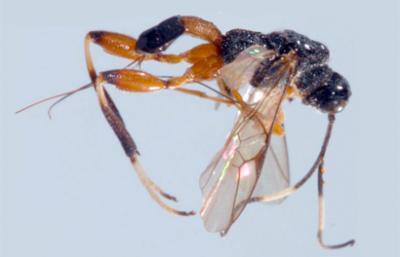
Wasps in the genus Spasskia (family: Braconidae) have been found for the first time in China, including a species in that genus which is totally new to science.   

The new species, Spasskia brevicarinata, is very small — male and female adults are less than one centimeter long. It is similar to a previously described species called Spasskia indica, but the ridges on some of its body segments are different.

The species epithet brevicarinata reflects a short ridge on its first tergite, as "brevi" is Latin for short and "carinata" is Latin for ridge.

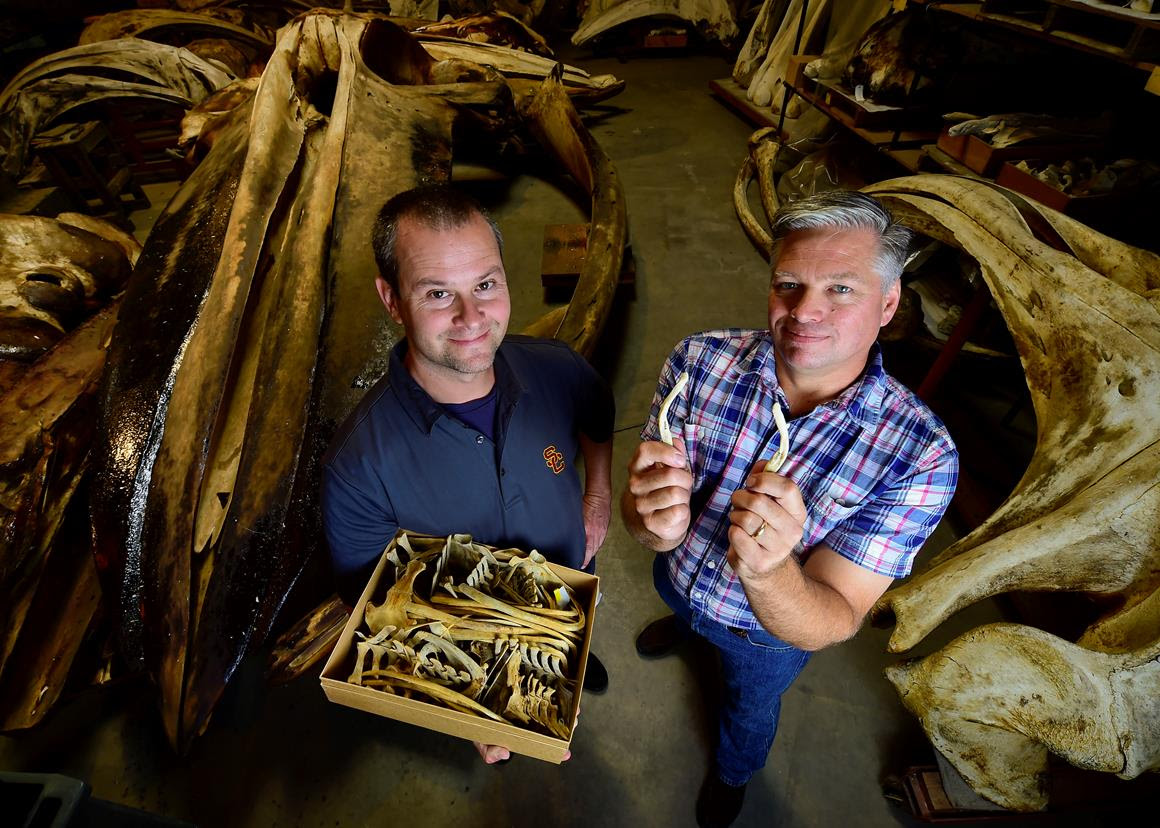
New whale research has turned a long-accepted evolutionary assumption on its...hips. Instead of  being just vestigial, whale pelvic bones play a key role in reproduction, according to a new study.

Both whales and dolphins have pelvic (hip) bones, evolutionary remnants from when their ancestors walked on land more than 40 million years ago. Common wisdom has long held that those bones are simply vestigial, slowly withering away like tailbones have in humans. But a new paper by USC and the Natural History Museum of Los Angeles County finds that not only do those pelvic bones serve a purpose – but their size and possibly shape are influenced by the forces of sexual selection.

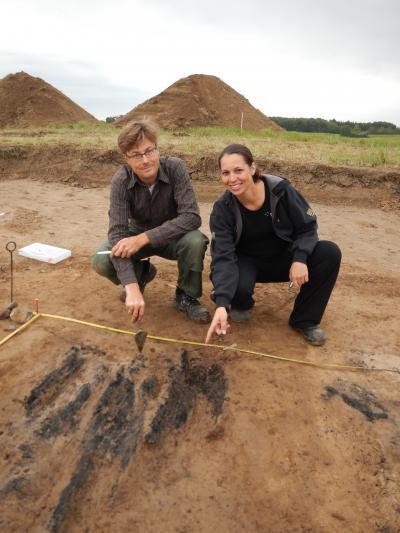
South of Copenhagen, Danish archaeologists have done something that has not happened in over 60 years - they have found a previously undiscovered Viking fortress.

It will be a surprise to most that Vikings built fortresses at all - they were the people that caused everyone else to build fortresses, who was dangerous enough to raid them? Their fellow berserkers and pirates, of course.

Using new, precise laser measurements of the landscape out curator Nanna Holm of Nanna Holm of The Danish Castle Centre on the trail of the fortress. An almost invisible rise in the field was proved by new measurements to have a clear circular outline.