


Bisphenol A (BPA) is currently banned from baby bottles so the search is on for alternatives. 

Lignin, the compound that gives wood its
strength, from waste in paper manufacturing could be ready for the market within five years, according to a paper at the National Meeting of the American Chemical Society.

There is no evidence of harm due to BPA despite 50 years of common use but some critics allege  it mimics the hormone estrogen and that it might be unsafe for young children and pregnant women in ways as yet undiscovered. Parents scared by the precautionary principle and the Dr. Oz show are not replacing it with a completely unknown alternative no matter how 'green' it claims to be, but alternatives are worthwhile research.

Researchers from University College Londonand Cambridge University says have found evidence of a specialized mechanism for spatial self-awareness that combines visual cues with body motion -  that our ability to instantly link what you see with what we do is thanks to a dedicated information 'highway'.

Standard visual processing is prone to distractions, as it requires us to pay attention to objects of interest and filter out others. The new study has shown that our brains have separate 'hard-wired' systems to visually track our own bodies, even if we are not paying attention to them. In fact, the newly-discovered network triggers reactions even before the conscious brain has time to process them.

Babies are born with the ability to digest lactose, the sugar found in milk, but most humans lose this ability after infancy because of declining levels of the lactose-digesting enzyme lactase. Most mammals also do not drink milk after weaning.

So did maintaining a high level of lactase confer an evolutionary advantage - reaping the nutritive benefits of milk - or is lactase persistence (lactose tolerance) simply due to dairy culture shaping?

Why is deciding to abort a baby a legitimate ethical choice but choosing to have a boy is not?

Some groups see the ethical issues in both but some only see the ethical issues in one. It shows that ethics is rife with subjective beliefs and rationalizations, so it can't be government policy. Yet there are efforts to claims such arbitrary lines are an evidence basis for decision-making.

Thomas H. Murray, President Emeritus of The Hastings Center, writes in Science that "preventing a lethal disease is one thing; choosing the traits we desire is quite another." 

(Santa Barbara, Calif.) — Shame on you. These three simple words can temporarily — or, when used too often, permanently — destroy an individual's sense of value and self-worth.

"In modernity, shame is the most obstructed and hidden emotion, and therefore the most destructive," said Thomas Scheff, professor emeritus of sociology at UC Santa Barbara. "Emotions are like breathing — they cause trouble only when obstructed."

When hidden, he continued, shame causes serious struggles not only for individuals but also for groups. In an article published in the current issue of the journal Cultural Sociology, Scheff examines the ubiquity of hidden shame and suggests it may be one of the keys to understanding contemporary society.

But when Yin and the paper's three lead authors, Ryosuke Iinuma, a former Wyss Institute Visiting Fellow, Yonggang Ke, Ph.D., a former Wyss Postdoctoral Fellow who is now an Assistant Professor of Biomedical Engineering at Georgia Institute of Technology and Emory University, and Ralf Jungman, Ph.D, a Wyss Postdoctoral Fellow, built bigger tripods and tried to assemble them into polyhedra, the large tripods' legs would splay and wobble, which kept them from making polyhedra at all.

The researchers got around that problem by building in a horizontal strut to stabilize each pair of legs, just as a furniture maker would use a piece of wood to bridge legs of a wobbly chair.

Whether you're a Major League outfielder chasing down a hard-hit ball or a lesser mortal navigating a busy city sidewalk, it pays to keep a close watch on your surroundings when walking or running. Now, new research by UC San Francisco neuroscientists suggests that the body may get help in these fast-changing situations from a specialized brain circuit that causes visual system neurons to fire more strongly during locomotion.

There has been a great deal of research on changes among different brain states during sleep, but the new findings, reported in the March 13 issue of Cell, provide a compelling example of a change in state in the awake brain.

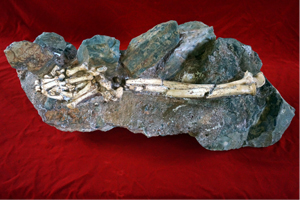
After 13 years of excavation of the nearly complete skeleton of the Australopithecus fossil named Little Foot, researchers conclude that it is probably around 3 million years old, refute previous dating claims that suggested it is younger. 

The Sterkfontein caves of Gauteng, South Africa have been world famous since 1936 for producing large numbers of fossils of the ape-man Australopithecus. However, for sixty years, these fossils consisted only of partial skulls and jaws, isolated teeth and fragments of limb bones. These were obtained by blasting or drilling and breaking of the calcified ancient cave infill or by pick and shovel excavation of the softer decalcified infills.

When President Bush signed an executive order becoming the first to fund human embryonic stem cell research, he had made a compromise that navigated Federal law - his predecessor President Clinton's Dickey-Wicker Amendment - the ethical concerns about a technology that had just come into existence, and the needs of science. American Presidents compromised once upon a time.

NEW ORLEANS – More than 7 million Americans are living with an artificial (prosthetic) knee (4.7 million) or hip (2.5 million), which may have significant future implications in terms of the need for ongoing patient care, according to new research presented at the 2014 Annual Meeting of the American Academy of Orthopaedic Surgeons (AAOS). Two related studies also found a growing incidence of adults younger than age 65 undergoing total knee replacement (TKR) and total hip replacement (THR) surgeries, and a potential underutilization of these procedures in some segments of the population.

