


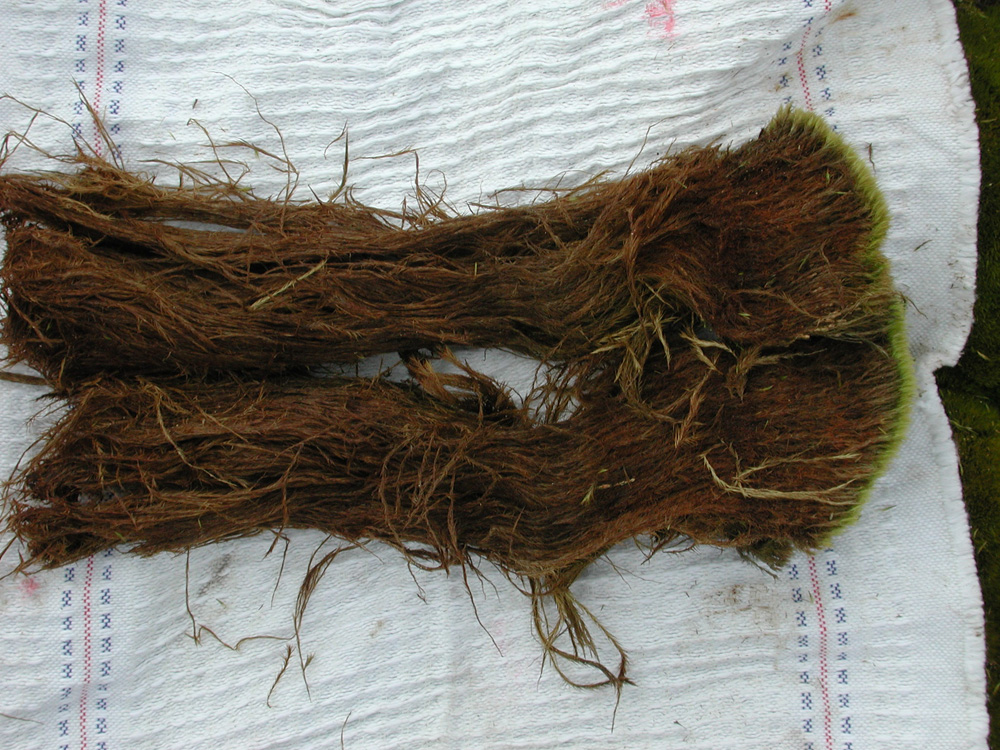



A timid jumping spider uses the scent of ants as a secret weapon to save itself from becoming the somewhat soggy prey of the predatory spitting spider. The downside to this plan is that jumping spiders are also a favorite snack of its very own saviors. To overcome this additional hazard, the spider has made yet another plan in the form of an ant-proof nest, writes Ximena Nelson of the University of Canterbury in New Zealand and Robert Jackson of the University of Canterbury and the International Centre of Insect Physiology and Ecology in Kenya, in Springer's journal Behavioral Ecology and Sociobiology.

This news release is available in German.

Adolescents with antisocial personality disorder inflict serious physical and psychological harm on both themselves and others. However, little is yet known about the underlying neural processes. Researchers at the University of Leiden and the Max Planck Institute for Human Development have pinpointed a possible explanation: Their brain regions responsible for social information processing and impulse control are less developed.

It is said that nothing dies of old age in the ocean, that everything gets
eaten and all that remains of anything is waste.

But that waste is pure gold to
oceanographer David Siegel, director of the Earth Research Institute at U.C. Santa
Barbara.

In a study of the ocean's role in the global carbon cycle, Siegel and his colleagues used those nuggets to their advantage. They incorporated the lifecycle of phytoplankton
and zooplankton — small, often microscopic animals at the bottom of the food chain —into a novel mechanistic model for assessing the global ocean carbon export. 

DURHAM, N.C. -- Brain imaging using radioactive dye can detect early evidence of Alzheimer's disease that may predict future cognitive decline among adults with mild or no cognitive impairment, according to a 36-month follow-up study led by Duke Medicine.

The national, multicenter study confirms earlier findings suggesting that identifying silent beta-amyloid plaque build-up in the brain could help guide care and treatment decisions for patients at risk for Alzheimer's. The findings appeared online March 11, 2014, in Molecular Psychiatry, a Nature Publishing Group journal.

Ulnar collateral ligament (UCLR) reconstruction, a common injury for pitchers in Major League Baseball, is often called "Tommy John Surgery" after the New York Yankees pitcher who made it famous, In 1974, Dr. Frank Jobe made medical history when he replaced the pitcher's torn medial collateral ligament with a tendon from John's forearm and he went on to pitch for 14 more years and added 164 more victories - after an injury that had been career-ending in the past.

Results out today show that pitchers win more games following Tommy John Surgery but another paper disagrees. The scholars at Henry Ford Hospital say the performance decline is notabled and that they the largest cohort of professional pitchers to date to examine the issue.

Ulnar collateral ligament (UCLR) reconstruction, commonly called "Tommy John Surgery" after the New York Yankees pitcher who made it famous, is a procedure performed on Major League Baseball pitchers after they get a damaged or torn ulnar collateral ligament, a common elbow injury.  In 1974, Dr. Frank Jobe made medical history when he replaced the pitcher's torn medial collateral ligament with a tendon from John's forearm.

John then pitched for 14 more years and added 164 more victories - after an injury that had been career-ending in the past.

What do people living in Boston, Pittsburgh and Los Angeles have in common? From coast to coast, prairie to desert, people love their lawns.  

If only there was a study that dug deeper, like examining differences in fertilization and irrigation practices.  

Don't scoff, the authors of a paper in the Proceedings of the National Academy of Sciences assure us that with 80 percent of Americans living in urban or suburban neighborhoods, understanding urban lawn care is vital to sustainability planning.

An international team of researchers has found evidence that the steam and heat from volcanoes and heated rocks allowed many species of plants and animals to survive past ice ages, helping scientists understand how species respond to climate change.

The research could solve a long-running mystery about how some species survived and continued to evolve through past ice ages in parts of the planet covered by glaciers.

The team, led by Dr Ceridwen Fraser from the Australian National University and Dr Aleks Terauds from the Australian Antarctic Division, studied tens of thousands of records of Antarctic species, collected over decades by hundreds of researchers, and found there are more species close to volcanoes, and fewer further away.

In end-stage lung disease, transplantation is sometimes the only viable therapeutic option, but organ availability is limited and rejection presents an additional challenge. Innovative research efforts in the field of tissue regeneration, including pioneering discoveries by University of Vermont (UVM) Professor of Medicine Daniel Weiss, M.D., Ph.D., and colleagues, holds promise for this population, which includes an estimated 12.7 million people with chronic obstructive pulmonary disorder (COPD), the third leading cause of death in the U.S.

Maintaining physical health brings a variety of benefits - including for the brain. A new study affirms that but also finds that lower IQ in teen years is correlated to a higher risk of dementia before the age of 60.

IQ doesn't really go up or down much so IQ at a young age isn't telling us much, but a study of one million young Swedish men included the data so it ended up being a factor.


