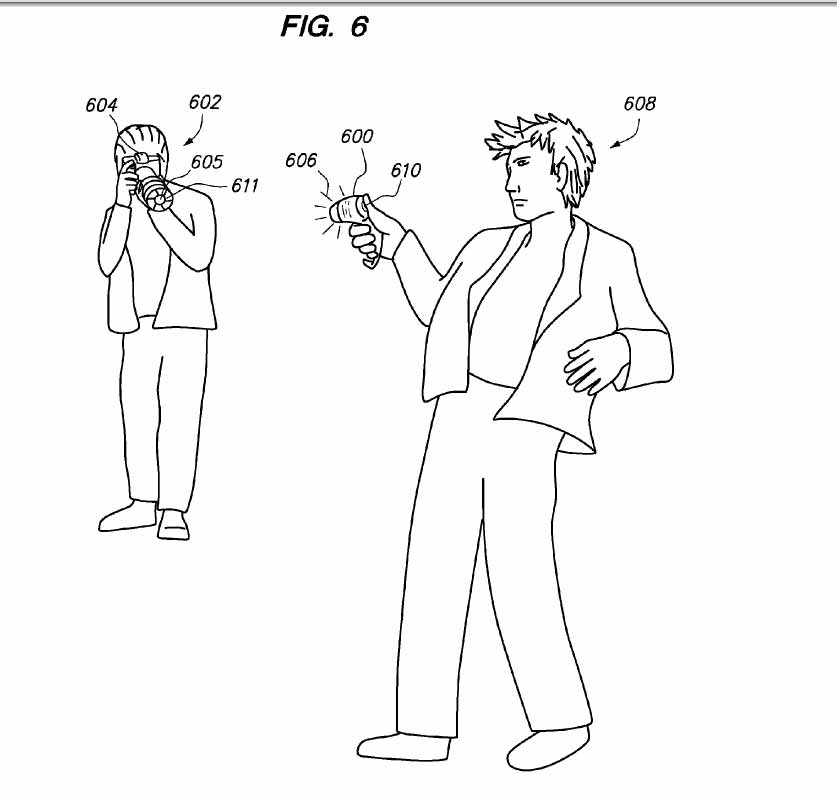

There are those among us who are “health blind”, i.e., handicapped at sensing the health signals most of us easily recognize on others around us. They are the color blind. But we at O2Amp can fix that.

1. The Health-Blind Among Us

Despite the presence of modern electronic medical sensing tools, medical personnel still rely on their naked-eye visual skills when examining and judging the symptoms and health of patients (Savin et al. 1997).

A new study has found that concentrations of arsenic, selenium, and mercury in bighead and silver carp from the lower Illinois River aren't a health concern.

Importantly, inorganic arsenic concentrations were undetectable and concentrations of selenium in carp fillets were well below the 1.5 mg/kg threshold for restricting the number of meals, according to the US Environmental Protection Agency. The distinction between naturally occurring arsenic and arsenic from the external environment has been a problem for popular media outlets like The Dr. Oz Show, which fail to note natural sources. 

In the early part of the 20th century, after we had entered the Age of Flight, a strange phenomenon in Arabia was sighted. 

Air travel had become more common and thus so did air delivery. British pilots flying from Cairo to Baghdad reported seeing ruins that no one had ever noticed before.

Under-use of fertilizers in Africa currently contributes to a growing yield gap; the difference between how much crops could produce in ideal circumstances compared to actual yields. 

Better yields mean more food and sustainable food leads to wealth and culture and a better life.

But fertilizer has to be smartly applied, with both phosphorous and nitrogen, and the difference between them is substantial for subsistence farmers. While nitrogen-based fertilizers can be produced by a process that extracts the element from the air, phosphorus must be mined from rock—and reserves are limited. That makes phosphorus fertilizers expensive, especially in the longer term. 

With any pesticide, over-use can have harmful effects on the environment. 

DDT has not been used in America for over four decades but Rutgers scholars say that exposure to DDT may also increase the risk and severity of Alzheimer's disease in some people, particularly those over the age of 60. 

There are efforts to label obesity as a mental illness and a physical addiction. While that's good for psychologists who want get eating therapy paid by insurance claims, it may undermine healthy behaviors, according to a paper in Psychological Science.

Two of the world's most devastating plagues, the Justinian Plague and the famous Black Death hundreds of years later, were each responsible for killing as many as half the people in Europe.

A new study finds that they were caused by distinct strains of the same pathogen - one that faded out on its own, but the other spreading worldwide and then re-emerging in the late 1800s.  A form of that plague still kills thousands every year and these findings suggest a new strain of plague could emerge again in humans in the future.

When we open our eyes, visual information floods the brain and it interprets what we're seeing. Researchers recently non-invasively mapped this flow of information in the human brain by combining two existing technologies, which allowed them to identify both the location and timing of human brain activity.

They scanned individuals' brains as they looked at different images and were able to pinpoint, to the millisecond, when the brain recognizes and categorizes an object, and where these processes occur. 

When and where

If you care about what is in your food, you have no greater sympathetic intellect than me.

But if you are an anti-science activist, you may not understand the distinction between what is in your food and what it simply is - and there we part company. A genetic modification (GMO) is your food, for example, it is no different than any other food from a health perspective. Cataloging the numerous ways agriculture has genetically engineered food for as long as food has been grown is outside the scope of this piece, but GMOs don't bother me and that science shouldn't bother you either. (1) 

Backboned animals, at least the ones with jaws, have four fins or limbs, one pair in front and one pair behind.

Thanks to that random prankster known as evolution, these have been modified into a marvelous variety of fins, legs, arms, flippers, and wings. But how did our earliest ancestors settle into such a consistent arrangement of two pairs of appendages?

It's because we have a belly say theoretical biologists (yes, that's a real thing) at the University of Vienna and the Konrad Lorenz Institute for Evolution and Cognition Research.

