Researchers have identified a DNA variation in a gene called PDSS2 that appears to curb coffee consumption. The authors suggest that the gene reduces the ability of cells to breakdown caffeine, causing it to stay in the body for longer.
This means that a person would not need to consume as much coffee to get the same caffeine hit.

The researchers looked at genetic information from 370 people living in a small village in south Italy and 843 people from six villages in north-east Italy. Each of the study participants was asked to complete a survey that included a question about how many cups of coffee they drank each day.

University of Hawai'i Cancer Center researchers discovered new genetic markers associated with a fast rate of nicotine metabolism, which potentially leads smokers to smoke more, thereby, increasing their risk for lung cancer.

Dr. Loïc Le Marchand, a professor and leading epidemiologist in the UH Cancer Center's Epidemiology Program, and his colleagues, identified differences in the CYP2A6 gene that are associated with a high rate of nicotine metabolism. Smokers who have these CYP2A6 markers may smoke more cigarettes and/or inhale a greater amount of nicotine per cigarette than smokers who metabolize nicotine less rapidly, in order to maintain stable levels of nicotine in the blood.

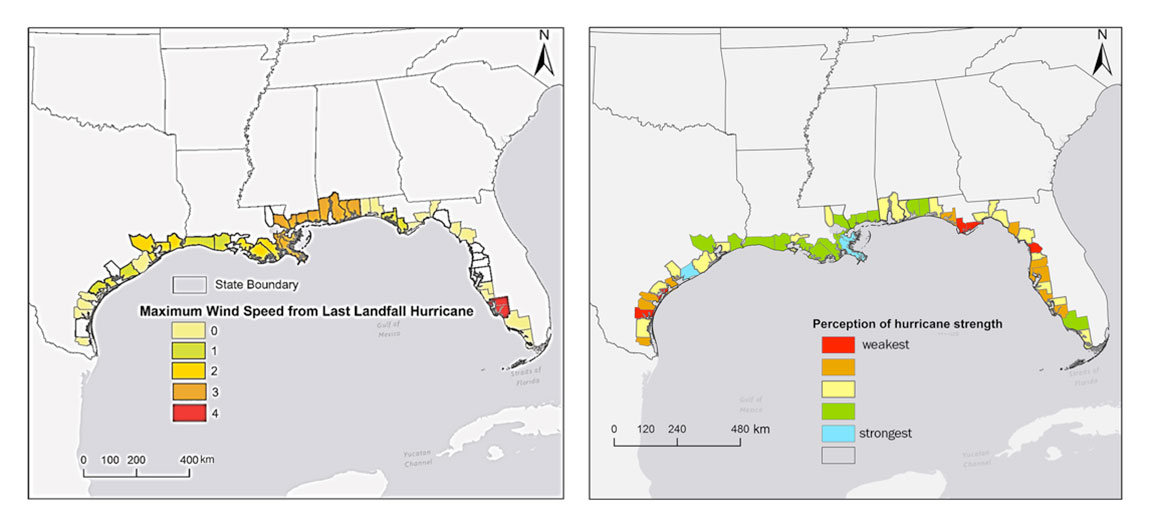
In the last decade, hurricanes have been essentially inconsequential. Sandy was so mild by the time it hit New York City that Manhattan media had to invent the term "Super Storm" to talk about it, because tropical storm sounded too nice.

Studies show that men are not as environmentally friendly as women. Let's face it, not too many "man caves" feature solar panels, recycle bins or posters of electric cars. It's just not manly.

But could men be persuaded to go green? New research indicates the answer is yes -- and it's all about branding.

Peer pressure is a proven social motivator, and seeing a friend or colleague succeed at a task can boost individual effort. Researchers at the New York University Tandon School of Engineering probed this decidedly human attribute -- sensitivity to competition from peers -- and found that not only is virtual pressure from a computer-simulated peer just as motivating as the real thing, but that "fake" competition can be used for the good of science.

The research team formulated a mathematical model of human behavior that successfully predicted group responses across conditions -- one they hope other researchers will use to overcome the notoriously difficult task of encouraging wide participation in scientific projects.

Alexandria, VA - Human evolution and paleoanthropology are tricky subjects, not just because of the rarity of these fossils, but also because human nature seems to be getting in the way of modern taxonomy. In a field that is generally governed by logical rules when it comes to identifying new fossils, scientists are noticed there are some peculiarities applied to our own genus, Homo.

As an old time chessplayer who's stopped competing in tournaments, I often entertain myself with the odd blitz game in some internet chess server. And more often than not, I play rather crappy chess. So nothing to report there... However fluctuations do occur.
I just played a combinative-style game which I wish to share, although I did not have the time yet (and I think I won't have time in the near future) to check the moves with a computer program. So my moves might well be flawed. Regardless, I enjoyed playing the game so that's enough motivation to report it here.

If you read media headlines or watch television programs like "The Dr. Oz Show" you might be convinced that an out-of-whack balance of microbes causes obesity, and that stool implants or fancy yogurt will cure it.

No, you got obese because you eat too much. Every other claim is selling you something.

Customers may grumble about having to pay fees for everything on an airplane, American airport security and a la carte pricing has certainly turned travel into a third world experience, but a new analysis has found that checked baggage fees have improved the biggest aspect of flying - getting to a destination on time.

"Because passengers changed their behavior, less weight went into the plane below the cabin," said Mazhar Arikan, a University of Kansas assistant professor in their business school. "This offset any changes in carry-on luggage, and it helped airlines improve their on-time departure performance. The below-the-cabin effect dominates the above-the-cabin effect."

CHARLOTTESVILLE, VA (AUGUST 23, 2016). Seventy percent of football players in the US are youths 9 to 14 years of age, yet most data on head impacts sustained in this sport have been from high school, college, and professional football players. This makes it difficult to make informed decisions on how best to structure practices and games to protect younger players from concussion. A new study reported in the Journal of Neurosurgery: Pediatrics will hopefully change that. It focuses on these younger players and the head impacts they sustain throughout the football season and offers suggestions to reduce the risk of high-magnitude head impacts.


