




Professor John Burn is Medical Director of the Institute of Human Genetics at Newcastle University, where some of the most controversial stem cell research in the UK takes place.

He's taking on a formidable task as the UK parliament debates controversial amendments to the 1990 Human Fertilisation and Embryology Act - namely helping determine at what point a cell becomes a human.

Concerns about the misuse of funds, threats to the structure of the family, and the dangers of admixed (hybrid) embryos can all be adequately addressed without an act of parliament. Stem cell research is done in a highly regulated environment, with statutory bodies such as the Human Fertilisation and Embryology Authority (HFEA) having access to the requisite expertise. The authority has already proved its ability to reach reasoned conclusions on similarly touchy subjects.

Identifying gene ancestry is crucial for computational genomics because genes passed down from a common ancestor tend to perform similar functions in the cell. Scientists exploit this similarity in tasks like predicting gene function, mapping human chromosomal regions to corresponding regions in model organisms, and reconstructing the regulatory circuitry that turns genes on and off.

Although computational biologists have developed methods to identify genes that share a common ancestor, current methods often lead to spurious conclusions when applied genes encode multi-domain proteins. Domains are sequence fragments that encode the basic building blocks of protein structure. Evolution makes new genes by mixing and matching domains in novel combinations, much like a child who builds a house, a car and a helicopter from the same LEGO kit by combining LEGO blocks in different ways.

This process, called domain shuffling, creates complex proteins that perform specific, critical tasks such as cell communication and binding to other cells. When one of these proteins fails, cancer is often the result. Domain shuffling allows rapid evolution of new proteins, but it also makes it close to impossible for scientists to determine their ancestry.

BASEL, Switzerland, May 16 /PRNewswire/ -- Patients with breast or colorectal cancer, two of the world's most common cancers, can expect further treatment advances with Avastin(R) (bevacizumab) and Herceptin(R) (trastuzumab) following new data that is being presented at the 44th American Society of Clinical Oncology (ASCO) annual meeting in Chicago at the end of May. Around 30,000 medical experts will attend the meeting which is the premier event for cancer therapy worldwide.

The Roche data will show that Avastin and Herceptin are continuing to offer further hope of improving survival in patients with cancers that are still devastating thousands of lives each year.

LONDON, May 16 /PRNewswire/ --

- Poll Reveals That Eight Out of Ten Undergraduates Would be Proud to Work in the NHS

Eight out of ten undergraduates would be proud to work in the NHS, a NHS Careers survey revealed today. Although 78% still said the NHS would not be their first choice employer and 54% would not even consider a career in the NHS.

To view the Multimedia News Release, please click:

http://www.prnewswire.com/mnr/nhsemployers/33027/

The poll was released as NHS Careers celebrated the launch of a new website - http://www.whatcanidowithmydegree.nhs.uk - for undergraduates and recent graduates by giving away a unique piece of graffiti painted by internationally-acclaimed gallery, Rare Kind.

SUNNYVALE, California, May 15 /PRNewswire/ --

- Highest-risk precancerous condition of esophagus eliminated in 90 percent of patients

BARRX Medical, Inc., the global technology leader for treating precancerous conditions of the digestive tract, today announced that 90.2 percent of the patients in a multi-center U.S. study were free of the highest-risk of Barrett's esophagus after having a non-surgical, endoscopic treatment using the HALO360 ablation system. Barrett's esophagus afflicts more than three million U.S. adults and is a complication of gastroesophageal reflux disease (GERD). The abnormal Barrett's tissue is the precursor to esophageal cancer (adenocarcinoma), which has the fastest rising incidence of all cancers in the U.S.

NAPA, California, May 15 /PRNewswire/ --

- Agreement in Principle Reached to Terminate Marketing Agreement with Triax Aesthetics, LLC for Pyratine-6(TM) on Most Favorable Terms

Senetek PLC (OTC Bulletin Board: SNKTY), a Life Sciences company engaged in the development of technologies that target the science of healthy aging, today announced financial results for the quarter ended March 31, 2008 and an agreement in principle to terminate its marketing agreement with Triax Aesthetics, LLC ("Triax") for Pyratine-6(TM) on most favorable terms.

PRINCETON, New Jersey, May 15 /PRNewswire/ --

Pharmasset, Inc. (Nasdaq: VRUS), a clinical stage pharmaceutical company committed to discovering, developing and commercializing novel drugs to treat viral infections, reported unaudited financial results for the second fiscal quarter ended March 31, 2008. Pharmasset reported a net loss attributable to common stockholders of US$12.1 million, or (US$0.57) per share for the quarter ended March 31, 2008, as compared to a net loss attributable to common stockholders of US$1.7 million, or (US$0.16) per share for the same period in 2007.

MINNEAPOLIS, May 15 /PRNewswire/ --

AGA Medical Corporation ("AGA") announced today it received CE mark approval to market the AMPLATZER(R) Vascular Plug III ("AVP III"). AGA also announced the immediate availability and launch of the device in the European Union. The AVP III further expands the AGA family of occlusion devices designed to embolize, or close, blood vessels and blood vessel malformations in the peripheral vasculature.

"We believe the new AVP III is another strong addition to the AGA vascular plug family," said Franck Gougeon, President and CEO of AGA. "Our goal is to provide physicians with a toolbox of embolization devices that can treat vessels of different types and length and with different flow characteristics."

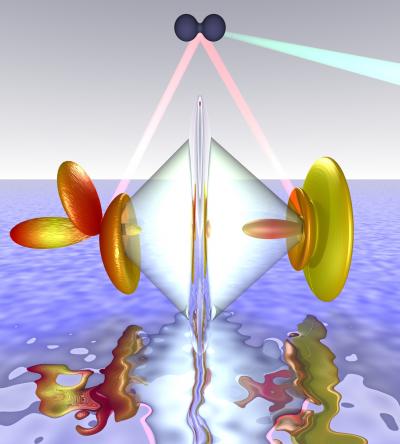
When atoms form molecules, they share their outer electrons and this creates a negatively charged cloud. The electrons buzz around between the two positively charged nuclei, making it impossible to tell which nucleus they belong to. They are delocalized.

Is this also true for the electrons located closer to the nucleus? And are those electrons spread out too, or do they belong to just one nucleus, i.e. are they localized?

These questions have been hotly debated for the last 50 years, and an international team of scientists says they have an answer - in true quantum theory fashion, they are both right.

MIT engineers have created ultrathin films made of polymers that could be applied to medical devices and other surfaces to control microbe accumulation. The inexpensive, easy-to-produce films could provide a valuable layer of protection for the health care industry by helping to reduce the spread of hospital-acquired infections, which take the lives of 100,000 people and cost the United States an estimated $4.5 billion annually.

The researchers found they could control the extent of bacterial adhesion to surfaces by manipulating the mechanical stiffness of polymer films called polyelectrolyte multilayers. Thus, the films could be designed to prevent accumulation of hazardous bacteria or promote growth of desirable bacteria.

“All other factors being equal, mechanical stiffness of material surfaces increases bacterial adhesion,” said Krystyn Van Vliet, the Thomas Lord Assistant Professor of Materials Science and Engineering.


