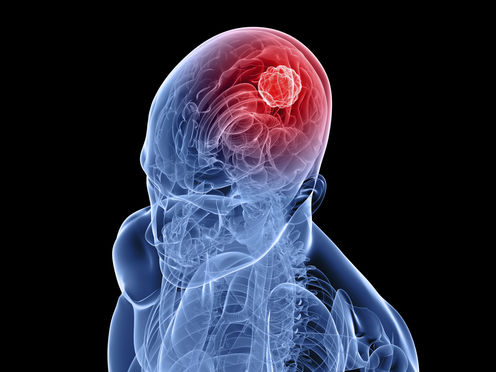




Glioblastomas are often resistant to the one type of drug that breaks the blood-brain barrier. HealthHub You find yourself sitting in your doctor’s surgery. It’s only been a few days since your initial visit to check on these pounding headaches you’ve been waking up with, along with some dizziness, nausea and vomiting, and a general drowsy and disconnected feeling.

The (Pre-)Neanderthals were the first, you see:


There has been plenty of criticism about academic clinical trial reporting mandated by government funding and now a new paper analyzing four companies finds that the private sector is better about it, though results vary.

In JAMA, Isabelle Boutron, M.D., Ph.D., of Paris Descartes University, Paris, and colleagues investigated the proportion of randomized clinical trials (RCTs) registered at ClinicalTrials.gov that were listed at the Clinical Study Data Request website, where companies voluntarily list studies for which data can be requested.

Nerves in the central nervous system of adult mammals do not usually regenerate when injured. The granule cell, a nerve cell located in the cerebellum, is different. When its fibres, called parallel fibres, are cut, rapid regeneration ensues and junctions with other neurons called "synapses" are rebuilt. The precise mechanism for this was unclear.

Researchers at Hokkaido University in Japan, together with colleagues from Sapporo Medical University School of Medicine and Niigata University, investigated the effect of a specific glutamate receptor, called GluD2, on parallel fibre regeneration.

Saijo, Hiroshima, Japan - Biologists at Hiroshima University, located in the historic sake brewing town of Saijo, have identified the genetic mutation that could ruin the brew of one particular type of yeast responsible for high-quality sake. The research was part of an academic-government-industry collaboration involving the National Institute of Brewing (Japan), the Asahi Sake Brewing Company (Niigata), the Brewing Society of Japan, The University of Tokyo, The University of Pennsylvania, and Iwate University.

Medical devices approved first in the European Union (EU) are associated with a greater rate of safety issues, finds a study published by The BMJ today.

Clinical trial results for many new medical devices that could guide treatment decisions also remain unpublished or unavailable up to five years after approval, the findings show.

As such, the researchers call for greater regulatory transparency to enable patients and clinicians to make informed decisions about treatment.

Medical devices play an important role in patient care, but their approval and regulation are handled differently in the EU and US.

A period of controversy over the risks and benefits of statins, covered widely in the UK media, was followed by a temporary increase in the number of people stopping their statin treatment, finds a study in The BMJ today.

The increase in stopping was seen among patients taking statins for existing heart disease (known as secondary prevention) as well as patients at high risk of developing disease in the next 10 years (known as primary prevention).

The researchers found no evidence that widespread media coverage was linked to changes in the proportion of newly eligible patients starting statins.

Manufacturers of feminine hygiene products, including tampons and sanitary products, could dedicate a part of their revenues to support public health programmes that prevent violence against women, argues an expert in The BMJ this week.

Physical and sexual violence is a public health problem that affects more than one third of all women, equivalent to at least a billion women globally, according to a World Health Organization (WHO) study.

Effective programmes and strategies to prevent domestic and sexual violence, the two most common types, have been identified by the WHO and collaborators, but these are "hugely underfunded", argues Dr S D Shanti, associate professor of public health from the A T Still University of Health Sciences, USA.

At the 2012 Democratic convention, when President Obama mentioned that his administration had killed the terrorist Osama Bin Laden, the building erupted in cheers.

This was positively un-Democratic, to both Democrats and Republicans. Democrats were supposed to be more tolerant of other cultures, with safe spaces for all, and anything that looked like being critical of Muslims was usually frowned upon.

COLUMBUS, Ohio - While events like the Arab Spring brought hope that the internet could inspire the growth of democracy in authoritarian countries, a new study offers a reality check.

Researchers studying Russian and Ukrainian internet users found that their demand for democratic reforms in their countries depended on what they were doing when they connected to the web.

Those who were on the internet primarily to get news and share political opinions with others were most likely to demand more democracy in their countries.

Those who visited the web mostly for entertainment purposes - such as watching cat videos - were less likely to say they wanted more democracy in their countries and believed they had more democracy than they actually did.

