






Elite athletes - often perceived as the epitome of health and fitness – may be more susceptible to common illness and are therefore proving useful in helping scientists understand more about the immune system.

Nic West, a PhD candidate at Griffith University, has enlisted elite rowers to help him study the role of salivary proteins that act as a barrier to infectious agents such as respiratory viruses.

He said salivary proteins such as lactoferrin and lysozyme act to prevent microbes from infecting the body and typically increase as the body fights off infection. They have a direct antimicrobial effect and also help modulate other aspects of the body’s immune response.

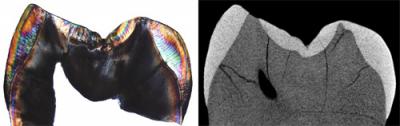
An international European research collaboration led by scientists at the Max Planck Institute for Evolutionary Anthropology reports evidence for a rapid developmental pattern in a 100,000 year old Belgian Neanderthal (Homo neanderthalensis). The Scladina juvenile, which appears to be developmentally similar to a 10-12 year old human, was estimated to be in fact about 8 years old at death, according to the new research.

The report, published in Proceedings of the National Academy of Sciences USA (online edition early December), details how the team used growth lines both inside and on the surfaces of the child's teeth to reconstruct tooth formation time and its age at death.

University of British Columbia astronomer Harvey Richer and UBC graduate student Saul Davis have discovered that white dwarf stars are born with a natal kick, explaining why these smoldering embers of Sun-like stars are found on the edge rather than at the centre of globular star clusters.

White dwarfs represent the third major stage of a star’s evolution. Like the Sun, each star begins its life with a long stable state where nuclear reactions take place in the core supplying the energy. After the core fuel is depleted, it swells up and turns into a huge red giant.

The long-held idea that only vertebrates have sophisticated adaptive immune systems that can protect them for life against many pathogens after being infected by them just once has been revised in recent years.

It turns out that many insects also have a form of immune memory that protects them against reinvasion by a pathogen they have previously encountered. This was just one of the striking discoveries discussed at the recent conference on Innate Immunity and the Environment, organized by the European Science Foundation (ESF).

To ensure you have a green Christmas this season, Bluewater, the UKs leading shopping center, have devised an eco-friendly scientific formula on how to wrap a Christmas present after estimating British consumers will waste over one ton of wrapping paper this Christmas (see note 1 at the bottom).

Bluewater discovered that Brits continually overestimate the amount of paper they need to wrap their Christmas presents.

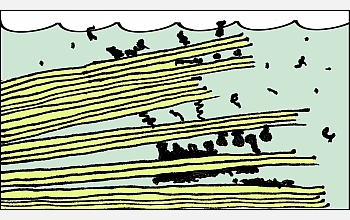
Life on Earth may have originated as the organic filling in a multilayer sandwich of mica sheets, according to Helen Hansma of the National Science Foundation and the University of California, Santa Barbara.

In a presentation at the American Society for Cell Biology’s 47th annual meeting, she proposes that the narrow, confined spaces between nonliving mica layers could have provided exactly the right conditions for the rise of the first biomolecules.

The “mica hypothesis” provides possible answers to many questions about life’s origins, according to Hansma. This layered mineral could have provided support, shelter, and an energy source for the development of precellular life, while leaving artifacts in the structure of living things today, including the periodicity of RNA.

The data are in. Divorce is bad for the environment.

A novel study that links divorce with the environment shows a global trend of soaring divorce rates has created more households with fewer people, has taken up more space and has gobbled up more energy and water. The findings of Jianguo “Jack” Liu and Eunice Yu at Michigan State University are published in this week’s online edition of the Proceedings of the National Academy of Sciences.

A statistical remedy: Fall back in love. Cohabitation means less urban sprawl and softens the environmental hit.

The price of oil nearly reached $100 a barrel recently, but a new University of Delaware prototype vehicle demonstrates how the cost of the black stuff could become a concern of the past.

A team of UD faculty has created a system that enables vehicles to not only run on electricity alone, but also to generate revenue by storing and providing electricity for utilities. The technology--known as V2G, for vehicle-to-grid--lets electricity flow from the car’s battery to power lines and back.

“When I get home, I’ll charge up and then switch into V2G mode,” said Willett Kempton, UD associate professor of marine policy and a V2G pioneer who began developing the technology more than a decade ago and who is now testing the new prototype vehicle.

A new data analysis undertaken by Dr.

Faint, fleeting blue flashes of radiation emitted by particles that travel faster than the speed of light through the atmosphere may help scientists solve one of the oldest mysteries in astrophysics.

For nearly a century, scientists have wondered about the origin of cosmic rays — subatomic particles of matter that stream in from outer space. “Where exactly, we don’t know,” said Scott Wakely, Assistant Professor in Physics at the University of Chicago. “They’re raining down on the atmosphere of the Earth, tens of thousands of particles per second per square meter.”

Recent results from the Pierre Auger Cosmic Ray Observatory suggest that the highest-energy cosmic rays may come from the centers of active galaxies.

